A married couple who met in a medical lab has won one of the world’s top science prizes for a gene therapy that restores vision and transforms the lives of people born with a rare form of blindness.
Molecular biologist Jean Bennett and ophthalmologist Albert Maguire won the prestigious Breakthrough Prize in life sciences, sharing the $3 million award with physician Katherine High. The prize is widely known as the ‘Oscars of science’ due to its global prestige and scale.
Their achievement came after more than 25 years of steady work. The team developed a gene therapy called Luxturna.
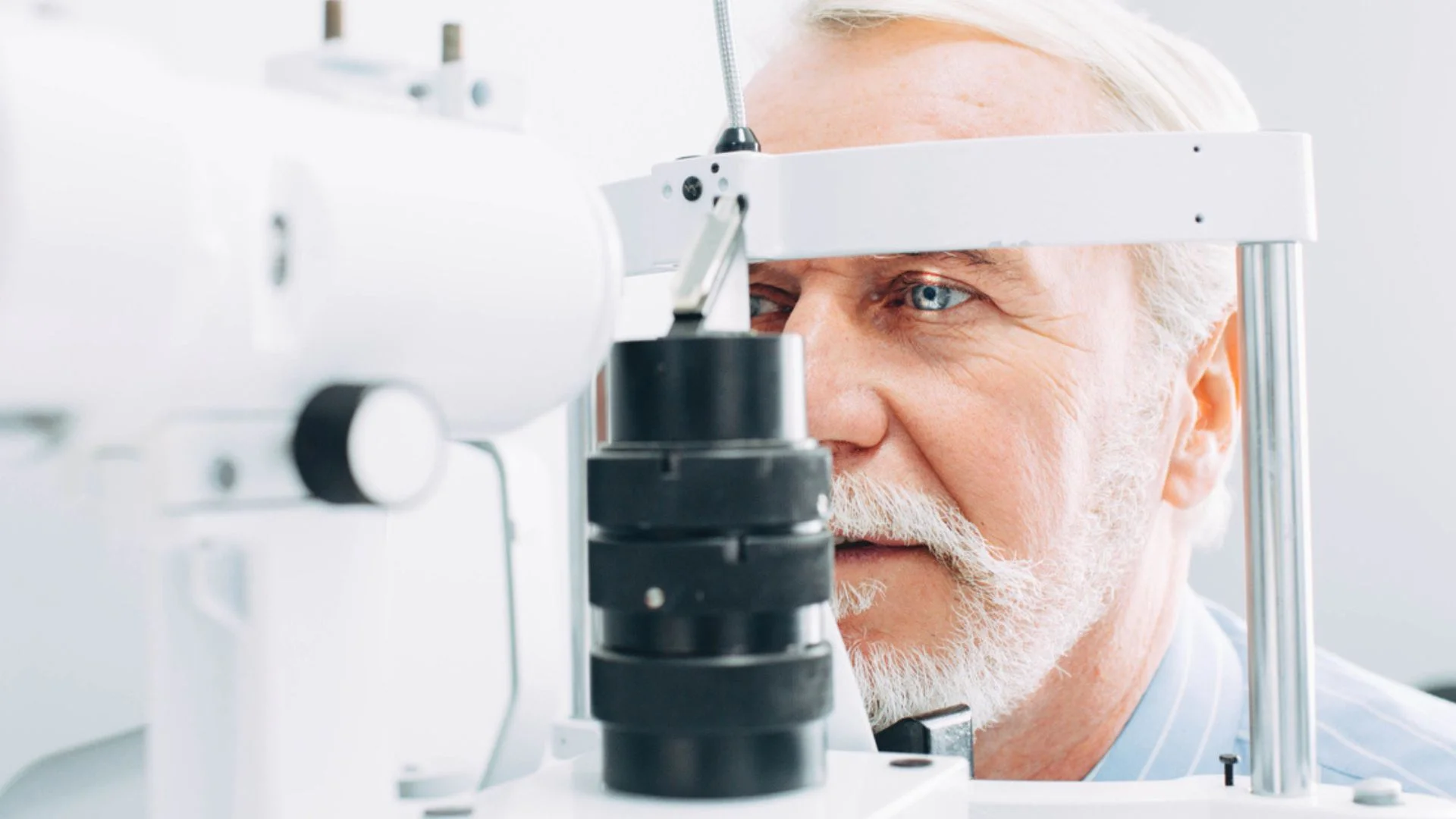
This treatment targets a rare inherited eye disorder known as Leber Congenital Amaurosis(LCA). The condition usually leads to severe vision loss from childhood and often results in complete blindness by early adulthood.
READ ALSO: Australia Weighs Risky Collins-Class Submarine Extension in Nuclear Pivot Era
Luxturna was approved in the US in 2017. Since then, it has helped patients regain parts of their vision that were once thought lost forever.
One of the most powerful moments came during clinical trials. A patient described seeing their child’s face clearly for the first time. They also noticed details like the texture of wood and the movement of tree branches in the wind. Many others shared similar experiences, describing life-changing improvements in how they see the world.
Jean Bennett recalled that moment with deep emotion. She said she felt overwhelmed when the results became clear. She described it as one of the most powerful discoveries she had ever experienced.
WATCH ALSO: A Brazilian skateboarder set a world record as he turned 22-storey skyscraper into giant ramp
The couple’s journey began in a simple but memorable way. They met as students at Harvard Medical School, where they were paired together to dissect a human brain. That moment marked the start of both a personal and professional partnership that would last decades.
Later, at the University of Pennsylvania, they focused their efforts on understanding LCA. Scientists had already linked the disease to faults in a gene called RPE65. But at the time, there was no clear way to fix it.
Bennett decided to move forward anyway. She said that being young helped her take risks. She explained that she did not fully understand the limits of what was possible, and that gave her the courage to try.
Over time, the team developed a method to deliver a healthy copy of the faulty gene directly into retinal cells. This approach allowed the eye to regain some of its lost function.
Their work included years of testing. They first tried therapy in animals. Two dogs treated during the research, named Venus and Mercury, regained their vision and later became the couple’s pets. These early successes gave the researchers confidence to move into human trials.
READ ALSO: US Locks 2027 Sentinel Test as Minuteman Era Ends, Nuclear Upgrade Speeds Up
When those trials showed clear results, the therapy moved closer to approval. Today, it stands as one of the first gene therapies to successfully treat inherited blindness.
While celebrating the achievement, Bennett also raised concerns about the future of science. She warned that political pressure and reduced support for research in the US could have long-term effects. She said that weakening scientific institutions and ignoring expert advice might drive researchers away and slow progress for years.
The awards ceremony, held in Los Angeles, recognized several other major advances in science.
Another life sciences prize went to Swee Lay Thein and Stuart Orkin. Their work focused on genetic blood disorders such as sickle cell disease and beta thalassemia.
They discovered that switching off the BCL11A gene allows the body to produce a healthier form of hemoglobin. This change helps red blood cells carry oxygen more effectively.
WATCH ALSO: A giant mobile elevated work platform has been launched
Their research led to the development of Casgevy, a treatment that edits a patient’s own cells and then returns them to the body. While the therapy shows strong results, experts say it is still complex and demanding for patients.
Orkin described the treatment as an important first step. He said future therapies need to become easier to use if they are to reach more people and reduce the overall burden of disease.
Like Bennett, he also expressed concern about the current state of scientific research. He said the field had been moving at high speed in recent years, but recent changes have slowed progress and created uncertainty.
Beyond medicine, the Breakthrough Prizes also honored achievements in mathematics and physics. The mathematics award recognized work on nonlinear evolution equations, which help explain how complex systems change over time.
In physics, scientists were awarded for studying the force that holds atomic nuclei together and for long-term efforts to measure muons, which are heavier relatives of electrons.
READ ALSO: USS Gerald R. Ford Returns to Red Sea, Carrier Move Signals Rising Stakes with Iran
These discoveries may seem far removed from everyday life, but they play a key role in shaping our understanding of the universe.
The story of Bennett and Maguire stands out because it combines science, persistence, and human impact. Their work did not just solve a problem in a lab. It gave people the chance to see loved ones, experience the world, and regain a sense many had lost.
Their journey, from a shared classroom moment to global recognition, shows how long-term dedication can lead to results that once seemed impossible.