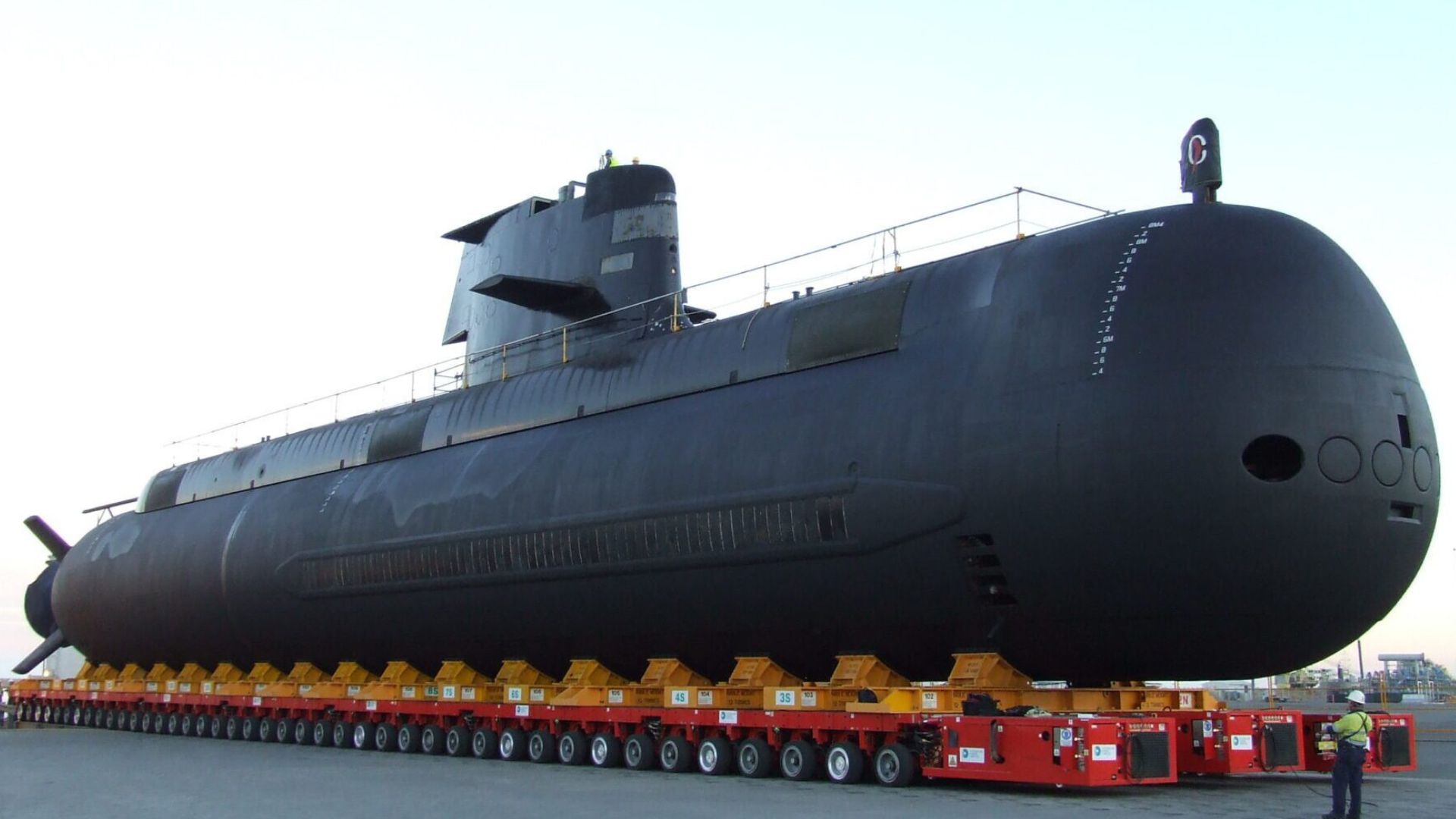
Australia is preparing to keep its aging submarine fleet operational while building a future nuclear-powered submarine force.
The focus is on extending the life of its six Collins-class submarines, a complex, resource-intensive process.
The effort is being carried out under the Collins Life-of-Type Extension (LOTE) program, also known as Project Sea 1450. The goal is to ensure these diesel-electric submarines remain capable and relevant well into the 2040s. But achieving that goal is far from simple.
Officials from the Royal Australian Navy (RAN) have openly acknowledged the scale of the challenge. Rear Admiral Stephen Hughes, Head of Navy Capability, described the situation as highly demanding. Speaking at the Indo-Pacific 2025 naval exhibition in Sydney, he explained that the navy is trying to sustain one fleet while preparing to introduce another.
READ ALSO: IIT Gandhinagar Simplifies Flexible Robot Control with Low Computation
“It’s a really complicated equation,” Hughes said.
He pointed out that around 160 to 200 Australian personnel are currently training in nuclear submarine programs in the US and the UK. “That’s like two or three Collins’ worth of people tied up in that system,” he added, while noting that the navy must still maintain its current fleet.
The Collins-class submarines have already shown signs of strain. In mid-2024, reports revealed that half of the fleet was out of service due to severe corrosion. Engineers found extensive damage on HMAS Sheean during routine maintenance. This raised concerns about the fleet’s reliability and readiness.
By late 2024, the LOTE program itself was flagged as a concern. Despite this, Hughes remained confident. He admitted the risks but stressed the navy’s ability to manage them. “Schedule is demanding, technologies are demanding, workforce is demanding,” he said. “But we are very good at managing risk in Defense.”
The RAN is now slowly recovering from a dip in submarine availability. Currently, four out of the six Collins-class submarines are operational. This improvement offers some relief, but the road ahead remains tough.
WATCH ALSO: Cartoon-like humanoid robot learns everyday kitchen chores from humans
Hughes said the life-extension program is essential to maintaining capability during the transition period. “It’s not beyond the wit of man,” he noted, suggesting the task is achievable with the right balance of workforce and industry support. However, he emphasized that success will depend on careful planning and execution.
The Australian government has committed significant funding to this effort. The Integrated Investment Program has allocated between A$4 billion and A$5 billion to keep the submarines potent and credible. Meanwhile, the Australian Submarine Agency estimates the cost could range from A$4.3 billion to A$6.4 billion.
The work will be carried out with the help of industry partners, led by the state-owned company ASC. The first submarine to undergo the life extension process will be HMAS Farncomb, with work scheduled to begin in mid-2026.
Each submarine will receive a tailored upgrade. This means the exact work will vary depending on the condition of each vessel.
READ ALSO: 850 US Tomahawk Cruise Missiles Fired: Is the Arsenal Under Pressure?
Vice Admiral Mark Hammond confirmed during a Senate Estimates hearing in October 2025 that each upgrade is expected to take around two years. However, he noted that timelines could change based on the specific needs of each submarine.
Typically, a full-cycle docking already takes about two years and can extend a submarine’s life by a decade. Defense Minister Richard Marles believes the LOTE timeline is achievable. “I do think it’s doable,” he said. “We just need to be smart and clever in how we approach it.”
Still, the program involves tough decisions. Hughes revealed that the government has been presented with different options, each involving trade-offs. “The focus is on submarine availability,” he said. “The government will need to decide what risks it is willing to accept and what it is not.”
He also stressed that a one-size-fits-all approach will not work. Each submarine will be assessed individually, and solutions will be designed to address its specific issues. “What works for one boat may not work for another,” he explained.
WATCH ALSO: Chinese humanoid robot learns to stitch detailed embroidery patterns autonomously
At the same time, Australia is preparing for its future fleet of nuclear-powered submarines under the AUKUS partnership. This adds another layer of complexity. There will be competition for skilled workers, funding, and industrial capacity.
In total, there are about ten major industrial efforts linked to Australia’s submarine plans. These include infrastructure upgrades, workforce training, and the development of new technologies. Managing all these efforts at once will put pressure on resources.
Some capability upgrades have already been ruled out. The government has decided not to equip the Collins-class submarines with Tomahawk cruise missiles. Plans to install advanced optronic mast systems from Safran have also been dropped, although the company is still expected to deliver the equipment, which will be stored for future use.
Meanwhile, Raytheon Australia continues to play a key role in maintaining the submarines’ combat systems. At Indo-Pacific 2025, the company announced a A$277 million contract extension. It will continue managing the AN/BYG-1 combat system, a role it has held for 25 years.
READ ALSO: Spain’s Indra Unlocks Ka-Band for Submarines, Changing Naval Communication
The coming years will be critical for Australia’s submarine capability. The country must keep its existing fleet operational while laying the groundwork for a new generation of submarines. It is a balancing act that requires careful coordination, strong leadership, and sustained investment.
Despite the risks, officials remain determined. Hughes summed it up with a simple but telling phrase: “We’re eating the elephant one bite at a time.”