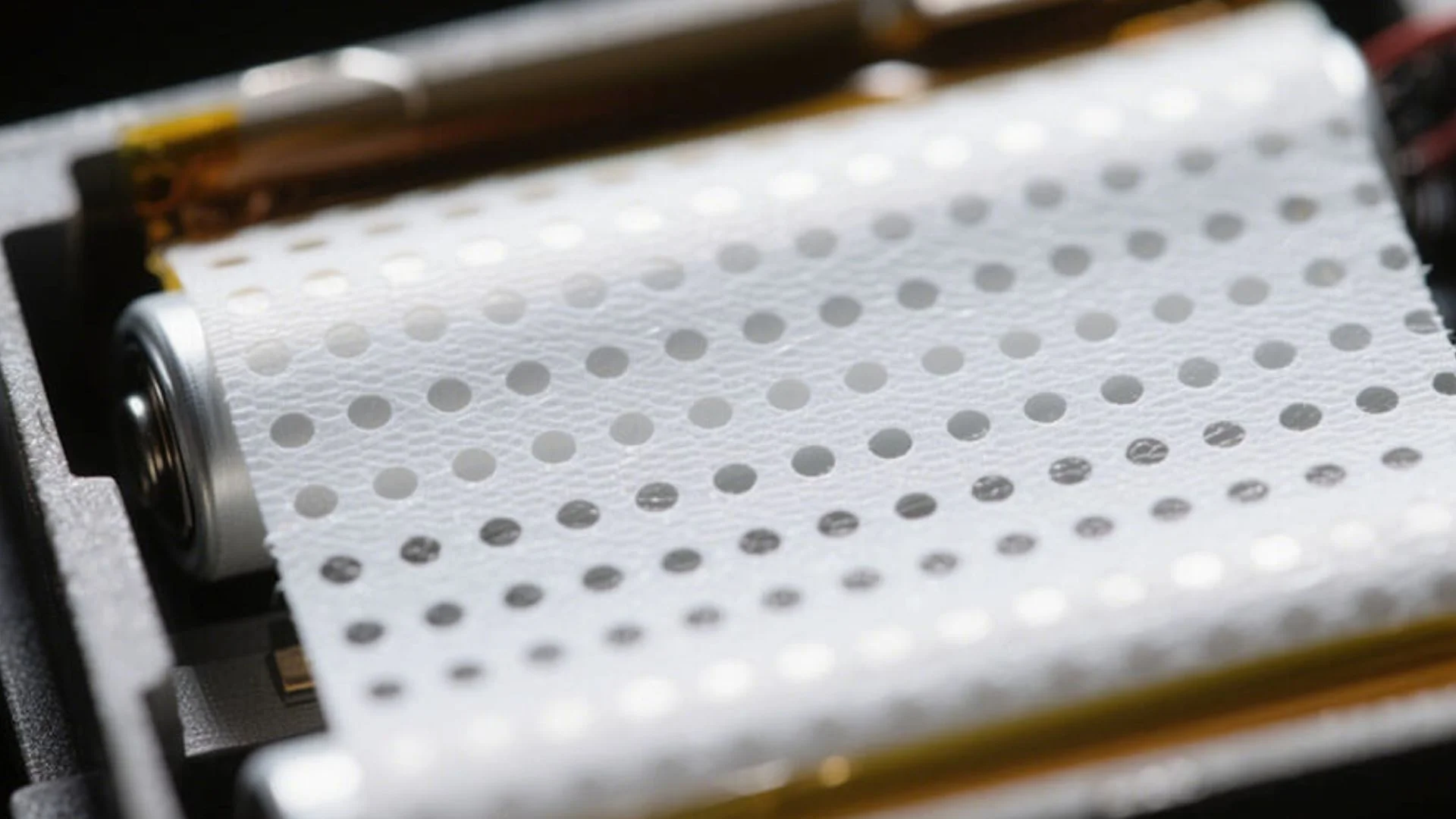
CATL, the world’s largest battery manufacturer, has officially outlined lithium-air battery technology as a key part of its long-term development strategy.
The announcement was made by CATL Chief Scientist Wu Kai during the 2026 Powering the Nation Forum, where he described lithium-air batteries as an important direction for the future of the battery industry.
The move marks the first time CATL has publicly positioned lithium-air technology at the center of its next-generation battery research plans. The company sees the technology as a pathway toward dramatically higher energy storage capacity than what is available today.
It also reflects growing competition among global battery makers seeking to develop technologies beyond current lithium-ion and solid-state systems.
Lithium-Air Batteries Higher Energy Density
Lithium-air batteries work differently from conventional lithium-ion batteries. Instead of relying on heavy metal compounds such as nickel, cobalt, and manganese to store and release lithium ions, they use lithium metal as the anode and oxygen from the surrounding air in the electrochemical reaction.
This design significantly reduces battery weight. Because the battery draws oxygen from the air, it requires fewer internal materials, thereby increasing its energy storage potential. For this reason, lithium-air systems are often referred to as breathable batteries.
According to CATL, the theoretical energy density of lithium-air batteries can reach approximately 12,000 watt-hours per kilogram (Wh/kg). That figure is close to the energy density of gasoline, which is around 13,000 Wh/kg.
Current laboratory prototypes remain far below that theoretical limit. However, some experimental lithium-air batteries have already exceeded 1,200 Wh/kg, which is more than four times the energy density of today’s mainstream lithium-ion batteries that typically operate in the 250 to 270 Wh/kg range.
READ ALSO: Riversleigh Fossil Unlocks Ancient Songbird’s Story
The figures also exceed the roughly 500 Wh/kg target often associated with future solid-state battery technologies. If these performance levels can be maintained in commercial products, electric vehicles could travel much farther between charging sessions.
Industry researchers estimate that lithium-air batteries with these characteristics could enable electric vehicle driving ranges of more than 1,600 kilometers on a single charge. Such performance would significantly change expectations for long-distance electric transportation.
Decades of Challenges Remain
Despite the promise, lithium-air batteries have faced major technical obstacles for decades. Scientists first explored the concept in the 1970s, but practical deployment proved difficult.
One challenge involves the battery’s sensitivity to moisture and carbon dioxide in the air. Exposure to these elements can interfere with battery performance and reduce reliability. Researchers have also struggled with catalyst durability, battery stability, and limited charging cycles.
Recent research progress has renewed industry interest. In 2024, a joint team from the University of Illinois Chicago, Argonne National Laboratory, and California State University, Northridge demonstrated a lithium-air battery that operated for more than 700 cycles in an air-like environment.
READ ALSO: Driving Innovation: Engineering the Next Generation of Green Race Cars
Further progress followed in 2025. Researchers from Argonne National Laboratory and the Illinois Institute of Technology reported a prototype capable of delivering approximately 1,200 Wh/kg while maintaining a lifespan of about 1,000 cycles at room temperature.
The researchers stated that the technology could support electric vehicles with driving ranges exceeding 1,600 kilometers. They also indicated that practical deployment is expected after 2030, reflecting the significant engineering work that still remains.
CATL’s Multi-Stage Battery Strategy
CATL’s latest announcement fits into a broader long-term roadmap for battery development. The company has already demonstrated its ability to commercialize emerging battery technologies through its work on sodium-ion batteries.
CATL first introduced its sodium-ion battery concept in 2020. By 2026, the technology had entered mass production and began appearing in vehicles from several Chinese automakers, including GAC, Changan, Geely, Chery, and FAW.
The company now describes a three-stage approach to future battery development. In the short term, it plans to continue improving mature battery technologies that already serve the market. In the medium term, CATL expects solid-state batteries to improve safety, performance, and user experience.
READ ALSO: Las Vegas Welcomes Zoox’s Driverless Ride-Hailing Service
For the long term, lithium-air technology represents the company’s effort to push energy storage closer to its theoretical limits. The strategy highlights CATL’s intention to remain at the forefront of battery innovation as demand for electric vehicles and large-scale energy storage continues to grow worldwide.
CATL currently leads both the global power battery and energy storage battery markets. The company held a 47 percent share of the power battery market in April 2026, while its energy storage battery shipments reached 121 gigawatt-hours in 2025, giving it a 30.4 percent global market share.
As battery makers search for technologies that deliver longer range, lower weight, and higher efficiency, lithium-air batteries are widely emerging as one of the industry’s most closely watched frontiers. The pace of progress over the coming years will help determine how quickly this concept moves from the laboratory into real-world applications.