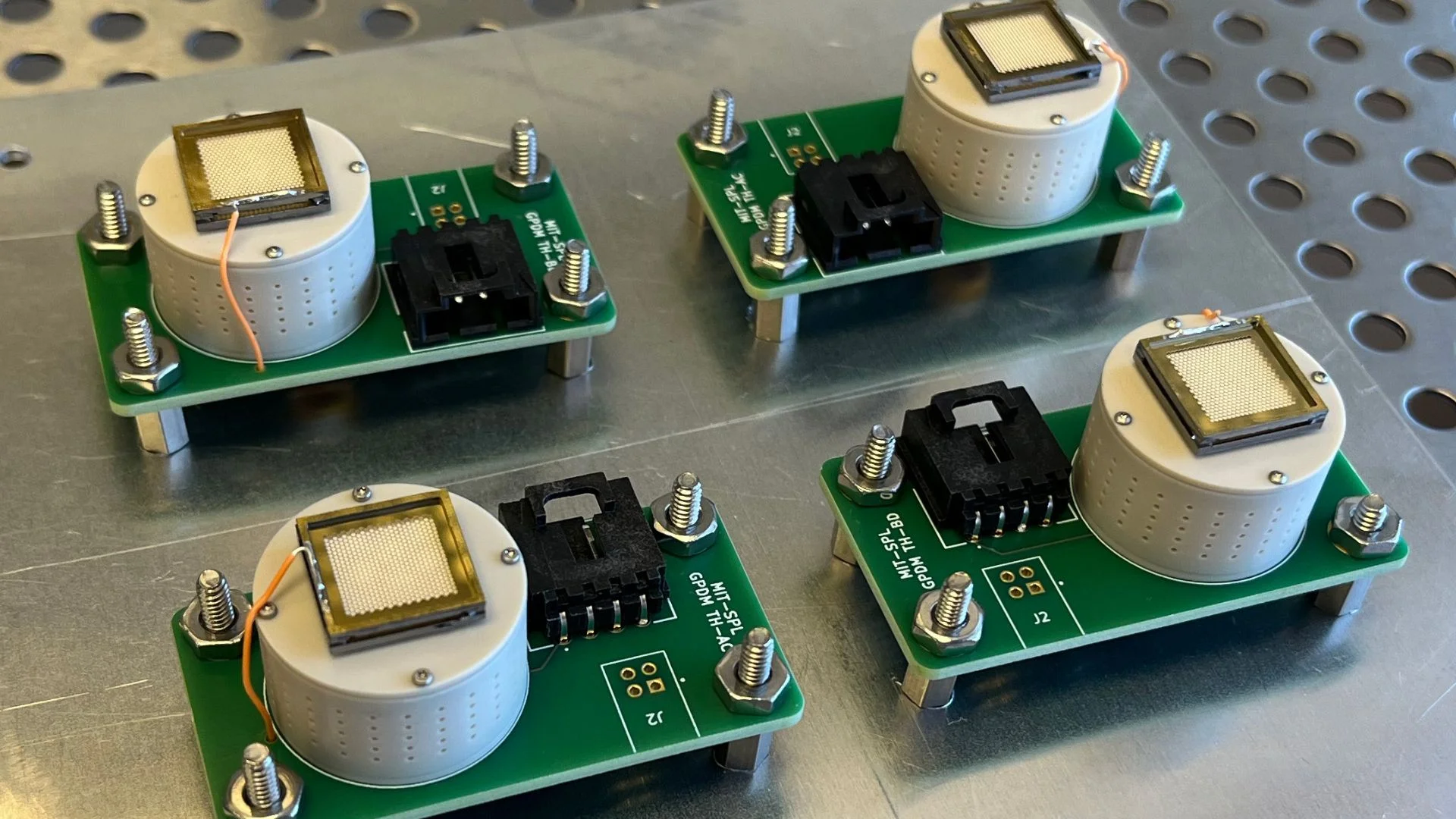
MIT engineers have successfully tested a new dual-mode propulsion system that allows small satellites to perform both rapid and highly precise maneuvers using a single fuel source.
The technology combines chemical and electric propulsion into a single compact package, reducing complexity and saving valuable space on spacecraft.
The development is expected to expand CubeSats capabilities and support more ambitious space missions beyond Earth orbit.
MIT Tests Shared Propellant System
Small satellites are important for scientific research, Earth observation, and deep-space exploration. However, their limited size restricts the amount of equipment and fuel they can carry. Engineers have long searched for ways to make these spacecraft more capable without increasing their size.
Researchers at the Massachusetts Institute of Technology (MIT) have now demonstrated a solution. They successfully tested a propulsion system that combines two different types of space engines using a single propellant.
READ ALSO: “Innovative fuel cell recycling transforms ‘forever chemicals’ into sustainable materials”
The system brings together chemical thrusters and electric electrospray thrusters. Traditionally, these technologies require separate fuel systems, which add weight and take up valuable space inside a satellite.
Chemical thrusters generate powerful bursts of force. They are useful for rapid maneuvers, such as changing orbit, adjusting speed, or quickly repositioning a spacecraft.
Electric thrusters work differently. They produce less thrust but use fuel far more efficiently, making them ideal for long-duration missions and precise navigation.
By combining both propulsion methods into one package, engineers aim to give small satellites greater flexibility. The approach allows spacecraft to switch between high-power maneuvers and fuel-efficient operations as needed.
Amelia Bruno, lead author of the study and a former MIT postdoctoral researcher, said the system combines the advantages of both technologies. She explained that integrating chemical and electric propulsion into a compact package opens new possibilities for smaller and less expensive spacecraft.
The findings were published in the Journal of Propulsion and Power. The research was conducted by Bruno, Professor Paulo Lozano, and doctoral researcher Matthew Corrado.
READ ALSO: The “Spacecraft Speedometer” is a novel and cutting-edge method for monitoring satellite movement.
How The New Space Fuel Works
The key element behind the new propulsion system is a special fuel known as Advanced SpaceCraft Energetic Non-Toxic propellant(ASCENT).
ASCENT was originally developed by the US Air Force as a safer alternative to hydrazine. Hydrazine has been widely used in spacecraft for decades, but it is highly toxic and requires careful handling.
Unlike hydrazine, ASCENT is considered a greener propellant. It reduces safety risks during spacecraft assembly and fueling operations.
What makes ASCENT especially valuable is its chemical structure. It belongs to a class of materials called ionic liquids, which are salts that remain liquid over a wide range of conditions.
Ionic liquids are particularly attractive for electric propulsion systems. They contain large numbers of charged particles that can be accelerated using electric fields.
MIT researchers realized that ASCENT’s ionic liquid properties made it a strong candidate for electrospray propulsion. This prompted the team to investigate whether the same fuel could power both chemical and electric engines.
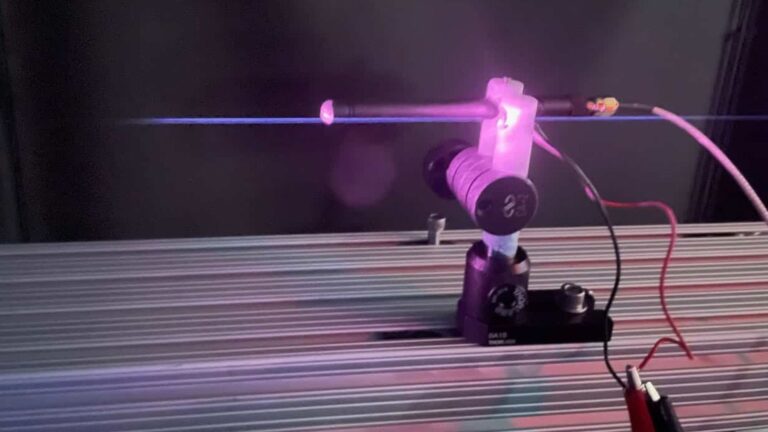
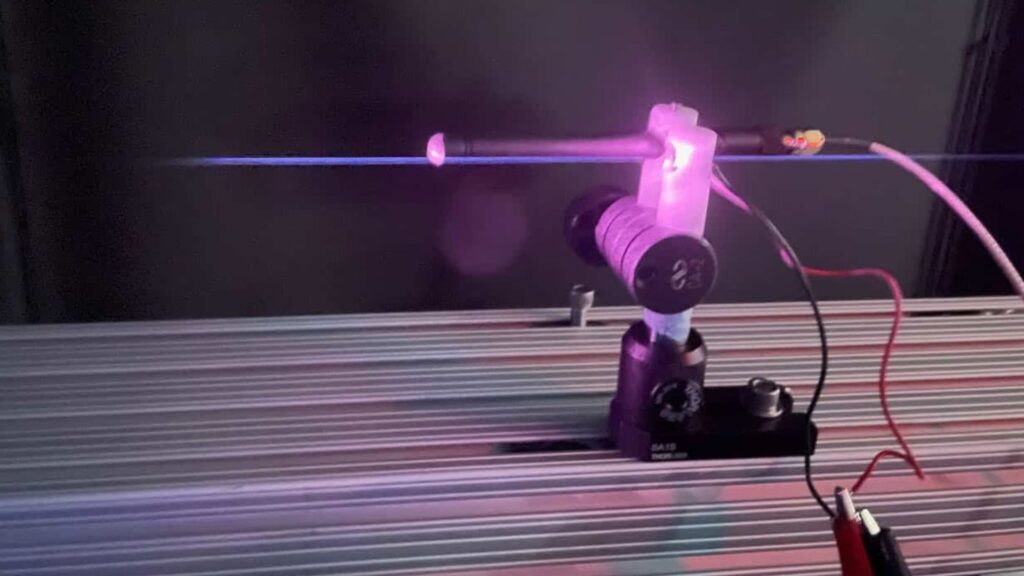
Electrospray thrusters are extremely small. Many are only about the size of a thumbnail, making them well-suited for compact spacecraft.
These thrusters operate by applying electrical voltage to a liquid propellant. The electric field pulls charged particles from the liquid and ejects them into space, creating thrust.
Although the force generated is small, electrospray thrusters consume very little fuel. This allows spacecraft to perform precise adjustments over long periods.
WATCH ALSO: Chinese robotic company Unitree has unveiled its new humanoid robot H2
The technology is particularly useful for missions requiring careful navigation. It also helps satellites maintain their position while using minimal propellant.
Successful Tests And Future Missions
To evaluate ASCENT’s performance, MIT researchers conducted a series of experiments using electrospray thrusters. Each thruster was connected to a small fuel reservoir roughly the size of a Lego brick.
The researchers loaded each reservoir with one gram of ASCENT. The liquid has a consistency similar to baby oil, making it suitable for controlled testing.
The thrusters were mounted on opposite sides of a CubeSat test platform. The spacecraft model was then placed on a magnetic levitation system inside a vacuum chamber designed to simulate space conditions.
During testing, engineers remotely supplied varying voltages to the thrusters. As charged particles were expelled, the CubeSat began rotating like a spinning top.
The team carefully measured thrust levels and fuel efficiency throughout the experiments. Some tests continued for as long as 100 hours.
Results showed that ASCENT successfully powered the electrospray thrusters. The fuel delivered performance comparable to conventional ionic liquid propellants already used in electric propulsion systems.
Researchers found that thrust levels remained competitive with existing electrospray fuels. This confirmed that ASCENT can serve both propulsion roles without sacrificing effectiveness.
WATCH ALSO: India’s indigenous Zorawar light tank has fired an anti-tank guided missile
The successful tests represent an important milestone for small satellite design. A single fuel tank can now potentially support both rapid and precision maneuvers.
This configuration eliminates the need for multiple fuel storage systems. The result is a simpler spacecraft architecture that saves space and reduces overall weight.
MIT is already preparing to demonstrate the technology in orbit. The team is working with NASA on the Green Propulsion Dual Mode mission.
The mission involves a CubeSat approximately the size of a briefcase. It will carry one chemical thruster and four electrospray thrusters powered by the same propellant tank.
According to the researchers, this will be the first satellite to use a shared propellant system for both chemical and electric propulsion. The mission is scheduled for launch in November.
The technology has implications far beyond Earth orbit. Small satellites equipped with dual-mode propulsion could travel to destinations such as Mars or the asteroid belt while remaining affordable.
During long journeys, spacecraft could rely on efficient electrospray thrusters to conserve fuel. Upon arrival, chemical thrusters could provide the rapid maneuvers needed to investigate specific targets.
The concept also offers advantages for missions closer to Earth. Weather monitoring, climate observation, and Earth-imaging satellite constellations could benefit from greater mobility and responsiveness.
READ ALSO: Air Force and DARPA Partner to Speed Up Cyber Defense Innovation
Operators would be able to quickly reposition satellites when needed. They could also perform slow, fuel-efficient adjustments during routine operations.
As space agencies and commercial operators continue to deploy larger numbers of small satellites, propulsion efficiency is becoming increasingly important. MIT’s dual-mode propulsion system provides a practical path toward more capable spacecraft without increasing their size.
If the upcoming NASA mission confirms the technology’s performance in orbit, shared-propellant propulsion systems could become a key feature of future CubeSats, enabling smaller spacecraft to take on missions that were once reserved for much larger satellites.