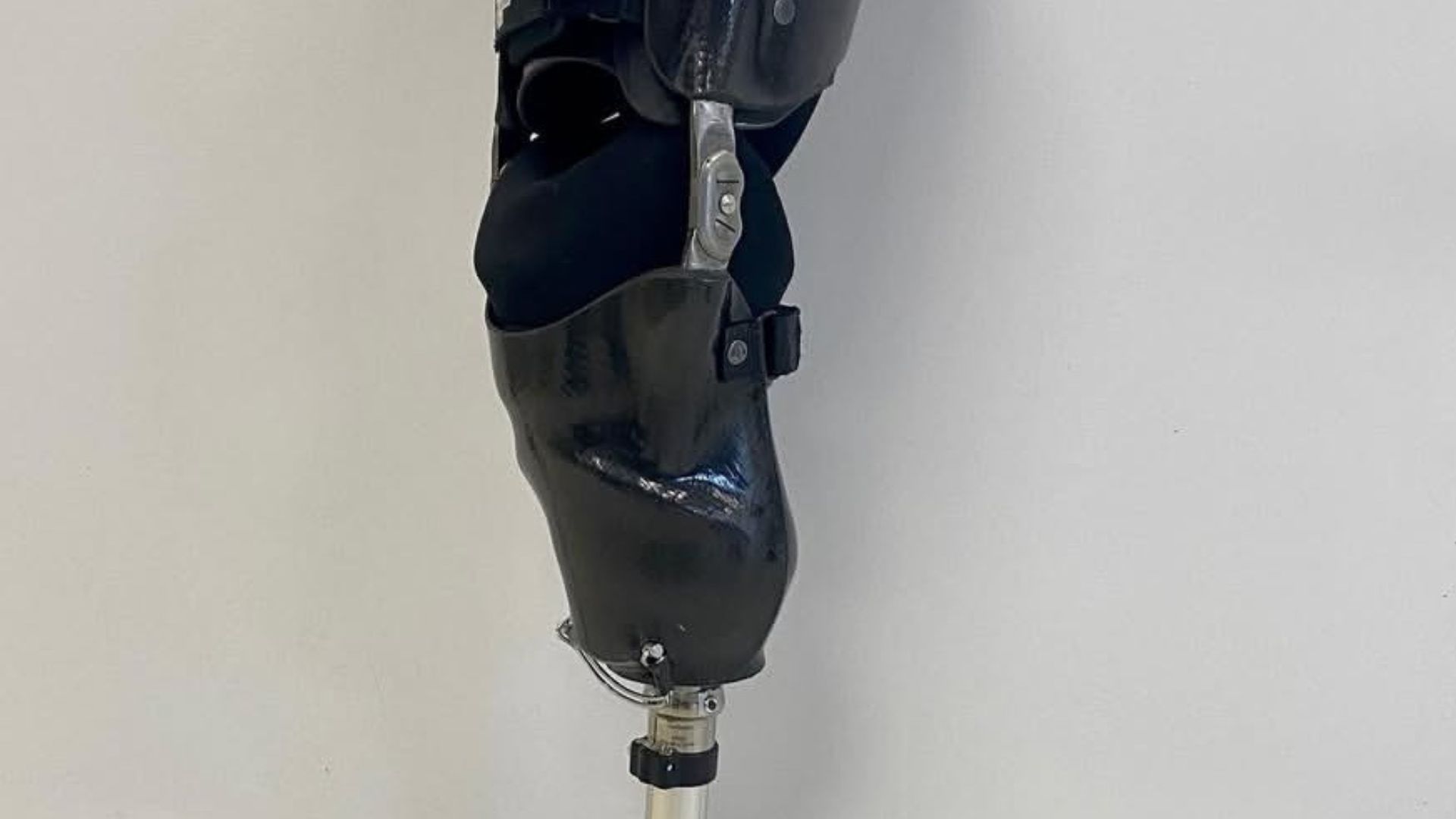
Researchers at Simon Fraser University (SFU) have developed a new type of prosthetic socket using 3D printing and artificial intelligence.
The innovation could significantly improve comfort and performance for people who use artificial limbs.
The new design allows prosthetic sockets to be fully customized for each patient. By combining pressure-mapping sensors, AI software, and lightweight 3D-printed structures, the system creates prosthetic sockets that better meet the needs of individual users.
Experts say the technology could reshape the prosthetics industry by making artificial limbs lighter, more breathable, and more comfortable to wear for longer periods.
READ ALSO: https://modernmechanics24.com/post/durapatcher-technology-pothole-crisis/
Traditional prosthetic sockets are usually created using a cast or digital scan of the remaining limb. While these methods accurately capture the shape of the limb, they often fail to measure how pressure and force are distributed during daily movement.
To address this challenge, the research team designed a special silicone liner with embedded pressure sensors. The liner contains a miniature 3D-printed pressure-sensing mat made with tiny origami-style sensors.
During testing, a participant wore the liner inside a temporary prosthetic socket while performing common movements. These included standing, walking on flat ground, walking down a ramp, and leaning in different directions.
The sensors recorded detailed data about how pressure and force were applied to the limb during these activities.
The collected pressure data was processed using custom artificial intelligence software. The AI then designed a prosthetic socket tailored to the user’s pressure patterns.
The final socket was produced using 3D printing technology and a special lattice structure known as a Gyroid infill. This design uses repeating geometric patterns similar to structures found in nature, such as honeycombs or the internal structure of bones.
Researchers say this lattice structure makes the prosthetic socket both lightweight and strong, while also improving airflow and flexibility.
WATCH ALSO: https://modernmechanics24.com/wp-content/plugins/feeds-for-youtube/img/lightbox-placeholder.png
Testing showed that the new socket design can absorb much more energy than traditional solid-infill prosthetic sockets.
According to the study, the lattice-based socket absorbed 1,600 percent more energy while standing and 1,290 percent more while walking than conventional designs.
This increased energy absorption helps reduce pressure on the residual limb. As a result, it may lower the risk of common health problems faced by prosthetic users.
Improved energy absorption can help reduce complications such as skin ulcers, pain, instability, musculoskeletal strain, and osteoarthritis.
Woo Soo Kim, professor at SFU’s School of Mechatronic Systems Engineering and lead researcher of the study, said the new system offers a major advancement in prosthetic design.
“For the first time, this technology captures unique pressure and force distribution from each patient and uses that data to design a customized prosthetic socket,” Kim said.
He added that the result is a lighter, more breathable, and pressure-responsive prosthetic device.
The project involved collaboration with Hodgson Group Orthotics and Prosthetics, which helped evaluate the technology in real clinical settings.
READ ALSO: https://modernmechanics24.com/post/epic-fury-claude-ai-role-iran-strikes/
Prosthetist Loren Schubert said the system shows how data-driven design can improve prosthetic care.
“This approach can greatly improve prosthetic fit, comfort, and long-term skin health,” Schubert said.
Orthotist Carl Ganzert said the technology could make prosthetic devices more accessible.
“Innovative and customizable solutions like this could reshape the future of prosthetic sockets and improve the daily lives of patients,” Ganzert said.
The research team hopes the combination of pressure-mapping sensors, AI-assisted design, and 3D printing will make prosthetic devices more affordable and widely available.
By simplifying manufacturing and improving customization, the technology could help prosthetic companies deliver better solutions to people living with limb loss.