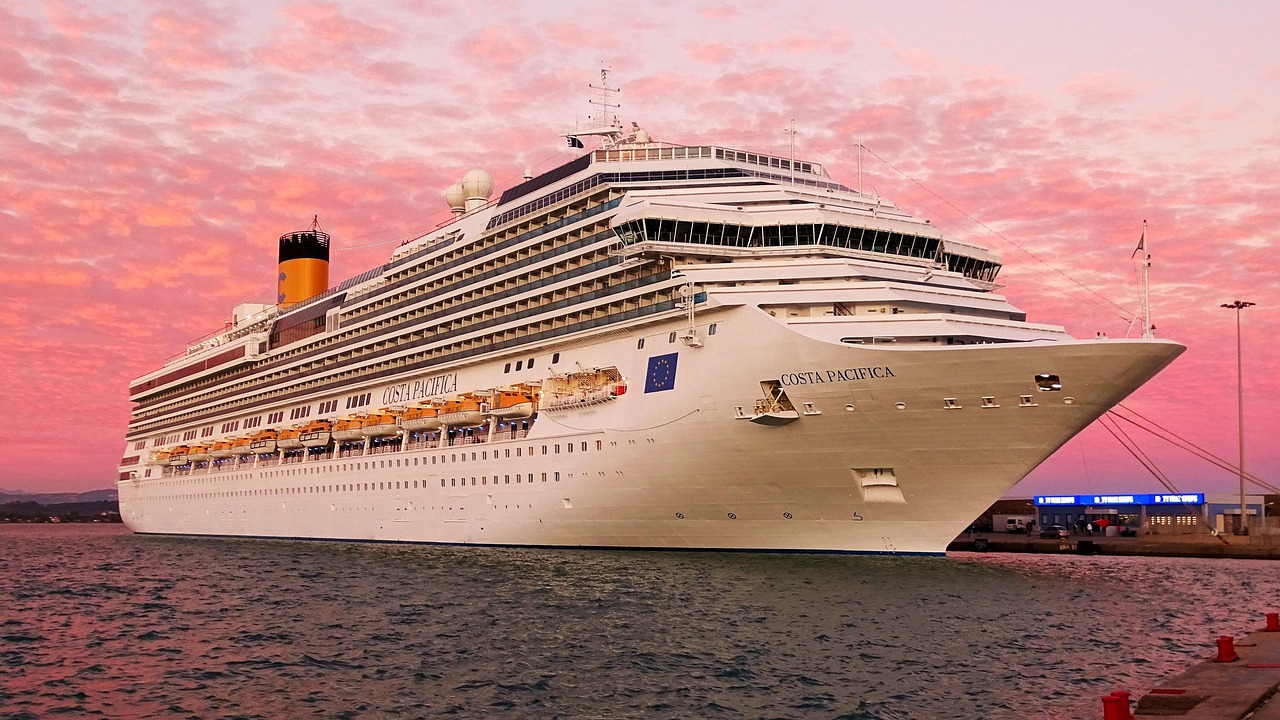
Texas A&M University engineers have unveiled an AI-powered collision avoidance system designed to tackle the complex web of human error and physics that leads to disastrous ship accidents. Led by Dr. Mirjam Fürth, an assistant professor in the Department of Ocean Engineering, the SMART-SEA system uses raw radar and machine learning to act as a real-time advisor for mariners, providing crucial extra seconds for evasive action.
If you think a highway pile-up is bad, imagine the catastrophic force of two supertankers colliding. These aren’t rare events; a quick search reveals a grim catalog of maritime mishaps. The stakes are astronomically high, and as Dr. Mirjam Fürth notes, the root cause is often tragically simple: “Many of these collisions are caused by human error.” But fixing it isn’t simple at all. Building a system for a 100,000-tonne ship is a world away from programming a self-driving car.
The challenge is a perfect storm of limitations. A fully laden cargo ship can take miles to stop, even at full reverse. Turning isn’t intuitive—the stern swings out first, potentially swapping one hazard for another. Add in shallow-water “squat” effects, radar blind spots, fierce currents, and howling gales, and the captain’s bridge becomes a high-pressure puzzle where one wrong solution can be fatal. It’s this extreme environment that the SMART-SEA project, reported by New Atlas, is built to assist.
READ ALSO: https://modernmechanics24.com/post/worlds-largest-ice-snow-theme-park-china/
Developed under a contract with the U.S. Department of the Interior (DOI) and the U.S. Department of Energy (DOE), the system takes a “human-in-the-loop” approach. It doesn’t seek to replace the captain but to become an unparalleled co-pilot. Its key advantage is using raw radar data instead of relying solely on processed signals from the Automatic Identification System (AIS). This allows it to “see” stationary and moving objects in all weather conditions, a critical capability when buoys, reefs, or even other ships might not be broadcasting their position.
Where SMART-SEA gets truly smart is in its application of machine learning. The AI classifies hazards and, crucially, learns the unique behavior of the ship it’s on. It builds a hybrid-physics-AI model that accounts for how winds and currents specifically affect that vessel’s handling. This real-world understanding is fused with a tiered logic system built from the hard-won experience of professional mariners, ensuring its advice aligns with seasoned seafarer intuition.
WATCH ALSO: https://modernmechanics24.com/post/transform-home-life-with-1x-neo-robot-1/
The system’s brain uses a Modified Velocity Obstacle (VO) algorithm paired with an Asymmetric Grey Cloud (AGC) model to assess risks. It continuously calculates the safest evasion path that also complies with the international rules of the sea, known as COLREGs. This isn’t about overriding the crew but providing a clear, data-driven recommendation during those critical, high-stress moments when seconds count.
The research, published in the journal Process Safety and Environmental Protection, represents a significant shift from pursuit of full autonomy to augmented intelligence. For Dr. Fürth and her team at Texas A&M, the goal is pragmatic: leverage data to give seafarers a superior toolkit. In an industry where the physical laws are unforgiving, this AI co-pilot aims to turn the tide, offering a digital lifeline that could prevent the next major maritime disaster.
READ ALSO: https://modernmechanics24.com/post/duke-energy-files-nuclear-permit-nc/