A new method for treating wastewater sludge is showing promising results, turning waste into clean energy while cutting costs. Researchers have found a way to significantly increase the production of renewable natural gas and reduce the expense of sludge disposal.
The findings, published in the Chemical Engineering Journal, point toward a more efficient and sustainable future for wastewater treatment.
The study focused on improving the processing of sewage sludge in wastewater treatment plants. These facilities are essential for cleaning water, but they consume large amounts of electricity.
In fact, they account for about 3% to 4% of total electricity use in the US. For many small communities, wastewater plants are the single largest electricity user. At the same time, their operations release around 21 million metric tons of greenhouse gases every year.
READ ALSO: US Navy’s Long-Stalled 6th-Gen F/A-XX Stealth Fighter Heads Toward August Call
To address these challenges, researchers introduced a new pretreatment step before the standard anaerobic digestion process. This traditional process uses microbes to break down waste and produce biogas.
However, it is not very efficient. It struggles to fully break down complex materials in sludge, leaving behind large amounts of biosolids. These leftovers often end up in landfills.
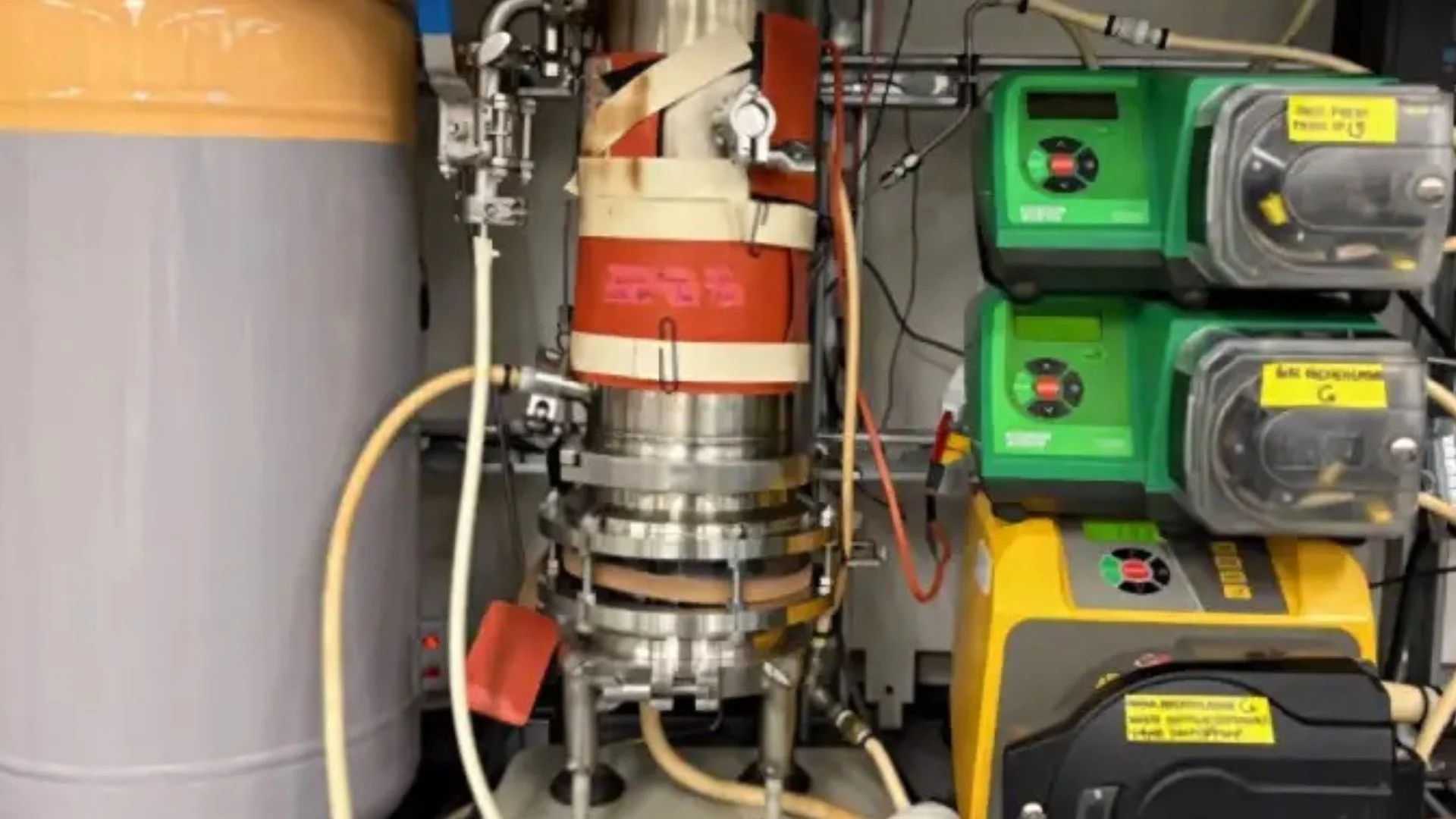
The new approach changes that. Scientists treated the sludge under high temperature and pressure while adding a small amount of oxygen. This step helps break down long and complex molecules into simpler forms. As a result, the material becomes easier for microbes to digest in the next stage.
The impact of this pretreatment was clear. The researchers reported a 200% increase in renewable natural gas production compared to current methods.
WATCH ALSO: World’s first motorbike backflip between two moving trucks successfully completed
At the same time, the cost of treating the sludge dropped sharply, from $494 per ton of dry solids to $253. This means communities could save money while producing more usable energy.
The renewable natural gas produced through this method is also of high quality. It can be used in the same way as traditional natural gas for generating electricity, heating homes, or powering vehicles. But unlike fossil fuels, it has a much lower impact on the climate.
A key part of the process is a special bacterial strain discovered by the research team. This microbe plays a major role in upgrading the biogas. It converts carbon dioxide and hydrogen into methane, which is the main component of renewable natural gas. The result is a 99% pure methane gas, making it suitable for direct pipeline use.
Professor Birgitte Ahring, who led the study, highlighted the technology’s value. She said the process can convert up to 80% of sewage sludge into a useful product. She explained that if the same method works on other organic waste, it could become a highly efficient waste treatment solution worldwide.
READ ALSO: Laser from Supercarrier USS George H.W. Bush: US Navy Tests Drone-Killer LOCUST
Ahring also praised the bacterial strain used in the process. She described it as strong and easy to maintain. According to her, the microbe does not need special care or additional materials to function well. It can work effectively with minimal input, making the system simpler and more cost-effective.
The research team included experts from Washington State University, Pacific Northwest National Laboratory, and Clean-Vantage LLC, a clean technology company. Together, they developed and tested the integrated system, combining advanced pretreatment with biological gas upgrading.
The team has already taken steps toward real-world use. They have patented the bacterial strain and are working with an industrial partner to scale up the technology. Their goal is to move from pilot studies to larger projects that can be used in actual wastewater treatment plants.
This new method offers a fresh perspective on waste. Instead of seeing sewage sludge as a problem, it becomes a valuable resource. By improving how it is processed, communities can reduce pollution, save money, and produce clean energy simultaneously.
WATCH ALSO: World’s first motorbike backflip between two moving trucks successfully completed
The approach also supports the idea of a circular bioeconomy, where waste materials are reused to produce useful products. By maximizing energy recovery and reducing leftover waste, the system creates a more sustainable cycle.
As cities continue to grow and energy demand rises, solutions like this could play an important role. They offer a way to manage waste more effectively while contributing to cleaner energy systems.
In simple terms, this research shows that something often seen as useless can become a powerful resource. With the right technology, even sewage sludge can help power the future.