Earth’s liquid outer core changed direction beneath the Pacific Ocean in 2010, according to a new scientific study by the European Space Agency(ESA).
Researchers used satellite data and magnetic field measurements collected over nearly three decades to identify the shift. The discovery offers fresh insight into the hidden processes taking place deep inside Earth.
The study was published in the Journal of Studies of Earth’s Deep Interior. Scientists analyzed data gathered between 1997 and 2025 from several space missions and ground observatories. The research focused on the movement of molten iron inside Earth’s outer core.
Earth’s outer core lies around 2,200 kilometers beneath the surface. It is made mostly of liquid iron and nickel that constantly move around the solid inner core. These movements create Earth’s magnetic field through a process known as the geodynamo.
For decades, scientists believed large-scale flows in the outer core mainly moved westward in a stable pattern. The new study found that this pattern suddenly changed under the equatorial Pacific region. A broad area of molten iron switched from moving weakly westward to flowing strongly eastward.
READ ALSO: China Launches Its First Domestic Racing Fuel Xpower103 at 2026 Taklimakan Rally
Researchers still do not know what triggered the reversal. The change happened deep inside Earth, where direct observation is impossible. Scientists instead rely on magnetic field measurements to understand what is happening below the surface.
ESA Swarm Tracked Earth’s Core
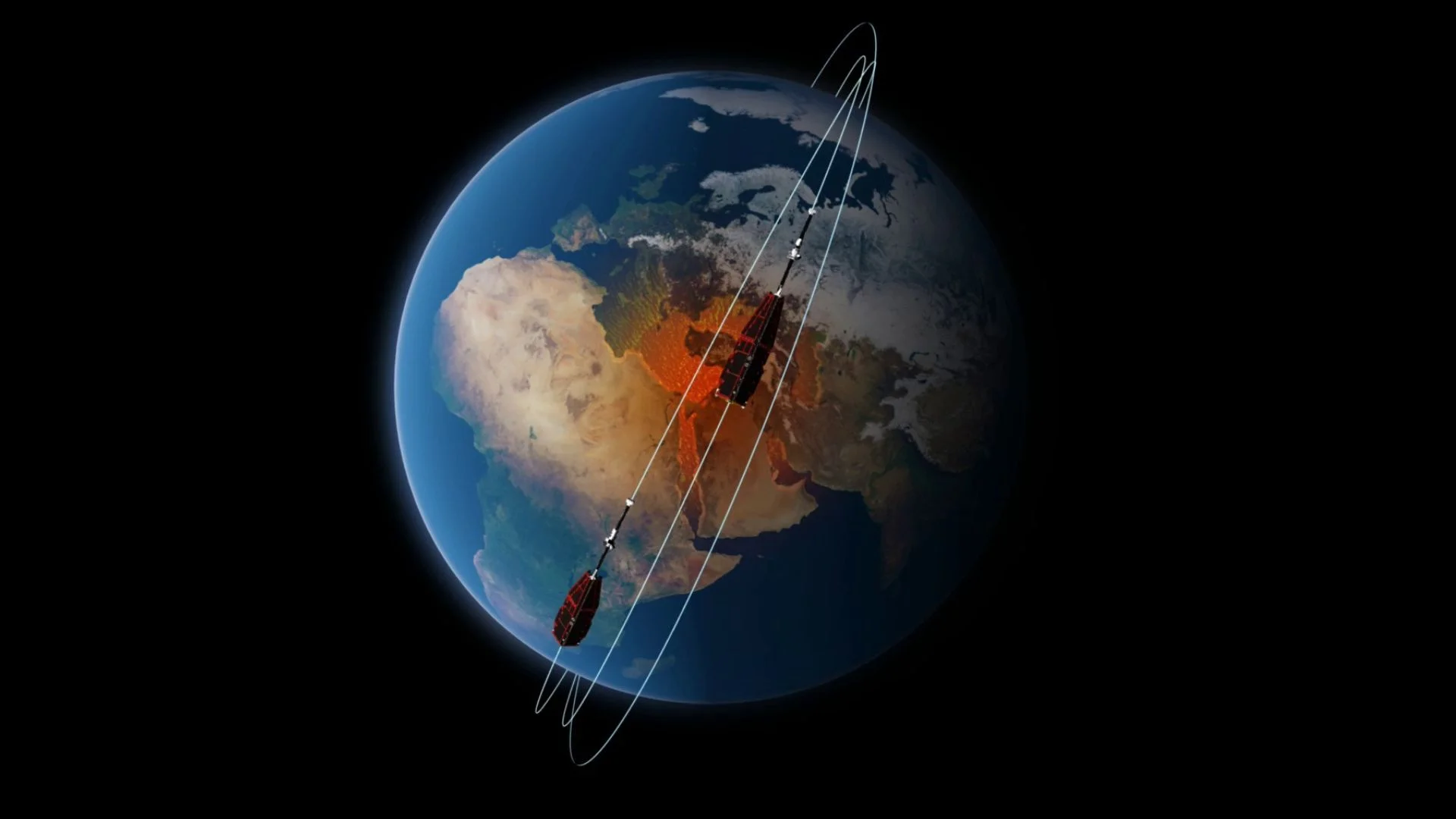
The research used information from several satellite missions, including the European Space Agency Swarm mission. Scientists also studied data from the CryoSat, CHAMP, and Ørsted missions. These satellites helped researchers monitor subtle changes in Earth’s magnetic field over time.
Launched in 2013, the Swarm mission includes three satellites orbiting Earth together. Each satellite carries highly sensitive instruments that measure tiny variations in the magnetic field. This allows scientists to separate signals from Earth’s core from those from oceans, rocks, or the atmosphere.
The magnetic field acts like an invisible shield around Earth. It protects the planet from charged particles coming from the sun. Without it, satellites, power systems, and communication networks would be far more exposed to harmful solar radiation.
Scientists say the long-term satellite record was essential for detecting the reversal. Ground observatories alone cannot provide complete global coverage. Satellites continuously scan the entire planet and capture detailed changes over many years.
Lead author Frederik Dahl Madsen said the reversal raises major questions about Earth’s deep interior. He explained that scientists now want to know whether the shift was temporary or part of a repeating cycle. Researchers are also studying whether the new flow pattern could become stable over time.
WATCH ALSO: Microsoft delivers first large scale production cluster with more than 4,600 NVIDIA GB300 NVL72
Madsen said computer models suggest the strong eastward flow has weakened since 2020. Scientists believe the event may already be slowing down after peaking several years ago. That pattern suggests the reversal might be part of a longer natural oscillation within Earth.
The study also identified wave-like accelerations inside the outer core. These fast-moving structures were hidden in older and less detailed datasets. Satellite technology helped researchers uncover these rapid changes with greater precision.
Earth’s Inner Core Connection Raises New Questions
Researchers noticed that the reversal happened during a period of unusual behavior in Earth’s inner core. Geodesy and seismic studies previously detected changes in the inner core around the same time. Scientists now suspect the two events could be connected.
Earth’s inner core is a solid metal sphere located at the planet’s center. It is surrounded by the liquid outer core, where molten iron constantly circulates. Interactions between these layers influence Earth’s magnetic field and overall planetary dynamics.
Scientists are also examining links between the outer core and Earth’s lower mantle. The lower mantle sits above the core and transfers heat from deep inside the planet. Changes in temperature or pressure at the core-mantle boundary can affect the movement of molten iron.
According to ESA Swarm Mission Scientist Elisabetta Iorfida, the discovery challenges long-standing assumptions about core circulation. She said scientists once believed the outer core moved in a mostly steady westward direction. The Pacific reversal now shows that rapid regional changes can happen within just a decade.
Researchers say understanding these processes matters beyond basic science. Earth’s magnetic field slowly changes over time as the core evolves. These shifts can influence navigation systems, satellites, aviation routes, and space weather forecasting.
Changes in magnetic fields also affect modern technologies that depend on accurate positioning systems. Airlines, ships, and military operations rely heavily on magnetic navigation data. Scientists, therefore, closely monitor geomagnetic changes to improve forecasting models.
The study also linked the reversal to a geomagnetic jerk detected in 2017. A geomagnetic jerk is a sudden change in the behavior of Earth’s magnetic field. These events provide clues about rapid motion happening deep inside the planet.
READ ALSO: US Navy Equips Nine Destroyers With Operational Laser Weapon Systems to Counter Drone Threats
Why Earth’s Outer Core Matters
Earth’s magnetic field is one of the planet’s most important natural defense systems. It protects the atmosphere from being stripped away by solar particles. Scientists believe this shield has helped Earth remain habitable for billions of years.
Unlike a fixed structure, the magnetic field constantly changes shape and strength. Some regions weaken while others become stronger over time. These changes reflect the turbulent movement of liquid metal deep below Earth’s surface.
Researchers say the Pacific reversal proves Earth’s interior is more dynamic than previously believed. The finding also highlights the growing importance of satellite missions in studying the planet. Modern spacecraft can now monitor deep-Earth processes that were once impossible to observe in detail.
ESA officials said long-term missions like Swarm remain key for future research. Continuous monitoring will help scientists determine whether the eastward flow continues to weaken or changes direction again. Future observations may also reveal stronger links between Earth’s outer core, inner core, and mantle.
Scientists stress that the reversal poses no direct danger to people or the climate. However, it provides a rare glimpse into the forces shaping Earth from deep below the surface. The discovery is expected to guide future studies on planetary magnetism and the long-term evolution of Earth’s interior.