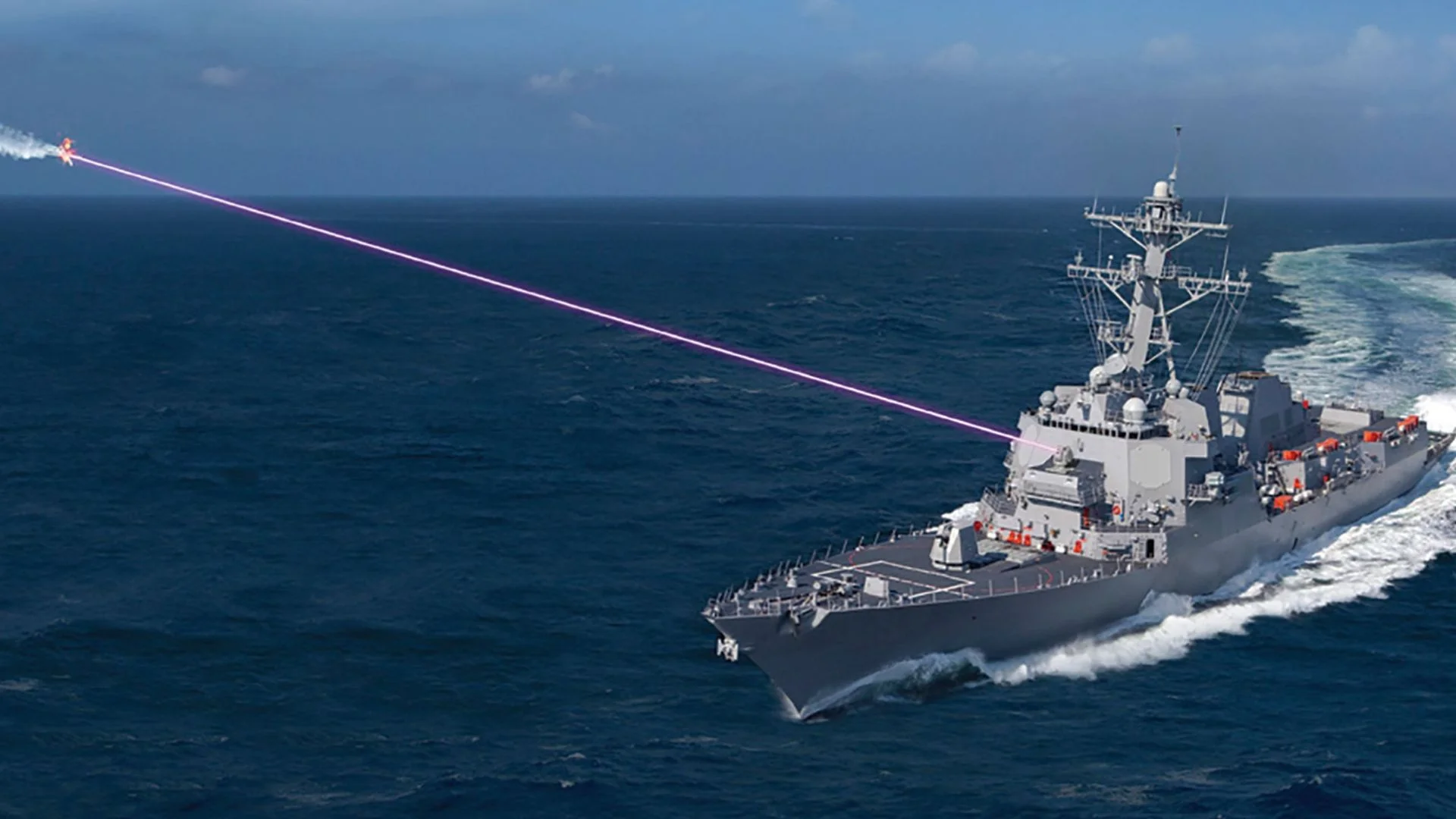
The US Navy has equipped nine destroyers with operational laser weapon systems as part of a wider effort to modernize naval warfare.
These systems are now active on frontline warships operating across multiple regions. The deployment marks one of the Navy’s largest operational uses of directed energy technology to date.
Laser Weapon Defends Destroyers
Laser weapons have long been discussed as a future solution for missile defense and drone warfare. Over the last decade, the technology has moved from experimental testing to active fleet deployment. Navy officials now see these systems as an important layer in modern ship defense.
The growing use of drones and low-cost missiles has forced militaries to rethink traditional naval combat. Advanced interceptors and missiles are effective but expensive to use repeatedly against cheaper threats. Laser systems offer a reusable option with a far lower cost per engagement.
Recent military operations have increased pressure on US weapons stockpiles. Conflicts in the Middle East and the war in Ukraine have highlighted the heavy demand for missiles and air defense systems. The Navy now wants additional defensive tools that reduce dependence on traditional munitions.
READ ALSO: ISS Astronauts See 16 Sunrises Daily as Orbital Life Forces a Redesign of Human Routines
American destroyers already carry powerful missile systems through their Vertical Launch System cells. However, these missile cells can only hold a limited number of weapons during combat deployments. Reloading them also requires access to specialized ports and support facilities.
Laser systems work differently because they rely on electrical power instead of physical ammunition. As long as the ship can generate enough power, the system can continue operating. This gives warships a deeper defensive capacity during long deployments.
The Navy confirmed that directed energy systems are currently installed on nine surface combatants. Officials also stated that further testing and expansion efforts are underway across the fleet. The service continues to evaluate how these systems perform during real operational missions.
The Navy currently operates two major laser weapon systems aboard destroyers. The first is the Optical Dazzling Interdictor, Navy(ODIN). The second is the more powerful High Energy Laser with Integrated Optical Dazzler and Surveillance System (HELIOS).
ODIN Laser Upgrades Destroyers
ODIN is designed primarily as a defensive dazzler weapon. Instead of physically destroying targets, it disrupts sensors and optical systems used by enemy drones and incoming weapons. This interference can confuse or blind the target, reducing its ability to strike accurately.
The system is especially useful against drones carrying electro-optical or infrared guidance systems. ODIN can also interfere with surveillance equipment used by enemy ships, aircraft, submarines, and unmanned systems. This gives destroyers additional protection against reconnaissance operations near naval task forces.
The Navy initially installed ODIN systems on eight Arleigh Burke-class destroyers. One unit was later transferred from USS Kidd to a training center in California for further development and operator instruction. USS Kidd is currently undergoing a long maintenance period in Washington state.
READ ALSO: Robotics Push: Hyundai Plans 25,000 Atlas Robots Across US Factories by 2028
Several ODIN-equipped destroyers are already deployed in strategically important regions. USS Spruance and USS John Finn are operating in areas connected to ongoing tensions involving Iran. These ships are supporting US operations across the Indian Ocean and nearby waters.
Another destroyer, USS Gridley, is currently escorting the aircraft carrier USS Nimitz during its movement to a new homeport in Norfolk. The remaining ODIN-equipped destroyers are stationed in San Diego and Yokosuka, Japan. These deployments deploy laser-equipped ships to key operational areas across the Pacific and the Middle East.
The Navy has not confirmed whether these laser systems were used during recent combat operations. Officials declined to discuss operational details linked to Iranian threats in the region. However, the presence of laser-equipped destroyers near active conflict zones highlights their growing military importance.
HELIOS Laser Expands Naval Warfare
The Navy’s most advanced operational shipboard laser is HELIOS. This system is currently installed on USS Preble, an Arleigh Burke-class destroyer based in Yokosuka, Japan. Unlike ODIN, HELIOS is designed to physically damage and destroy certain targets.
HELIOS is a 60-kilowatt-class laser weapon integrated directly into the Aegis Combat System. The system can shoot down small drones and damage fast-attack boats by focusing intense energy on the target. It also retains many of the dazzling features of the ODIN system.
The integration with Aegis gives HELIOS an important advantage. The destroyer’s sensors and combat systems can track threats and coordinate responses more efficiently. This creates a more unified defensive network aboard the ship.
WATCH ALSO: Tesla’s Optimus humanoid robot steals spotlight at ‘Tron: Ares’ premiere
During a public demonstration last year, USS Preble successfully disabled four incoming drones using HELIOS. The test showed the Navy’s progress in turning directed energy concepts into operational capabilities. Funding for additional testing and maintenance has already been included in the latest defense budget plans.
Defense companies and Navy researchers are also working on stronger laser systems. Lockheed Martin has previously discussed increasing HELIOS output to around 150 kilowatts. Higher power levels could improve range and allow the system to engage larger and faster threats.
The Navy is also testing several experimental laser projects beyond destroyers. Earlier demonstrations included laser systems aboard USS Portland and laser trials launched from an aircraft carrier. These projects help researchers study how directed energy performs under real maritime conditions.
The latest US defense budget includes major investments in future laser programs. One project focuses on a containerized 150-kilowatt Joint Laser Weapon System designed for cruise missile defense. Another program aims to develop extremely powerful 300- to 500-kilowatt beam-control technologies.
Despite rapid progress, laser weapons still face important technical limitations. Most current systems can only engage targets at relatively short distances measured in a few miles. Weather conditions such as rain, fog, humidity, and dust can also reduce laser effectiveness.
Laser weapons also need sustained contact with a target to cause damage. Unlike missiles, they do not destroy threats instantly upon firing. This limits how quickly ships can engage multiple incoming targets during large attacks.
Power generation and heat management remain additional challenges for naval laser systems. High-energy lasers require substantial electrical power and generate intense heat during operation. Ships must balance these demands while continuing normal combat and propulsion operations.
Reliability is another concern because laser systems contain sensitive optical components. Saltwater conditions, ship movement, and long deployments create difficult operating environments. Engineers continue working to improve durability and maintenance performance for future deployments.
WATCH ALSO: Lockheed Martin has converted Black Hawk choppers into pilotless cargo drone
Even with these challenges, the Navy sees laser weapons as an important part of future maritime defense. Directed energy systems offer reusable protection against drones, surveillance platforms, and smaller attack threats. As the technology matures, lasers are expected to play a larger role alongside traditional missile defenses.
The growing deployment of laser-equipped destroyers also reflects wider changes in global naval warfare. Militaries around the world are investing heavily in drones, electronic warfare, and low-cost strike systems. The US Navy is responding by building layered defenses that combine missiles, radar, electronic warfare, and directed energy technologies.
Future naval battles are expected to involve larger numbers of unmanned systems operating simultaneously across sea and air domains. Laser weapons give warships an additional tool to better manage these evolving threats. Their continued development will shape how modern fleets defend themselves during high-intensity operations in the years ahead.