The suspense-building music used in horror films has inspired a new safety technology for people working alongside robots.
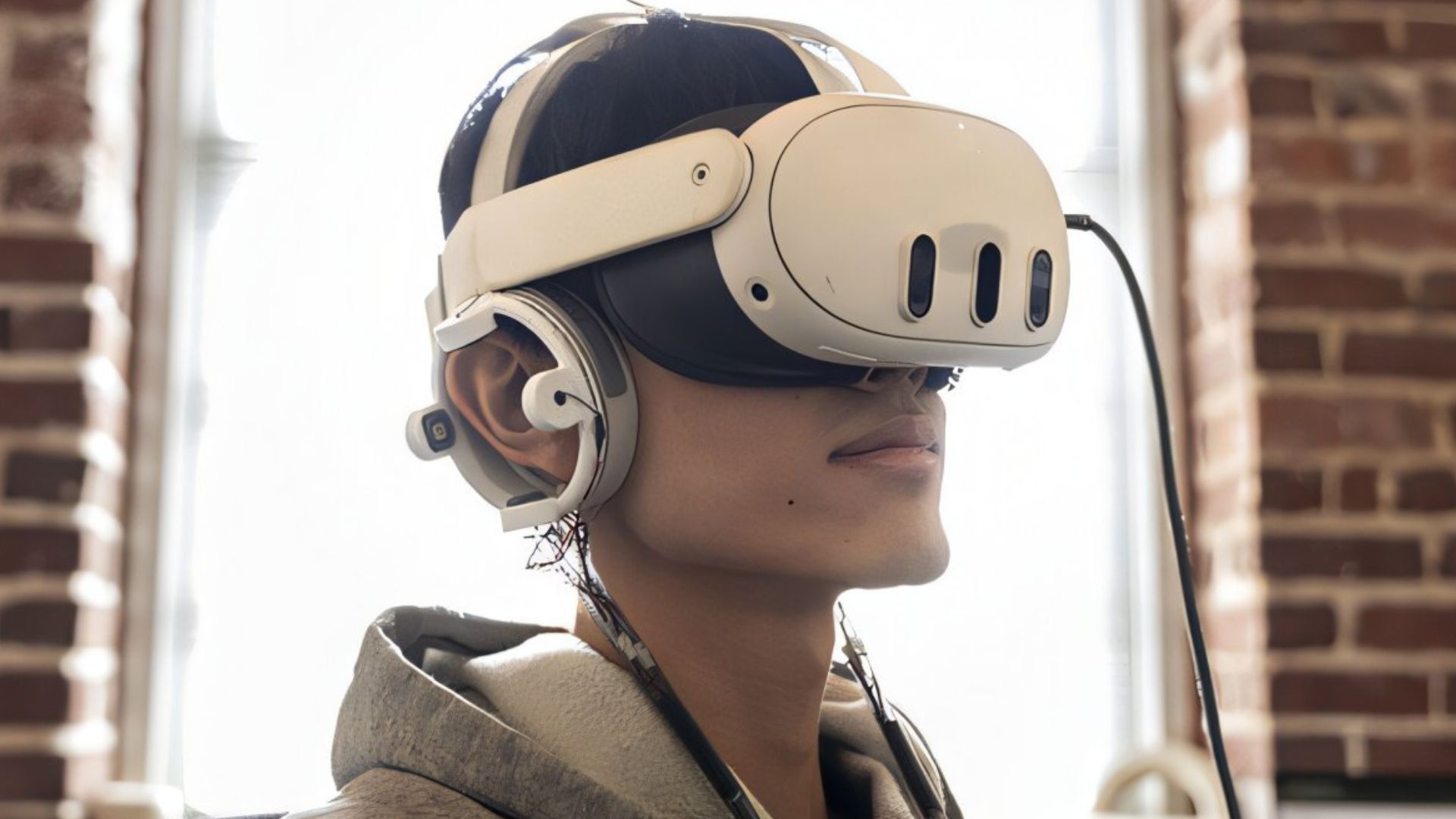
Researchers at Georgia Tech have developed a wearable system called Spherephones that converts robot movements into directional music rather than loud alarms. The technology helps workers understand where a robot is, how close it is, and when it will arrive without interrupting their work.
Horror movies often use music to prepare audiences before something appears on screen. The growing sound builds tension and tells viewers that something is about to happen.
Researchers at Georgia Tech used the same idea to create a wearable system that warns people about nearby robot movements.
The project was developed by Amit Rogel while pursuing his Ph.D. in Gil Weinberg’s Robotic Musicianship Group at the Georgia Tech Center for Music Technology. The research focused on making human-robot communication more natural. As robots become more common in factories, researchers wanted a better way to improve worker awareness.
Robots move according to programmed instructions without waiting for people to notice them. Workers usually react only after they see the machine moving. Even a short delay can increase the risk of workplace accidents.
Traditional safety systems mainly rely on warning sounds or flashing lights. These alerts tell workers that something is happening but rarely explain where the robot is or how quickly it is approaching. Frequent alarms also become familiar over time, making it easier for workers to ignore them.
Rogel wanted a warning system that stayed in the background instead of constantly demanding attention. He explained that music allows people to stay focused while still receiving important information. This idea eventually became Spherephones.
READ ALSO: Vanguard Opens as First US Underwater Habitat in 40 Years in the Florida Keys
Spherephones Use 3D Music
Spherephones are built around an open-ear headset that lets users hear both the music and the sounds around them. The headset places four speakers around each ear. They are positioned in front, behind, above, and below the listener.
The speaker placed below the ear plays an important role because ordinary headphones cannot create sound from that direction. This allows the system to place music in three-dimensional space. Users hear sounds coming from the same direction as the robot.
When a robot begins moving closer, the wearable starts playing a melody. The music changes naturally as the robot approaches. Workers can estimate when the robot will arrive by listening to its rhythm rather than constantly watching it.
Rogel explained that users can predict the end of the melody, which matches the robot reaching its destination. For example, a worker knows when a robot is about to hand over an object. The process happens without interrupting the person’s task.
Researchers found that participants continued assembling and sorting items while using the system. They remained aware of robot movements without stopping their work. The music served as a quiet guide rather than an urgent alarm.
The team selected computer-generated lo-fi music because it blends into the background. Lo-fi music is calm and repetitive, making it comfortable to listen to for longer periods. It delivers information without becoming distracting.
Gil Weinberg said the system allows users to understand not only that a robot is approaching but also its direction and whether it presents a danger. That gives workers more useful information than a simple warning sound. The result is a more natural interaction between people and machines.
READ ALSO: StormWall: Scientists Propose Satellite Shield to Protect Earth From Solar Superstorms
Wearable Finds New Uses
The earliest version of the project used speakers placed around the workplace. That approach created confusion because every worker heard every robot notification. The researchers quickly realized the system needed to be personal.
The team redesigned the technology into a wearable headset. Each worker now receives only audio from nearby robots. This makes the experience clearer and easier to understand.
The researchers soon discovered that the technology had applications beyond factories. Working with music technology master’s student Lennon Seiders and researcher Titov, they tested Spherephones in a virtual reality environment. Participants followed a virtual bird using sound before hearing another sound behind them.
Although nothing appeared visually, users instinctively reacted to the sound behind them. The experiment showed that accurate spatial audio creates a strong feeling that something is nearby. This demonstrated the technology’s effectiveness beyond workplace safety.
The team believes Spherephones can also improve gaming. Most gaming headsets provide only left- and right-channel sound. Spherephones add sound from above, below, behind, and in front, giving players a more complete sense of their surroundings.
The open-ear design also allows users to hear real-world sounds while wearing the device. This keeps people aware of conversations, warning signals, and other important noises nearby. It provides better environmental awareness than many traditional headphones.
Researchers are also studying how the system can assist people with visual impairments. Directional sound can help users understand where objects or movement are located. The technology is also being explored as a support tool for veterans living with PTSD through carefully designed audio cues.
Spherephones began as a workplace safety project, but its future has expanded far beyond factory floors. By turning robot movements into easy-to-understand music, the wearable offers a different way for people to interact with machines.