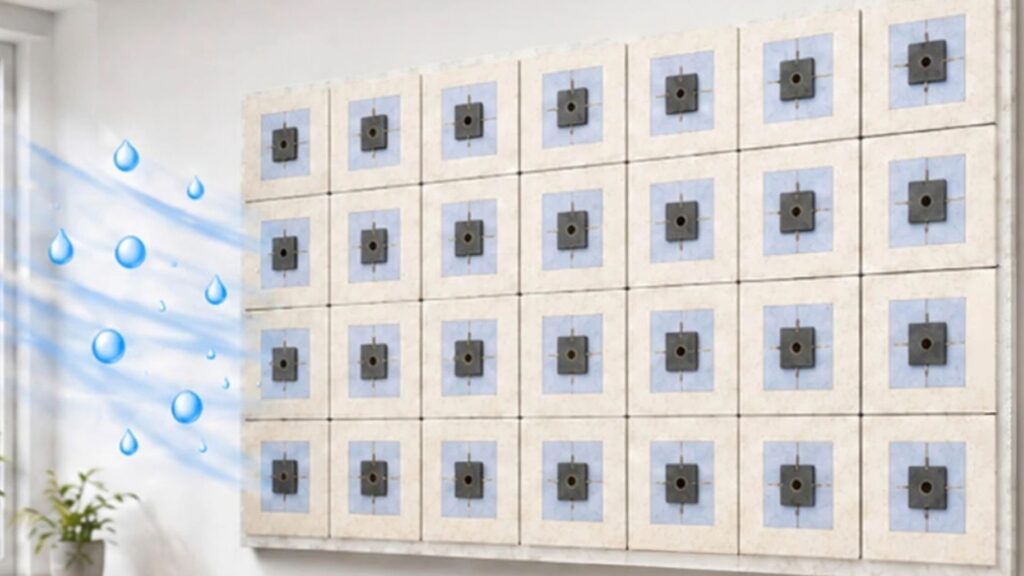
A team of researchers has developed a flexible battery that draws moisture from the air to generate electricity without using toxic liquid electrolytes.
The new design also includes an optional built-in self-destruct system that destroys electronic devices if someone tries to tamper with them.
Scientists believe the technology can support the next generation of wearable devices, medical sensors, and Internet of Things (IoT) products.
The research was carried out by scientists from North Carolina State University and Rice University. Their findings were published in the journal Science Advances. The project focuses on making batteries safer, lighter, and more suitable for flexible electronics.
Moisture Battery Uses Air, Salt Water
Modern wearable electronics and IoT devices require compact, lightweight power sources. Traditional lithium-ion batteries offer strong performance, but they are often rigid and heavy and contain flammable or toxic materials. These limitations make them less suitable for devices that bend, stretch, or come into contact with the human body.
The newly developed moisture-activated battery solves several of these problems with a different design. Instead of storing liquid electrolytes inside the battery, it collects moisture directly from the surrounding air. This process creates the conditions needed for electricity to flow only after the battery is exposed to the environment.
The battery uses a magnesium anode and a silver-silver chloride cathode. Between these two electrodes sits a cellulose membrane loaded with lithium chloride salt. Once the membrane absorbs water from the air, the salt dissolves, forming an electrolyte that allows the battery to begin producing electrical power.
Because the battery remains dry inside sealed packaging, it stays inactive during storage. This design helps extend its shelf life since chemical reactions do not begin until the package is opened. It also removes the need for flammable liquid electrolytes used in many conventional batteries.
Assistant professor Amay Bandodkar from North Carolina State University said the battery essentially operates using salt water.
He explained that eliminating toxic and flammable electrolytes makes the design safer for many applications. He also noted that the battery activates only when exposed to ambient air, helping preserve its performance during storage.
READ ALSO: Scientists Build Synthetic Cell That Grows and Divides, Marking a New Step Toward Artificial Life
Bio-inspired Battery Design Improves Flexibility
Creating a battery that stretches without losing performance is a major engineering challenge. Most flexible batteries use serpentine-shaped electrical connections that leave gaps when stretched. Those gaps reduce the amount of energy that can fit inside the battery.
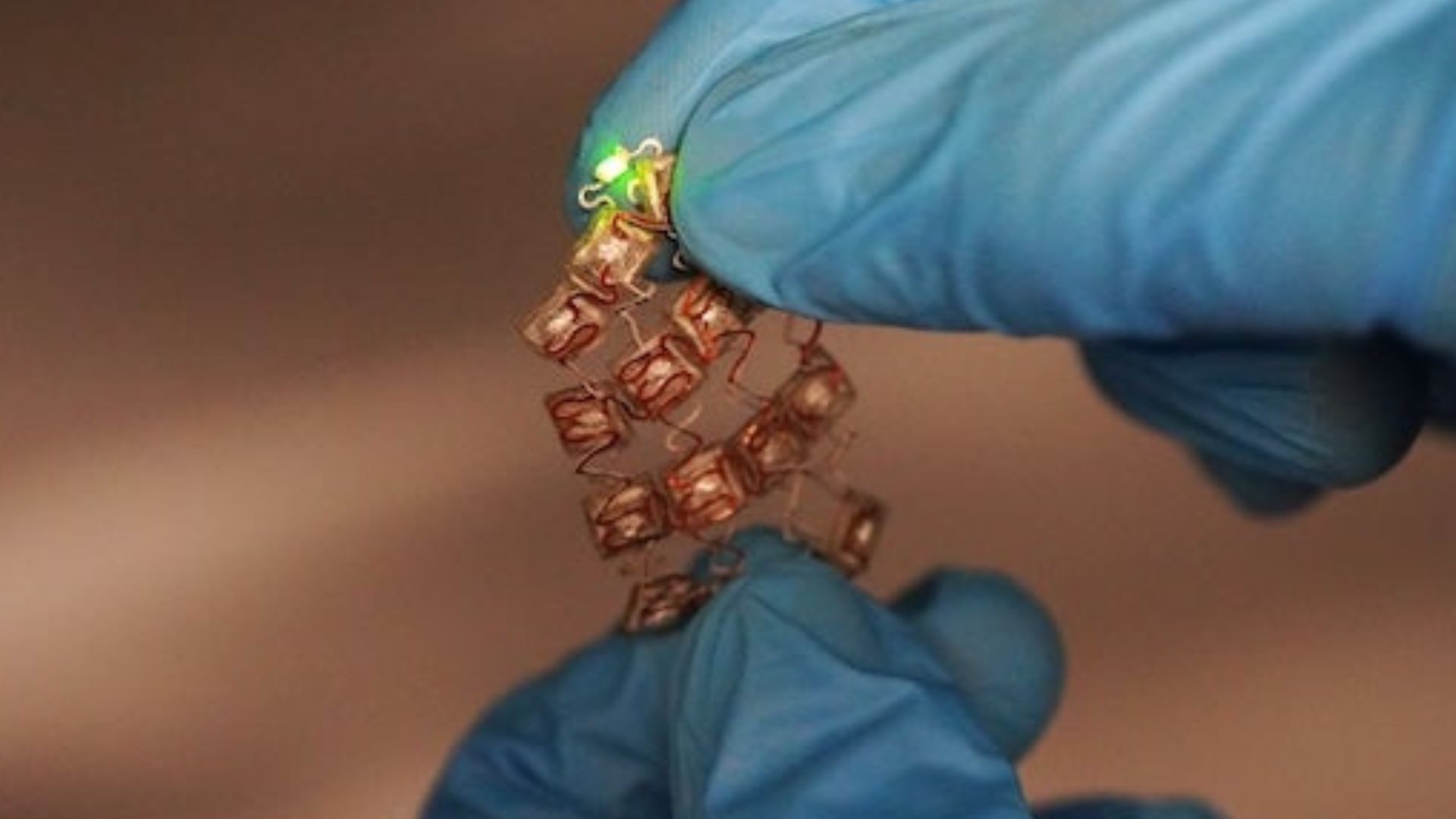
The research team solved this issue by taking inspiration from pangolins. Pangolins are mammals covered with overlapping protective scales. The scientists designed the battery with a similar overlapping structure that keeps its components closely packed even when stretched.
This arrangement reduces empty spaces and improves energy density. It also allows the battery to bend, twist, and stretch while maintaining reliable electrical performance. The design helps flexible electronics operate more efficiently during everyday movement.
Raudel Avila, assistant professor of mechanical engineering at Rice University, said the battery’s mechanical design plays an important role in its performance.
He explained that computer modeling showed how the bio-inspired structure spreads stress across the battery during stretching. This approach helps preserve battery performance while minimizing unused space.
The researchers tested the battery by powering a wireless Bluetooth pulse oximeter. The device operated for up to 30 hours on a single battery. That operating time is similar to many conventional batteries used in portable electronics today.
The team says these results show the technology is ready for practical applications instead of remaining only a laboratory demonstration. Abraham Vázquez-Guardado from North Carolina State University said the battery can support real medical devices and everyday IoT products. He added that its performance demonstrates its ability to power future generations of connected electronics.
Another advantage is the battery’s materials. The battery is made from lightweight, biodegradable, and biocompatible components. This combination offers a safer alternative for applications where reducing toxic waste is becoming increasingly important.
Built-in Kill Switch Destroys Electronics After Tampering
Beyond supplying power, the researchers integrated an unusual security feature into the battery system. They developed a self-destruct mechanism designed to protect sensitive electronics from unauthorized access. The feature targets devices used in surveillance or other security applications.
READ ALSO: Organic Transistor Combines Memory, Computing and Light at Under 3.5V for Wearables
The kill switch uses a separate chamber inside the electronic device. That chamber contains a dry mixture of aluminum and iodine powder. A moisture-harvesting cellulose membrane seals the compartment until it is activated.
If someone presses or opens the device while attempting to remove or disable it, the membrane allows harvested moisture to reach the powder mixture. The resulting chemical reaction quickly generates intense heat and flames. Within minutes, the reaction destroys the device’s electronic hardware.
To demonstrate the concept, researchers installed the kill switch inside a wireless gas sensor powered by the new battery. When activated, the system completely destroyed the sensor and its internal CMOS electronics in about three minutes. The test showed that the self-destruct feature can effectively prevent sensitive equipment from being recovered or analyzed.
The research combines clean energy generation with advanced device protection in a single platform. It also highlights how environmental moisture can serve more than one function in future electronic systems. The same moisture that activates the battery also powers the security mechanism.
As wearable electronics, smart medical devices, and IoT sensors continue to expand across industries, demand is growing for safer and more flexible power solutions.
Batteries that are lightweight, biodegradable, and operate without toxic liquid chemicals meet many of these emerging needs. This technology offers a new direction for powering future electronics while also adding built-in protection for sensitive devices.