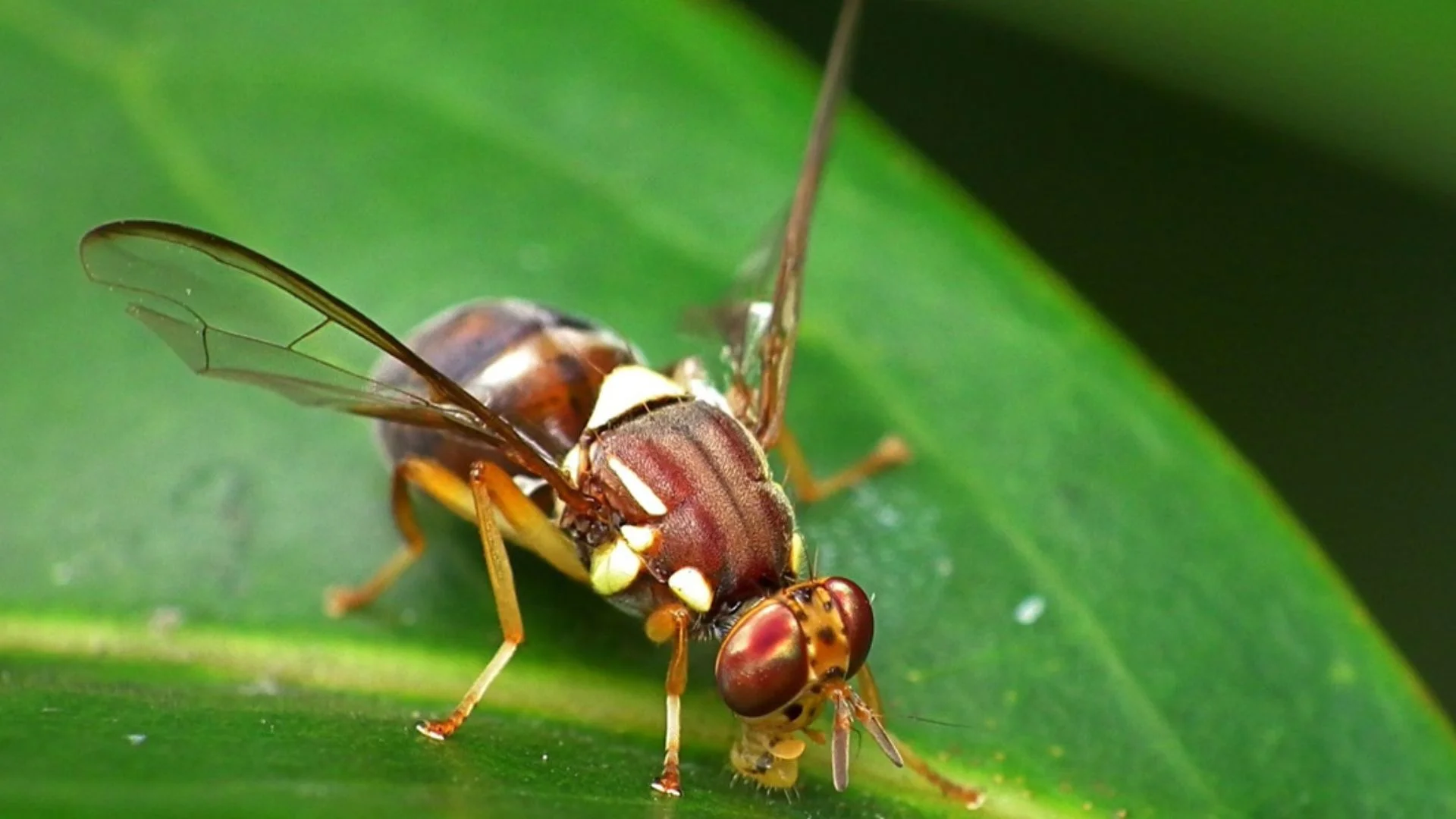
Researchers at the University of California, Riverside, have found that fruit flies can survive and adapt to intense gravitational forces.
Their findings were published in the Journal of Experimental Biology. The results reveal surprising strength in how living systems respond to stress.
The team exposed fruit flies to hypergravity, meaning gravity was much stronger than what we feel on Earth. This type of force is similar to what fighter pilots or astronauts experience during high-speed movements or reentry. Scientists expected the flies to weaken or fail under such pressure.
Instead, the flies survived the conditions. They continued to mate and reproduce even under intense force. Over time, they also recovered from the changes caused by the stress.
READ ALSO: NASA Transforms a Boeing 777 Into Its Largest, Most Capable Flying Science Lab Ever
The study focused on understanding how gravity shapes movement and energy use. Lead author Sushmita Arumugam Amogh asked a question about how gravity affects behavior. This idea guided the entire research.
Most earlier studies focused on microgravity, the near-weightless state in space. This research took the opposite path by studying very high gravity. Scientists believe both extremes are important to fully understand how the body works.
To simulate hypergravity, researchers used a custom-built centrifuge. This machine spins rapidly, creating a strong outward force. The faster it spins, the stronger the gravitational pull becomes.
Arumugam Amogh explained the idea in simple terms. She said, “The centrifuge is like a merry-go-round. The faster you go, the more you feel pulled outward.”
The scientists carefully monitored the flies’ movements after exposure. They used infrared sensors to track activity inside small tubes. Every movement was recorded when a fly crossed a beam.
WATCH ALSO: This Microsoft AI Could Change Cancer Treatment Forever
They also tested climbing behavior in flies. This behavior, called negative geotaxis, shows how flies naturally move upward against gravity. It is a common way to study movement and strength.
At first, the results were surprising. Flies exposed to four times Earth’s gravity(4G), became more active than usual. This increase in activity lasted for a long time.
However, the pattern changed at higher levels. At 7G, 10G, and 13G, the flies became less active. They also showed weaker climbing ability.
Giraldo explained this shift clearly. She said, “When flies experience four times Earth’s gravity, they become hyperactive. At higher levels, they slowed down and climbed less.”
The team then studied how long these effects would last. They exposed flies to hypergravity for 24 hours and tracked them throughout their lives. This allowed scientists to see long-term changes.
Flies in the 4G group stayed highly active for about seven weeks. This is a large part of their lifespan. After that, their behavior slowly returned to normal.
READ ALSO: USS Eisenhower Completes Sea Trials Ahead of Schedule After Major Norfolk Overhaul
Flies in the 7G group showed reduced activity at first. But over time, they also recovered. This showed that different stress levels elicited distinct responses, yet both groups adapted.
The researchers believe the brain plays a key role in this process. It may decide how energy is used based on the level of stress. This helps the body choose between action and rest.
Arumugam Amogh shared this idea directly. She said, “We believe gravity feeds into the brain’s decision-making about energy use. It helps decide whether to act or conserve energy.”
The study also examined changes within the body. Fat storage increased soon after exposure to hypergravity. Later, it decreased as the flies became more active and used more energy.
This shows a clear link between movement and metabolism. When activity increased, energy use also rose. The body adjusted to the conditions.
Another important part of the study was its timescale. Researchers did not limit themselves to short experiments. They tested different exposure periods.
Some flies experienced hypergravity for just 24 hours. Others lived their entire lives, about 50 days, under high gravity. This gave a deeper understanding of long-term effects.
WATCH ALSO: From Ice to Innovation: US Coast Guard Deploys Drones in Antarctic Mission
The team also studied multiple generations of flies. In one case, flies lived and reproduced under hypergravity for ten generations. Every stage of life happened under these conditions.
This kind of long-term study is rare. It helps scientists understand how life adapts over time. The results showed that organisms can handle stress better than expected.
The findings challenge a common belief. Many assume extreme environments only cause harm. But this study shows that living systems can recover and adapt.
The research is not meant to exactly copy human space conditions. Instead, it helps explain basic biological responses to gravity. These insights are useful for many fields.
Gravity is not just a background force. It actively shapes how organisms move and use energy. It also affects how they recover from stress.
This knowledge is important as space travel becomes more common. Missions like Artemis II will take humans farther into space. Future missions aim to return people to the Moon.
Understanding gravity’s effects can help protect astronaut health. It can guide how humans prepare for long journeys and reentry. Studies like this offer valuable clues.
Giraldo highlighted the importance of the research. She said, “The link between gravity, physiology, and energy use will become more important as space travel grows.” This makes the study both timely and relevant.
In the end, the tiny fruit fly offers a powerful lesson. Even under crushing force, life finds ways to adapt. This resilience may hold answers for the future of human exploration.