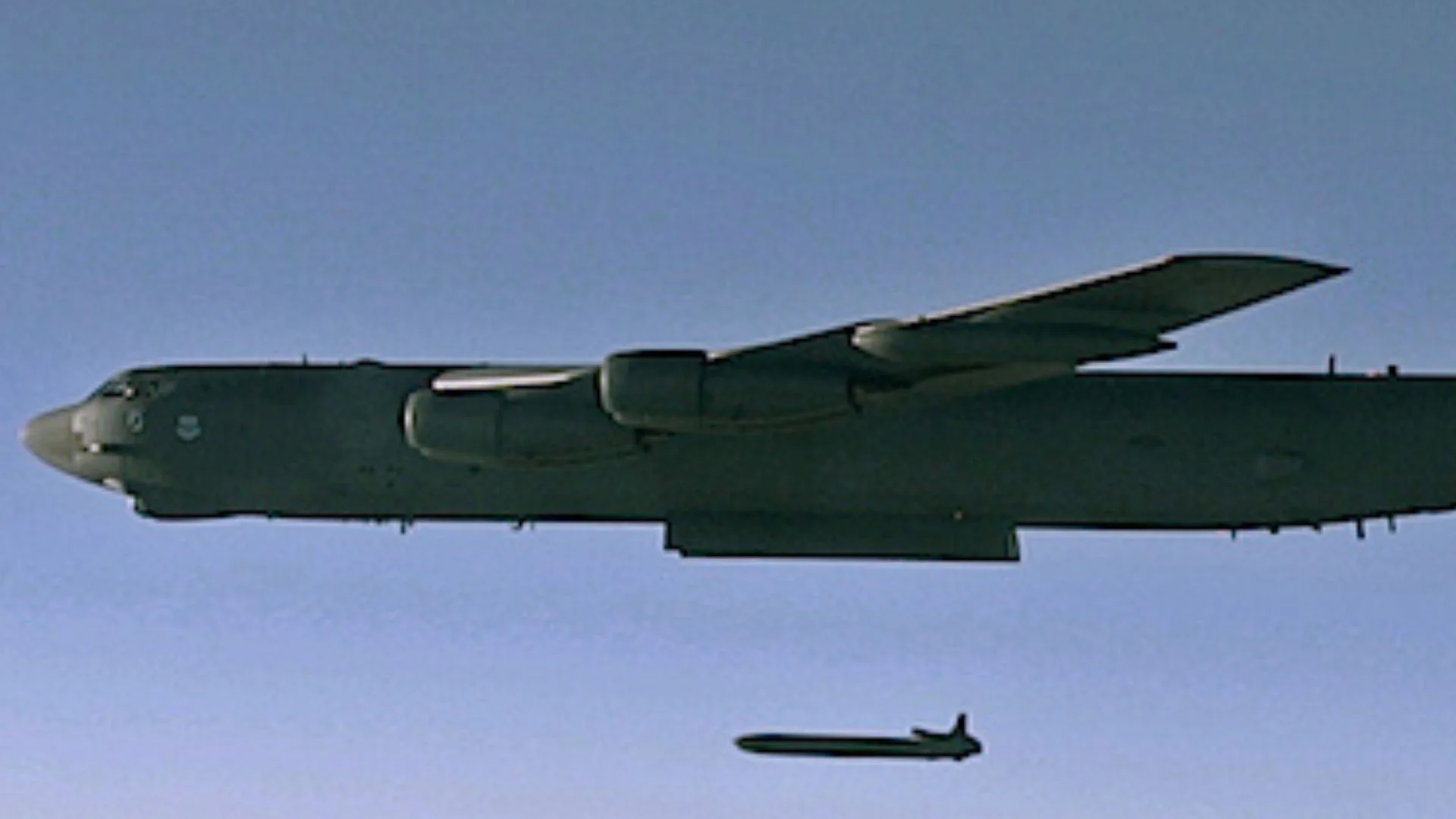
The US is accelerating the Long-Range Stand-Off missile, known as the LRSO nuclear cruise missile, to replace the aging AGM-86B.
This new weapon allows bombers to strike targets without entering heavily defended airspace. Officials say this improves both safety and mission success.
The announcement came on April 30, 2026, during discussions tied to future defense planning. Lawmakers reviewed funding as part of preparations for fiscal year 2027. The move shows how stand-off strike systems are becoming central to nuclear strategy.
Military planners believe modern air defenses have changed the battlefield. Older missiles and direct bomber missions face higher risks today. The new system is meant to overcome these challenges.
READ ALSO: Lockheed Martin Supports TACAMO Mission with E-130J Training Systems
Countries like China and Russia have built strong, layered defense networks. These systems include long-range missiles, advanced radars, and electronic warfare tools. Together, they create a shield that is difficult to break.
Russia uses systems such as the S-400 missile system and is developing the S-500. These defenses can track and engage targets at long distances and multiple altitudes. This makes older cruise missiles less effective.
China has developed similar systems, such as the HQ-9 missile system. Its defense coverage extends across key regions, including the Taiwan Strait and the South China Sea. These zones are now highly contested environments.
In such conditions, traditional bomber missions become dangerous. Aircraft would need to fly close to enemy defenses to launch weapons. This increases the chance of detection and interception.
WATCH ALSO: NASA rover discovered ancient microbial life signature on Mars
The LRSO changes this approach completely. It allows bombers to launch missiles from far beyond the enemy’s defense range. This reduces risk while maintaining strike capability.
The missile will work with both the B-52 Stratofortress and the B-21 Raider. This ensures both current and future aircraft can use the system. It also strengthens long-term planning for air-based nuclear forces.
Technically, the LRSO is built to avoid detection. It uses stealth shaping and special materials to reduce its radar signature. This makes it harder for enemy systems to track it.
The missile is designed for long, subsonic flight. It can fly low and follow terrain to avoid radar coverage. This allows it to move quietly through defended areas.
Its guidance system combines several technologies. These include inertial navigation, satellite updates, and terrain mapping. This ensures accuracy even when GPS signals are blocked.
The missile is also built to resist electronic attacks. It can operate even in environments filled with jamming and cyber threats. This makes it more reliable during modern conflicts.
READ ALSO: Safran and MBDA Eye 2029 Delivery for France’s Next-Gen Thundart Rocket Artillery
In combat, the LRSO offers flexible use. A B-52 can carry many missiles and launch them all together. This creates a saturation attack that overwhelms defenses.
The B-21, on the other hand, can combine stealth and stand-off launch. This creates layered attack options that are harder to counter. It gives commanders more ways to plan missions.
The missile can also change direction during flight. It can approach targets from different angles and altitudes. This increases the chance of hitting its objective.
Another key feature is the flexibility of mission control. Operators can adjust or cancel strikes while the missile is in flight. This provides more control than ballistic missiles.
Replacing the AGM-86B has become necessary. While it has served for decades, it lacks modern stealth and resistance features. Its survival rate in advanced defense zones has declined.
The LRSO addresses these limits with new technology. It is built specifically for high-threat environments. This ensures it remains effective against near-peer adversaries.
The program is led by Raytheon Technologies. It highlights the role of industry in maintaining advanced military systems. Strong industrial support is key to long-term defense readiness.
WATCH ALSO: Drum-shaped antenna reflector on NASA-ISRO NISAR satellite deployed
The LRSO is part of a wider nuclear modernization effort. This includes upgrades to land-based and sea-based nuclear systems. They maintain the nuclear triad’s strength.
The air-based leg of the triad plays a unique role. It offers visibility and flexibility in crisis situations. Leaders can signal intent or adjust actions when needed.
Experts say this makes bombers an important deterrence tool. Unlike missiles, they can be recalled after launch. This adds an extra layer of control.
The push for LRSO shows a larger shift in warfare. Modern conflicts require systems that can operate in denied environments. Speed, stealth, and adaptability are now critical.
By extending range and improving survivability, the LRSO keeps bomber forces relevant. It ensures they can operate even against advanced defenses. This strengthens overall deterrence.
In the end, the program reflects changing global security conditions. Nations are investing in both offense and defense at a rapid pace. The LRSO is the US answer to this evolving challenge.