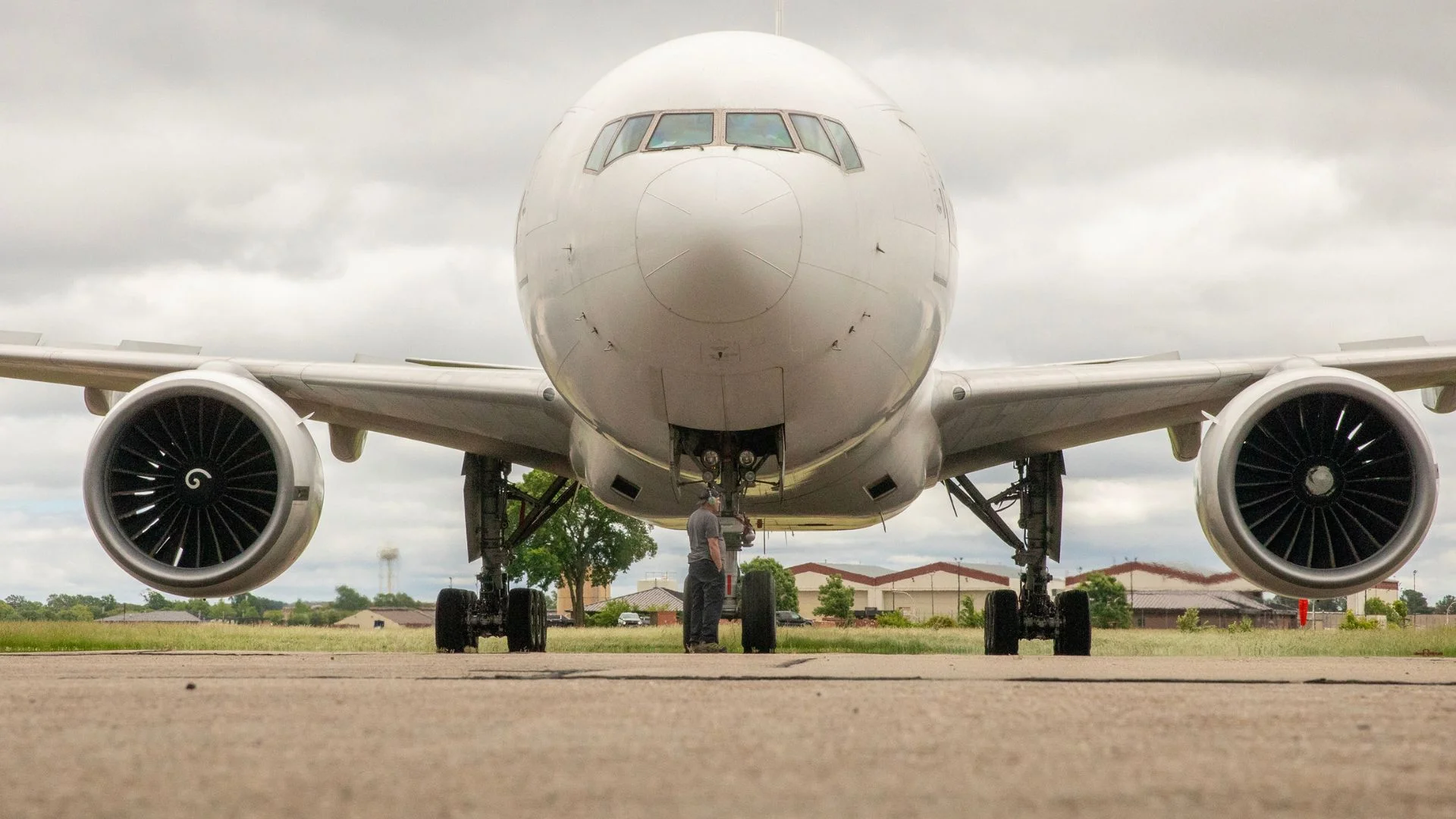
NASA is preparing to redefine airborne science with its modified Boeing 777, which will become the most advanced research platform in the agency’s fleet.
Built on a large commercial airliner, the aircraft combines scale, endurance, and flexibility in a way no earlier science aircraft has achieved.
The sheer size of the aircraft is one of its biggest strengths. Inside, it offers a massive workspace that can accommodate 50 to 100 scientists, engineers, and mission operators on a single flight.
READ ALSO: REK: S.F.’s Robot Fight Hub, Humanoid Bots Battle, Perform & Are Available to Rent or Buy
This allows multiple experiments to run simultaneously, significantly increasing both efficiency and the volume of data collected during each mission.
In terms of payload, the aircraft stands in a class of its own. It can carry up to 75,000 pounds of scientific equipment, making it ideal for complex missions that depend on several instruments working together. This capability enables researchers to study different aspects of Earth systems simultaneously, from atmospheric conditions to ocean patterns.
READ ALSO: Cornell Student Develops Ultra-Precise Microchips to Boost Tech Reliability
Another major advantage is its long endurance. The Boeing 777 can fly for up to 18 hours without stopping, allowing NASA teams to cover vast regions in a single mission. This extended range is especially important for studying large-scale phenomena such as weather systems, ocean currents, and atmospheric changes.
WATCH ALSO: Researchers from German have developed a diving robot that can easily collect underwater waste
The aircraft’s long-range capability also allows scientists to observe events as they unfold. Instead of relying only on satellite images taken at intervals, researchers can collect continuous, real-time data over long distances. This results in more detailed observations and improves the accuracy of scientific analysis.
WATCH ALSO: World’s largest nuclear fusion research project ITER has reached a new milestone
Inside the aircraft, NASA has installed dedicated research stations designed for modern airborne science missions. These stations are supported by advanced wiring and communication systems that allow instruments to connect and operate smoothly during flight.
The aircraft can integrate payload systems with advanced sensors such as lidar and infrared imaging spectrometers. This setup enables real-time data collection and analysis, giving scientists immediate insights while still in the air.
READ ALSO: MIT Quantum Sensor Reads Multiple Signals Together: Changing How We Measure Reality
Structural upgrades have also enhanced the aircraft’s capabilities. Larger cabin windows improve visibility for both direct observation and instrument-based measurements, supporting a wider range of research activities.
One of the most important modifications is the addition of fuselage portals beneath the aircraft. These specially designed openings allow remote-sensing instruments to be mounted externally, providing them with a clear, unobstructed view of Earth. This improves the precision and quality of the data collected during missions.
READ ALSO: No Motors, No Air: This Origami Robot Moves in a Completely New Way
The Boeing 777’s importance goes beyond its technical features. It plays a key role in bridging the gap between satellite observations and ground-based measurements. By flying directly into areas of interest, it can collect high-resolution data that satellites alone cannot provide.
READ ALSO: DeepSeek V4 Emerges as Huawei’s Chips Begin Shaping the Future AI Power Game
The aircraft also opens new opportunities for collaboration. Its large capacity enables NASA to bring together international partners, researchers, and students on a single mission. This not only strengthens scientific output but also supports education and training for future scientists.
Summarily, NASA’s Boeing 777 marks a major leap forward in airborne research. With its unmatched combination of size, range, and advanced technology, it is set to play a crucial role in improving our understanding of Earth and addressing global environmental challenges.