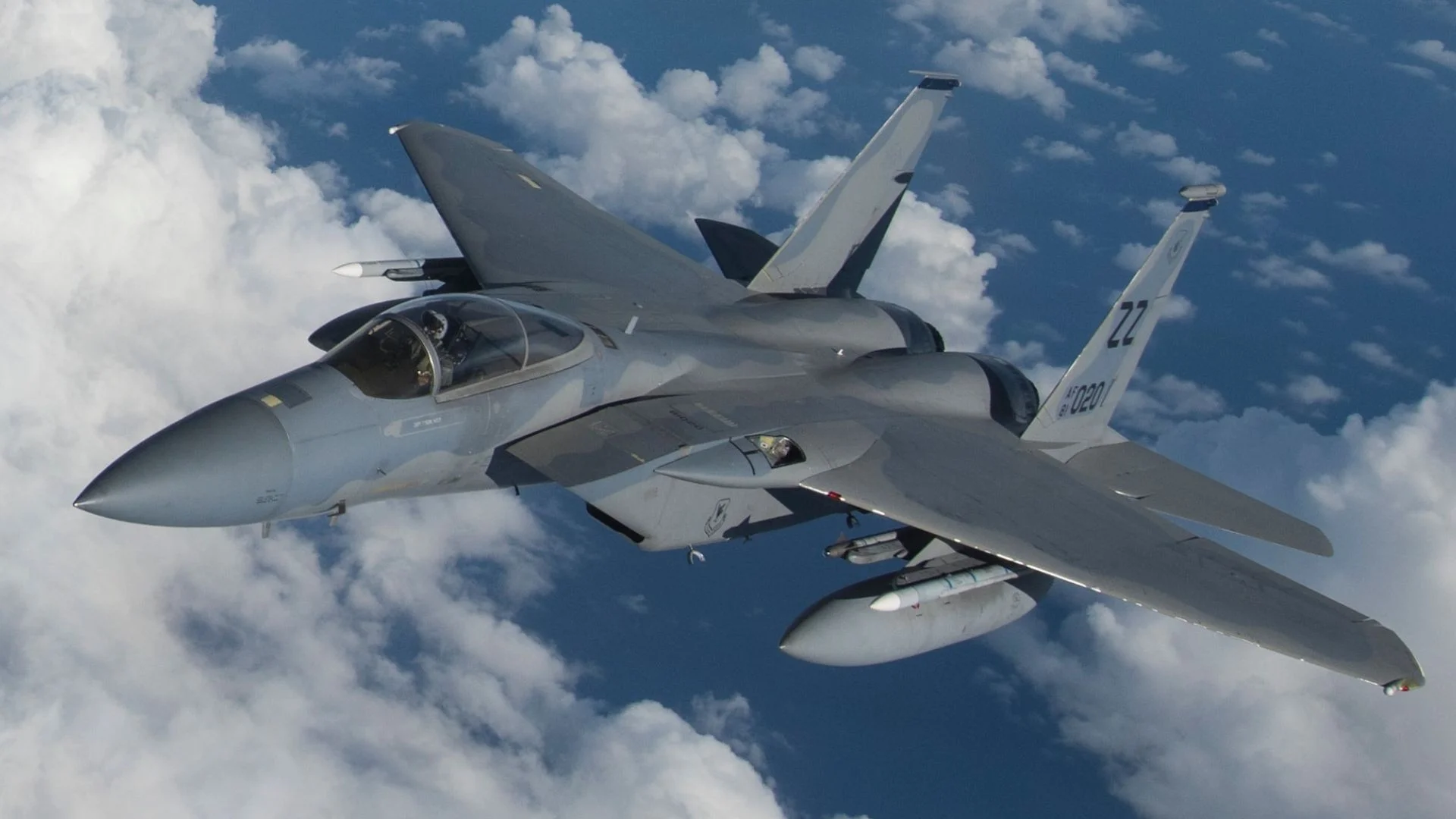
Textron Systems has received a $9.5 million contract to support the US Air Force in assessing an important defensive system on the F-15 Eagle.
The work will center on the Eagle Passive Active Warning Survivability System(EPAWSS). This system replaces older components, such as the radar warning receiver and countermeasure systems, providing the aircraft with stronger protection in combat.
To carry out the testing, Textron will provide several units of its Advanced Architecture Phase, Amplitude and Time Simulator, known as A2PATS.
This system helps measure how well radar warning systems perform against modern electronic warfare threats. It creates a dense and realistic testing environment, allowing engineers to study how the F-15 reacts under pressure.
READ ALSO: MQ-9 Reaper Becomes SOCOM’s Drone Hub as Light Attack Fleet Plans Shrink
The contract also includes benchmarking services, spare parts, and testing systems.
The testing will take place in partnership with the 68th Electronic Warfare Squadron at Eglin Air Force Base. The project is scheduled to run for 17 months. Part of the work will also support evaluations for foreign military sales customers, expanding the program’s global reach.
Textron says A2PATS can recreate the complex signals found in real combat zones. It generates different waveforms that simulate threats from modern air defense systems.
WATCH ALSO: Chinese company’s humanoid robot has mastered Webster flip, defies physics
The system can replicate how signals arrive, including timing, strength, and direction. This allows engineers to test how well the aircraft’s sensors respond in realistic conditions.
Steve Mensh said, “A2PATS simulates both electronic intelligence and communications signals at the same time. It models a full air defense system in one environment.”
He added, “We are giving the US Air Force and its allies a realistic setup to test and train with modern electronic warfare systems.”
READ ALSO: Skydio’s $3.5 Billion, 5-Year Push Signals a New Phase in US Drone Power
The contract highlights the growing focus on electronic warfare as a key part of air combat. By improving how the F-15 detects and reacts to threats, the US Air Force aims to keep the aircraft effective in modern battle environments.
With advanced simulation tools and realistic testing, this effort is expected to sharpen both performance and readiness for future missions.