A new collaboration between IBM and Dallara is reshaping motorsport and the design of high-performance vehicles.
The partnership focuses on combining artificial intelligence with advanced physics models. It also opens the door to future use of quantum computing in engineering workflows.
The two companies aim to solve one of the biggest challenges in vehicle design. Engineers need fast and accurate simulations to test ideas. Traditional tools are powerful but take a lot of time and computing power.
This collaboration tries to change that balance. It uses AI to speed up simulations without losing accuracy. At the same time, it explores how quantum computing can push design even further.
READ ALSO: Forterra’s MESA Targets the Last Tactical Mile with Battlefield Autonomy
IBM brings deep expertise in artificial intelligence and quantum research. Dallara adds decades of experience in building high-performance vehicles. They are developing new tools for faster, smarter design.
Dallara has worked in motorsport for over 50 years. Its cars compete in top racing series like IndyCar, Formula 2, and Formula 3. The company also contributes to Formula E, WEC, IMSA, and even aerospace projects.
This wide experience gives Dallara a strong advantage. Its simulation models can be tested against real-world racing data. That makes its data highly reliable for training AI systems.
At the center of the collaboration are new physics-based AI models. These models are trained on Dallara’s aerodynamic data. The data comes from detailed simulations of high-performance vehicles.
WATCH ALSO: Chinese company’s humanoid robot has mastered Webster flip, defies physics
Unlike general AI, these models understand physical laws. They do not replace physics but work alongside it. This helps engineers trust the results while gaining speed.
The models also use Dallara’s engineering knowledge. This combination improves accuracy and usability. It ensures the AI reflects real-world conditions.
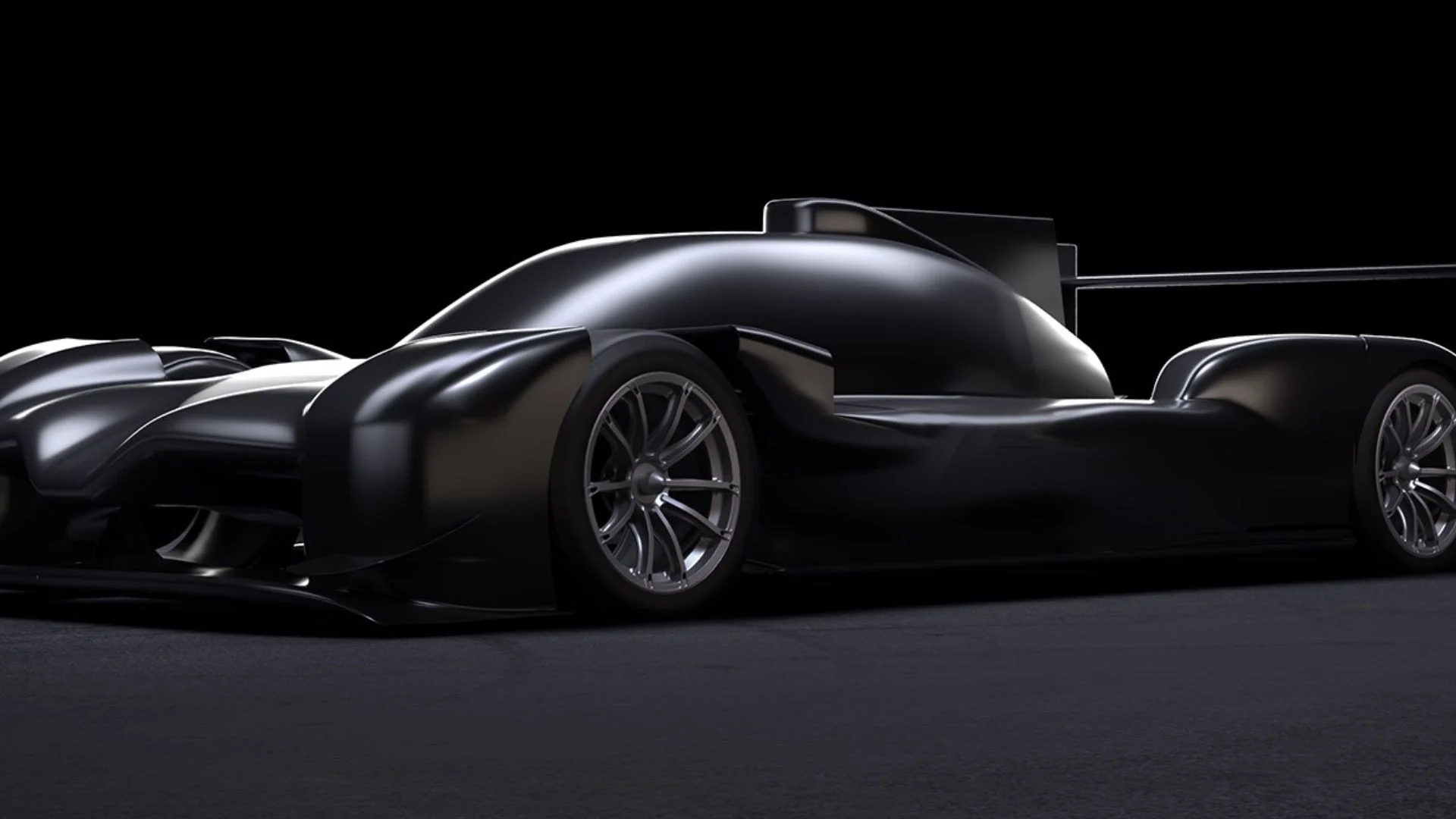
One early test focused on a race car design similar to a Le Mans Prototype 2 vehicle. Engineers studied the rear diffuser, a key part that affects downforce. Downforce helps cars stay stable and maintain grip at high speeds.
Traditionally, engineers use computational fluid dynamics, or CFD, for such studies. CFD simulations are detailed but slow. Even simple cases can take hours to complete.
In this test, AI showed a major advantage. It analyzed multiple design options in about 10 seconds. The results closely matched those from CFD simulations.
This speed difference is significant. What once took hours can now take seconds. For full design workflows, this could reduce days of work to just minutes.
READ ALSO: Rice University Study Solves Decades-Old Mystery in Light Crystals
That means engineers can test more ideas early in the process. They can quickly explore different shapes, angles, and conditions. This leads to better decisions before final testing.
It also helps teams use their computing resources wisely. Heavy simulations can be saved for final optimization. Early stages become faster and more flexible.
The AI models aim to predict aerodynamic behavior directly. They take inputs like geometry and design parameters. Then they estimate how the air will flow around the vehicle.
As the project grows, the models will handle more scenarios. These include different driving conditions and race situations. Engineers will be able to test ideas across a wider range of cases.
Future versions may also include real-world test data. This includes wind tunnel experiments and track performance. Combining simulation and real data will further improve accuracy.
At the same time, the collaboration is exploring quantum computing. This is still an early-stage effort. But it has the potential to handle complex simulations more efficiently.
WATCH ALSO: A South Korean humanoid robot has performed Michael Jackson’s Moonwalk, leaving all viewers stunned
Quantum methods may improve how engineers solve difficult aerodynamic problems. They could work alongside classical computing systems. This hybrid approach may offer the best results.
The goal is not immediate replacement. Instead, the focus is on finding where quantum tools can help. This careful approach allows gradual integration into workflows.
Andrea Pontremoli highlighted the project’s mindset. He said racing teaches teams to win or learn. He added that working with IBM shows Dallara’s drive to keep improving.
Alessandro Curioni explained the technical challenge. He said simulating the real world is one of the hardest problems in engineering. He noted that AI can speed up design, while quantum computing can expand possibilities.
These views reflect a shared vision. Both companies want to push boundaries. They aim to combine speed, accuracy, and innovation.
The impact of this work may go beyond racing. Faster design tools can benefit passenger cars. Even small improvements in aerodynamics can save fuel on a large scale.
Aircraft and other industries may also gain from these advances. Any field that depends on fluid dynamics could benefit. The potential applications are wide.
READ ALSO: BAE Systems Secures $146M Deal to Launch M776 Cannon Production for U.S. Army
Fabrizio Arbucci pointed out this broader impact. He said even a small reduction in drag can improve efficiency. Across millions of vehicles, the effect becomes significant.
The collaboration has already produced early research results. These were shared in a preprint study published in April 2026. Additional findings were presented at an international AI conference.
The work builds on a model developed by IBM called Gauge-Invariant Spectral Transformers. This model focuses on understanding complex physical systems. It serves as the basis for further development in this project.
The research continues to evolve. Both companies plan to expand the models and test new ideas. The long-term goal is to reshape how vehicles are designed from the ground up.
This partnership shows how technology is changing engineering. AI is no longer just a support tool. It is becoming central to the design process.
At the same time, quantum computing is moving closer to real use. While still early, it offers a glimpse of future possibilities. These technologies may redefine performance engineering.
However, the focus is to make design faster, smarter, and more efficient. And in the world of high-speed racing, that can make all the difference.