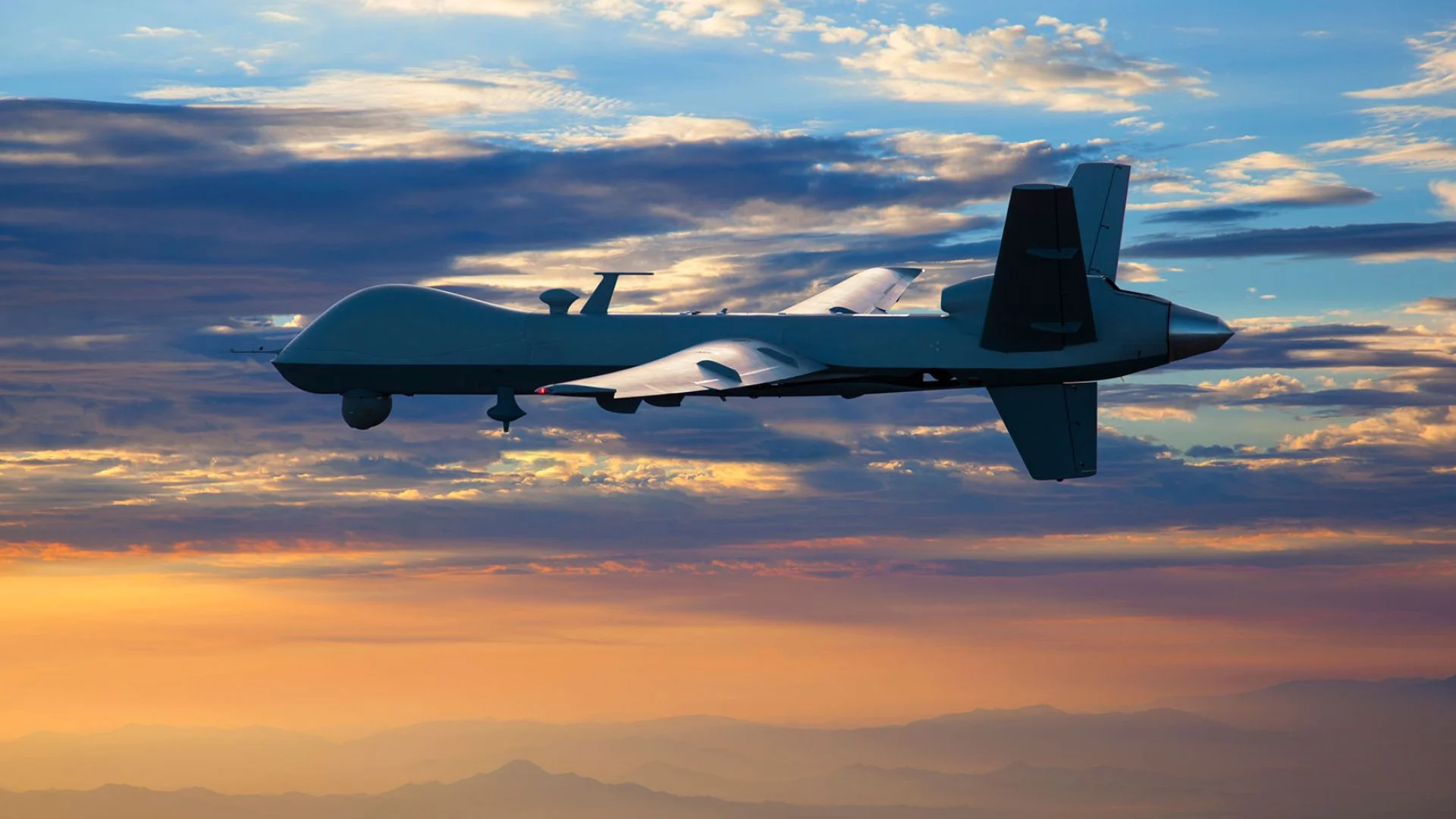
US Special Operations Command (SOCOM) has requested a major funding increase for its MQ-9 Reaper program in the fiscal 2027 budget.
The request totals $75.8 million, more than three times the current allocation of $24.9 million. This move shows a clear shift in priorities toward advanced drone operations.
At the same time, SOCOM is cutting back its planned fleet of OA-1K Skyraider II aircraft. The total number has dropped from 75 to 53 units. This reduction signals a change in how the command plans to carry out future missions.
SOCOM originally selected L3Harris’ AT-802U Sky Warden in 2022 under its Armed Overwatch program. The aircraft was chosen for light attack, close air support, and intelligence, surveillance, and reconnaissance missions. These roles were especially important in counterinsurgency operations.
READ ALSO: US Air Force Backs DZYNE’s ULTRA Turbo UAS for 70-Hour Multi-Mission Operations
The Armed Overwatch program was valued at around $3 billion. It aimed to replace multiple older platforms with a single, flexible solution. Now, that vision is being scaled down as new priorities take shape.
The shift reflects a broader change in focus toward the Indo-Pacific region. This area presents more complex and contested airspace compared to past battlefields. As a result, SOCOM is adjusting its tools and tactics.
A key part of this change is the plan to turn the MQ-9 Reaper into a drone mothership. This concept builds on the Adaptive Airborne Enterprise effort. It aims to expand the MQ-9 beyond its usual strike and ISR roles.
In its new role, the MQ-9 would act as a command-and-control center in the sky. It would manage a network of smaller drones operating deep in contested areas. These drones would handle sensing, targeting, and possibly strike missions.
WATCH ALSO: NASA rover discovered ancient microbial life signature on Mars
The increased budget is about $50 million above last year’s. Most of this funding will go toward new drones, carrier pods, and system interfaces. These systems will support closer coordination between humans and machines.
The request outlines plans to buy 93 Group 2 drones and 10 Group 3 drones. It also includes 16 swarm carrier pods and five ground-system interfaces. This marks a sharp rise from the previous year’s request of just 29 Group 2 drones.
Group 2 drones are smaller and lighter, weighing up to 55 pounds. They usually fly at altitudes up to 3,500 feet. Their main role will be intelligence, surveillance, and reconnaissance.
READ ALSO: Skydio’s $3.5 Billion, 5-Year Push Signals a New Phase in US Drone Power
Group 3 drones are larger and more capable. They can weigh up to 1,320 pounds and fly as high as 18,000 feet. These drones may include stealth features and could be used for more direct combat tasks.
Both types of drones fly at speeds below 250 knots. Despite their lower speed, they offer flexibility and reach in complex environments. This makes them valuable in modern warfare.
In November, Anduril Industries received a $50 million contract to supply ALTIUS-600 drones. These are part of the Group 2 category. They will likely play a key role in the new drone network.
WATCH ALSO: Drum-shaped antenna reflector on NASA-ISRO NISAR satellite deployed
SOCOM has not revealed how many drones each MQ-9 will control. However, the scale of procurement suggests a large and coordinated system. This approach points to a future where one aircraft manages many unmanned systems.
READ ALSO: Anti-Drone Laser System Gets Pentagon, FAA Nod Amid Rising Drone Threat
Summarily, SOCOM’s plan shows a clear move away from traditional counterinsurgency tools. Instead, it is preparing for operations in highly contested regions. The MQ-9 mothership concept sits at the center of this transformation.