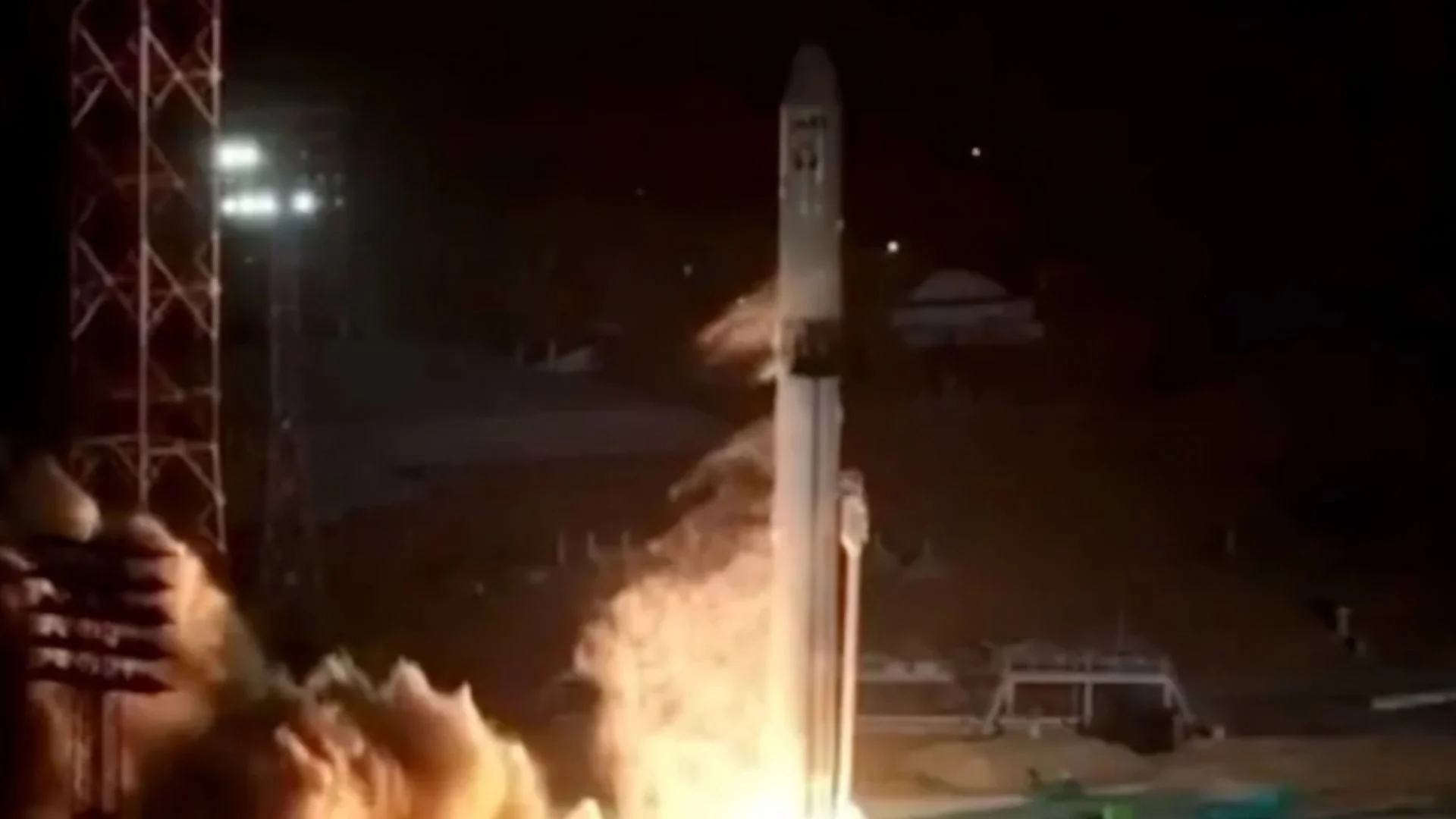
Russia’s new Soyuz 5 rocket made its space debut on April 30 with a launch from Baikonur Cosmodrome, operated by Roscosmos.
The launch took place at 2:00 p.m. EDT (1800 GMT), which was 11:00 p.m. local time at Baikonur. After years of development and delays, the mission marked the rocket’s first real test in flight conditions.
Officials confirmed that the launch went as planned. The rocket followed a suborbital path and carried a mock payload. The test was designed to check performance rather than deliver a satellite into orbit.
Roscosmos shared updates shortly after the launch. The agency said the rocket performed exactly as expected.
READ ALSO: AI Meets Racing DNA: IBM & Dallara Redesign Motorsport With AI & Quantum Computing
“The first and second stages worked as planned,” officials stated. They added that the mock payload followed a calculated trajectory before reentering Earth’s atmosphere. It later splashed down safely in a restricted area of the Pacific Ocean.
The mission was short but important. It allowed engineers to validate the rocket’s systems under real conditions. This type of shakeout flight is common for new launch vehicles.
Development of Soyuz 5 began in 2017. The rocket was designed to replace the aging Zenit rocket, which was originally built in Ukraine.
WATCH ALSO: Engineers from Australia have introduced a spray that enhances the fire-resistance of clothing
Russia wanted a fully domestic alternative. This goal became more urgent after tensions with Ukraine escalated into war in 2022. Since then, cooperation between the two countries in space technology has ended.
Soyuz 5 is also expected to play a role in future heavy-lift systems. It could serve as a building block for a next-generation super-heavy rocket.
Roscosmos had earlier planned for Soyuz 5 to complement the Angara rocket family. These rockets were meant to handle domestic missions and attract international customers.
The idea was to offer a lower-cost option for launching satellites. This would help Russia regain its position in the global launch market.
However, the situation has changed. Since the Ukraine conflict began, Russia has lost many international space partnerships. Sanctions and political tensions have reduced its presence in commercial launches.
Soyuz 5 is similar in size and capability to SpaceX’s Falcon 9. The Russian rocket can carry around 20 tons to low Earth orbit. Falcon 9 can lift about 25 tons. On paper, the difference is not huge.
READ ALSO: NASA Transforms a Boeing 777 Into Its Largest, Most Capable Flying Science Lab Ever
But there is one major gap. Falcon 9 uses reusable technology. Its first stage can return and land after launch. This lowers costs and increases launch frequency.
Soyuz 5, in contrast, is fully expendable. Each rocket is used only once. This makes it harder to compete in today’s market, where cost efficiency is important.
The successful test flight is an important milestone. It shows that Russia can still design and launch new rockets independently.
However, success in space today depends on more than just technical ability. Cost, reliability, and global partnerships all play a role. Soyuz 5 has proven it can fly. Now, the real test will be whether it can find a place in an increasingly competitive space industry.