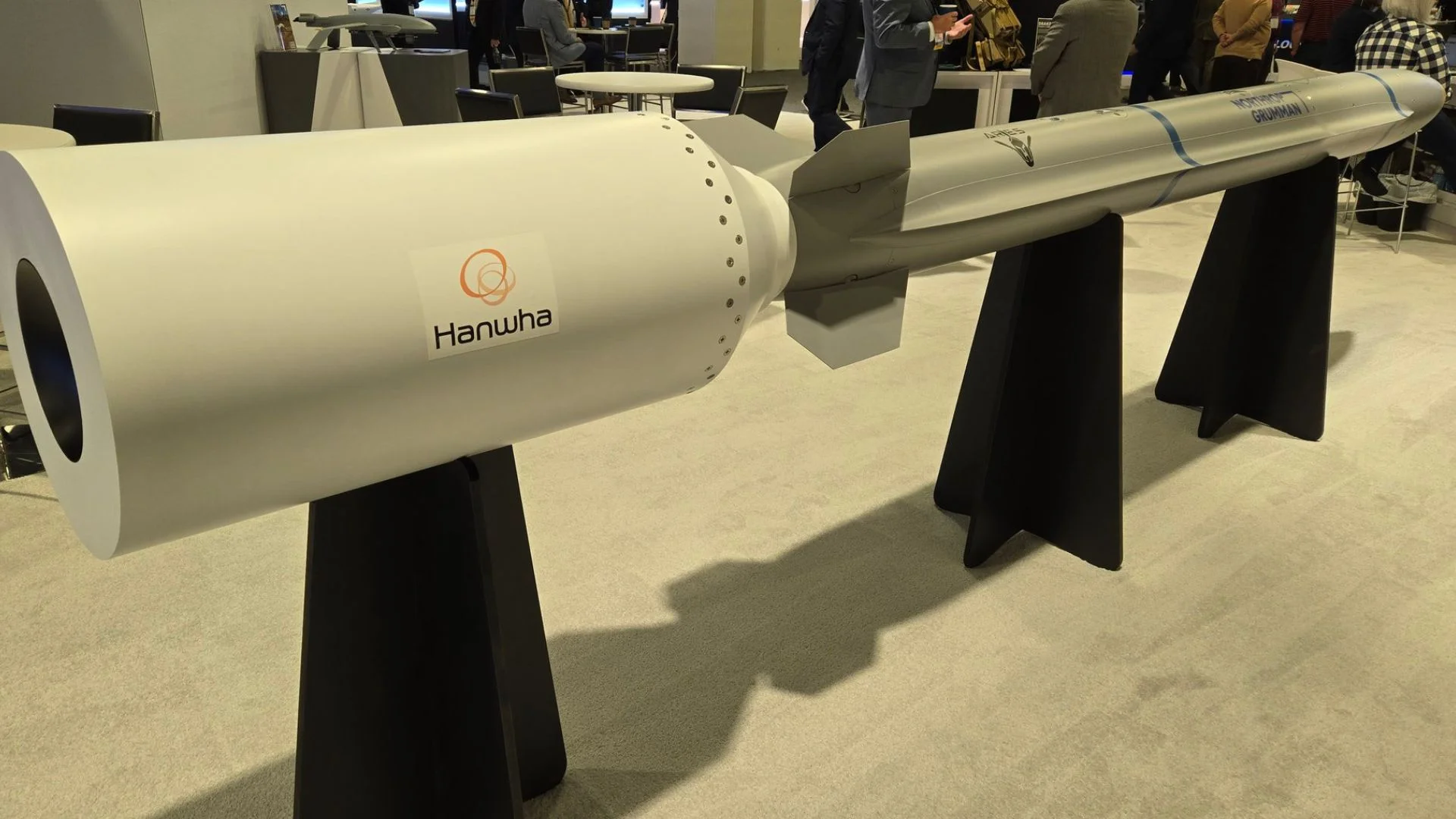
Northrop Grumman and Hanwha Aerospace have taken a first step toward working together on a new solid rocket booster for the Advanced Reactive Strike (AReS) system.
The two companies signed a memorandum of agreement to study how they can jointly develop the booster, which is expected to serve as the system’s first-stage motor.
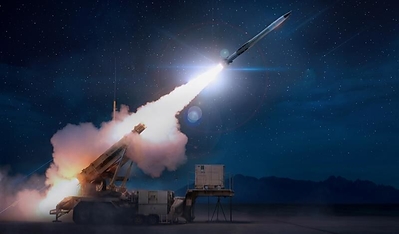
The AReS program focuses on building a surface-launched strike platform designed for long-range missions. It is meant to operate in highly contested environments, where advanced air defense systems and electronic warfare can limit traditional strike options.
At this stage, the agreement does not commit both sides to full development. Instead, it sets the ground for early cooperation. The companies will align technical needs and decide how work can be shared between them.
READ ALSO: Norway Starts New Tank Era as First Foreign Leopard 2A8 Operator, Germany Begins Deliveries
The solid rocket booster sits at the center of this effort. It will help AReS achieve the speed and range needed for rapid-response missions. A strong first-stage motor enables the system to reach targets at greater distances while remaining outside heavily defended zones.
Northrop Grumman is leading the work. The company brings long experience in solid rocket motors, especially from strategic missile and space launch programs. This background provides a strong foundation for developing high-performance propulsion systems.
AReS is designed as a mobile, ground-based system. It can be deployed quickly and used to strike targets at extended ranges. This makes it useful in scenarios where access is limited or airspace is heavily contested.
WATCH ALSO: United Launch Alliance’s Atlas V rocket delivers success for Amazon Leo
The system also fits into a larger shift in military planning. Countries are investing more in stand-off strike weapons that can operate from a distance, reducing risk to personnel and platforms.
The partnership also reflects growing defense ties between the US and South Korea. Both countries are working to expand cooperation in missile systems and long-range fires.
There is also a clear focus on strengthening supply chains. Demand for precision strike weapons is rising, and both sides want to increase production capacity. Hanwha has been expanding its presence in the US through its local operations, while Northrop continues to build international partnerships.
So far, no official timelines have been shared for the AReS program or booster development. The current phase remains focused on planning and coordination.
READ ALSO: Laser from Supercarrier USS George H.W. Bush: US Navy Tests Drone-Killer LOCUST
Still, the move signals a clear direction. As demand grows for long-range, survivable strike systems, partnerships like this are expected to play a key role in shaping the next generation of military capabilities.