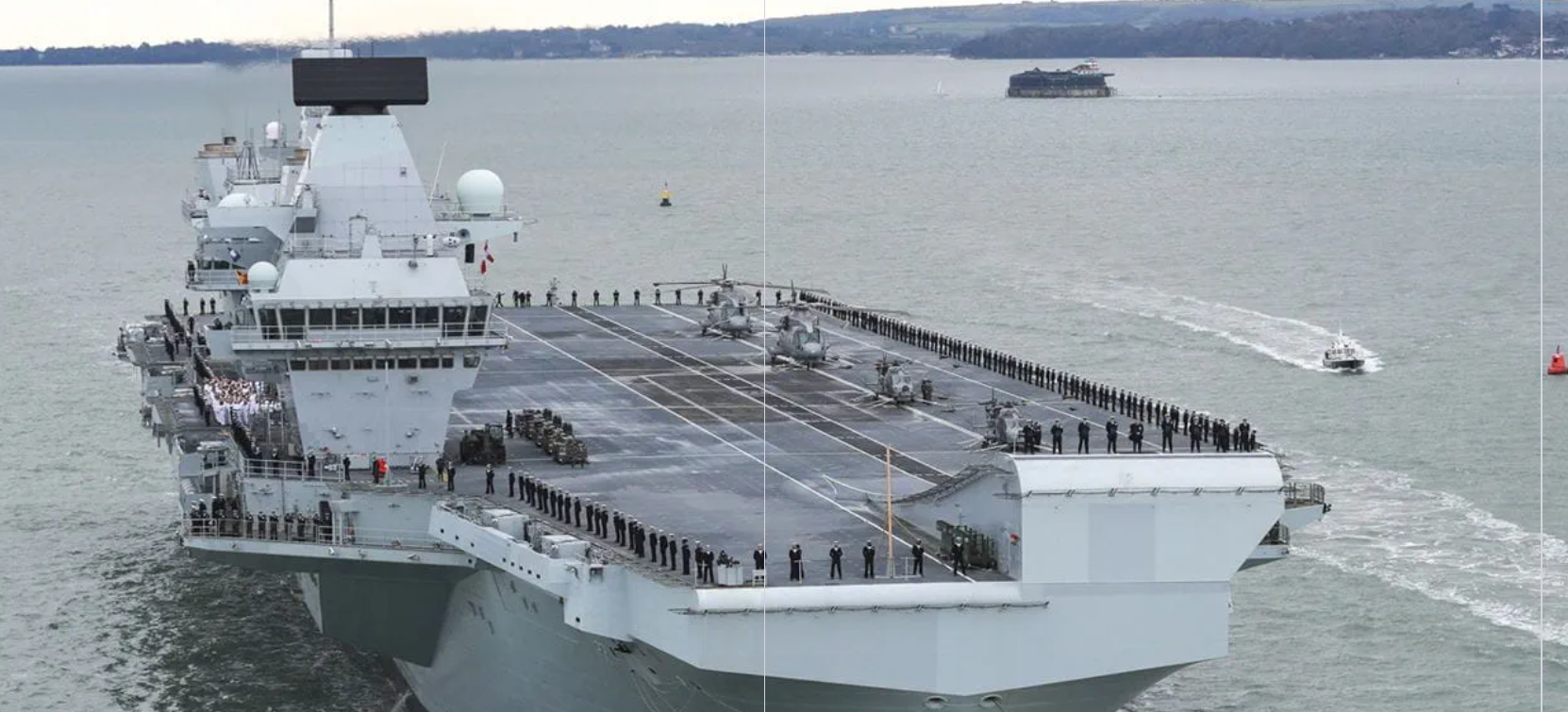
The United Kingdom has halved the readiness time for its aircraft carrier HMS Prince of Wales, reducing the deployment notice from 10 days to 5 amid rising Middle East tensions. The move enables the Royal Navy to respond quickly if the government decides to reinforce allied military operations in the region.
British naval personnel have been alerted to the possibility of rapid deployment as the conflict involving the United States, Israel, and Iran escalates. According to Sky News reporting on March 7, 2026, the decision gives the Royal Navy’s carrier strike capability greater flexibility to project power toward the Persian Gulf, Eastern Mediterranean, and British facilities in Cyprus.
The UK government made the move to prepare contingency options as the regional security environment deteriorates. A British carrier strike group would strengthen the allied naval presence near key strategic areas and help protect maritime shipping lanes should the conflict expand.
READ ALSO: https://modernmechanics24.com/post/scientist-device-earthquake-damage/
HMS Prince of Wales is one of two Queen Elizabeth class carriers operated by the Royal Navy. The 65,000-ton vessel serves as the centerpiece of Britain’s carrier strike capability and can carry up to 36 F-35B Lightning II stealth fighter jets along with helicopters for anti-submarine warfare and early warning missions.
A full carrier strike group typically includes several escort vessels and a nuclear-powered submarine. Type 45 destroyers provide air defense using the Sea Viper missile system, while Type 23 or newer Type 26 frigates handle anti-submarine warfare with towed sonar arrays and Merlin helicopters. A support ship from the Royal Fleet Auxiliary keeps the group supplied during long deployments.
The F-35B fighters aboard the carrier are critical to the group’s combat power. These short-takeoff and vertical-landing aircraft can conduct precision strikes, air defense, and surveillance missions. Their stealth design and advanced sensors allow them to operate in contested environments where older aircraft would be vulnerable.
WATCH ALSO: https://modernmechanics24.com/post/boston-dynamics-atlas-balance-agility/
If deployed to the Middle East, the British carrier group would likely integrate closely with U.S. Navy forces already operating in the Arabian Sea and Eastern Mediterranean. The region around the Strait of Hormuz remains vital to global oil shipments, with about one-fifth of the world’s supply passing through the narrow waterway.
The readiness reduction to 5 days does not mean deployment is imminent. However, the shorter timeline allows British defense planners to rapidly assemble escort ships, aircraft, and supplies if the security situation worsens. The move also signals allied preparedness at a time of heightened international concern.
British military assets already in the region include Royal Air Force bases at RAF Akrotiri in Cyprus, which host Typhoon fighters and surveillance aircraft. A carrier deployment would complement these land-based forces by providing mobile air power that can operate across a wide area without relying on regional basing permissions.
READ ALSO: https://modernmechanics24.com/post/create-molecule-quantum-computing/
The decision underscores the continuing importance of aircraft carriers in modern naval operations. These floating air bases give governments flexible military options to project force, support coalition operations, and protect critical maritime routes without needing permanent forward bases in every region.