Science

CASC Long March-10 prototype launches from Wenchang with Mengzhou spacecraft during pad abort test; first stage performs controlled vertical splashdown.

China’s Mengzhou Spacecraft Passes High-Stress Launch Escape Test, Advancing 2030 Moon Landing

China has completed a high‑stress launch escape test of its Mengzhou lunar spacecraft aboard a Long March-10 rocket at Wenchang. Conducted at max Q by CASC, the test validated independent solid‑fuel crew abort and the first controlled vertical splashdown of the booster stage. The milestone advances China’s 2030 crewed moon landing and reusable rocket technology, with a Lanyue lander already in testing and a 2035 lunar south pole station on the roadmap.

Read More...

UK Scientists Fire Lasers at Darwin’s Priceless Specimens—And Solve a 200-Year-Old Mystery

UK scientists have fired lasers at Charles Darwin’s 200-year-old Galapagos specimen jars to identify their unknown preservation fluids—without opening them. Led by Dr. Wren Montgomery and physicist Sara Mosca, the team used portable SORS spectroscopy to achieve nearly 80 percent accuracy, solving a major conservation challenge for the Natural History Museum London. The method, reported in ACS Omega, could protect over 100 million museum specimens worldwide.

Read More...
University of Sydney researchers demonstrate liquid gallium hydrogen production using sunlight and seawater in a laboratory reactor.

University of Sydney Engineers Use Sunlight and Liquid Metal to Produce Clean Hydrogen at 12.9% Efficiency

University of Sydney engineers have developed a liquid metal method that produces clean hydrogen from seawater using only sunlight. Led by Professor Kourosh Kalantar-Zadeh, the team achieved 12.9% efficiency with a circular gallium-based process. The innovation, reported in Nature Communications, solves a key problem in green hydrogen production and offers a scalable path forward.

Read More...
Samsung's advanced HBM4 memory chips designed for AI accelerators.

Samsung to Launch World’s First HBM4 Mass Production Next Week for NVIDIA’s Next-Gen AI Chips

Samsung will start mass-producing the world’s first HBM4 memory next week for NVIDIA’s Vera Rubin AI GPUs. This 6th-generation high-bandwidth memory, shipping after Lunar New Year, marks a key breakthrough for AI hardware, solving critical data bottleneck issues and setting a new performance standard for the next wave of generative artificial intelligence.

Read More...

ETH Zurich Study Reveals Why Earth’s Chemical “Goldilocks Zone” Is So Rare in the Universe

ETH Zurich scientists found a planet’s fate for life is set during its fiery birth. Their models reveal a narrow chemical “Goldilocks zone” for oxygen that allows phosphorus and nitrogen—essential for DNA and proteins—to be retained. Earth was uniquely lucky; most planets, like Mars, form outside this zone. This dramatically refines where we should search for life in the universe.

Read More...

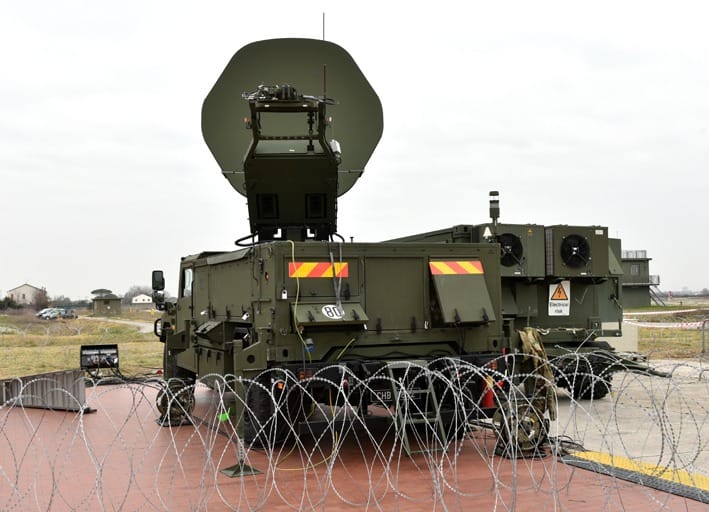
Egypt’s Arab Organization for Industrialization Unveils 1,800km Hamza-3 Suicide Drone at World Defense Show 2026

Egypt’s Arab Organization for Industrialization (AOI) unveiled its Hamza-3 suicide drone with a 1,800 km range and swarming capabilities in Riyadh. Alongside the Sakr 105 rocket launcher and Haris-2 jammer, the systems highlight a push for localized production, though key components are still imported from China, mirroring a broader Arab drive for defense self-sufficiency.

Read More...

China’s Nuclear Posture Under Scrutiny as US-Russia New START Treaty Collapses

As the US-Russia New START treaty ends, the CTBTO has denied U.S. claims of secret Chinese nuclear tests. Focus shifts to China’s ~600-warhead arsenal, growing by ~100 annually. Beijing rejects trilateral arms talks, citing its smaller stockpile versus America’s 5,000+, framing its build-up as essential “strategic deterrence” amidst a collapsing global arms control framework.

Read More...

University of Science and Technology of China Achieves 100km Device-Independent Quantum Encryption Using Single Atoms

Physicist Pan Jianwei and his USTC team have extended device-independent quantum encryption to 100km, a 40x distance record. Using just two entangled rubidium atoms, their system generates secrets secure even if the hardware is compromised. This leap closes a critical gap toward hack-proof quantum networks, even as current speeds remain far slower than conventional internet.

Read More...