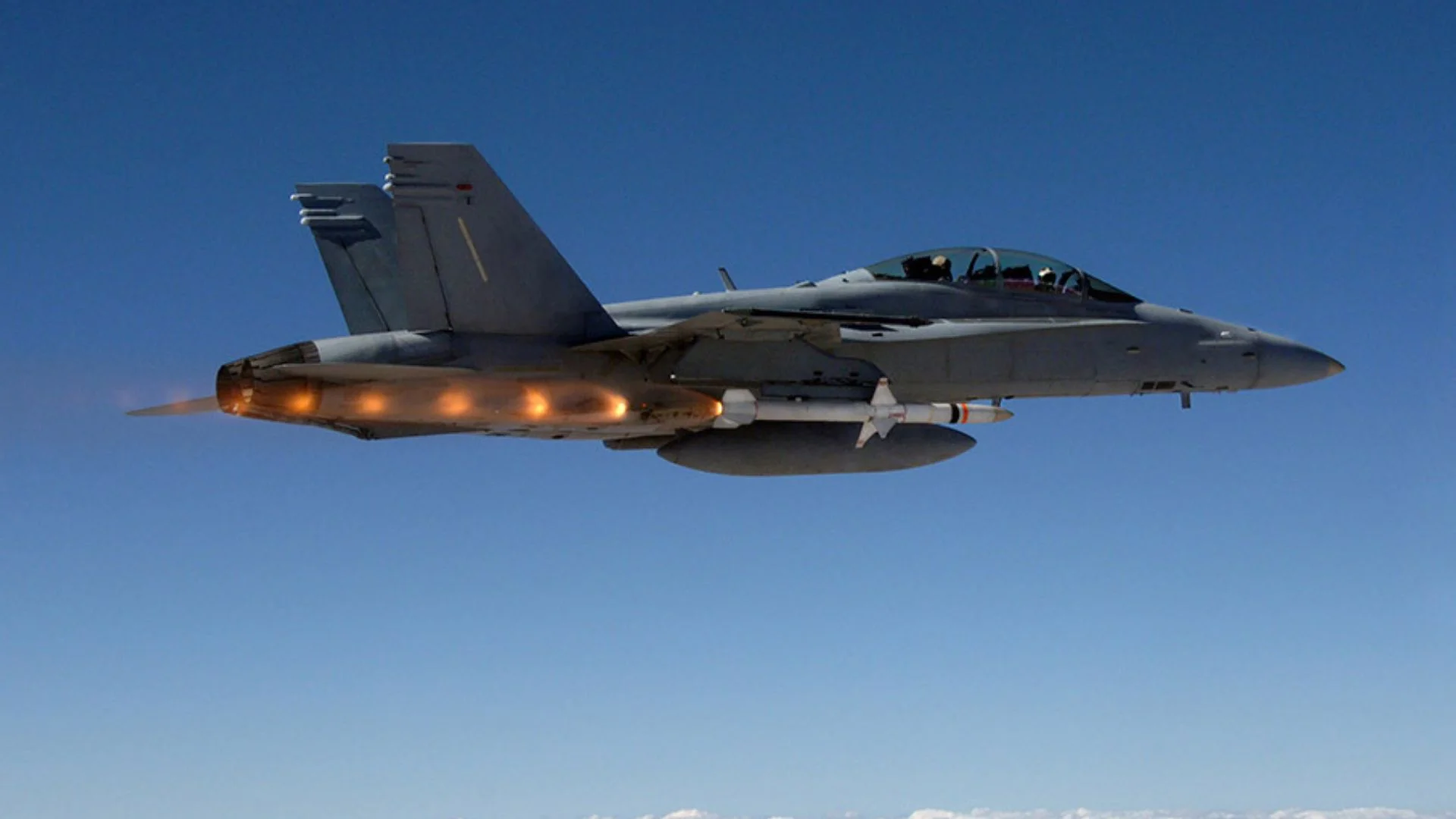
The US Navy is pressing ahead with fielding the AGM-88G AARGM-ER for service by September 2026, even as it temporarily halts new purchases to focus on testing and capability.
The decision to halt procurement in Fiscal Year 2027 has raised eyebrows, but officials describe it as a calculated move.
The Navy wants to complete testing, validate software, and ensure the system performs as intended under operational conditions. Only after meeting these benchmarks will production scale up again.
A Navy spokesperson outlined the plan in direct terms, saying the immediate priority is to meet all testing milestones and field the missile on schedule. The official added that production will later increase to address a backlog of more than 150 missiles. Procurement is expected to resume in Fiscal Year 2028 once confidence in the system is fully established.
READ ALSO: Robots Finally Crack Curved Objects Like Bananas, Cups: What Changed This Time?
Even during this pause, production will continue for international customers. Missiles built in 2027 will go to partner nations through Foreign Military Sales agreements. Countries including Italy, Australia, Finland, and the Netherlands are already approved buyers, while Norway has indicated its intent to acquire the system.
The missile also has strong backing within the US. The US Air Force is preparing to field its own version, underscoring the system’s broader importance across services. This growing demand shows the missile’s relevance in modern combat scenarios.
The AARGM-ER builds on the legacy of the AGM-88 HARM, a system in service since the 1970s. However, this latest variant represents a major leap forward rather than a simple upgrade. It features a completely redesigned body optimized for greater speed and extended range.
Developed by Northrop Grumman, the missile is designed to engage targets at greater range. Its enhanced performance enables aircraft to operate farther from enemy defenses while still executing precise strikes. This is important because adversaries are deploying more capable, layered air defense systems.
WATCH ALSO: Rolls-Royce tests world’s first high-speed marine engine powered by methanol
Internally, the missile retains advanced guidance technology from the AGM-88E AARGM. It combines GPS-assisted inertial navigation with a millimeter-wave radar seeker. This enables it to track and destroy radar emitters even if they shut down to avoid detection.
Beyond its primary mission, the missile can also strike fixed targets using pre-programmed coordinates. This adds flexibility, allowing it to support a wider range of operations. Such versatility is an important asset in complex, rapidly changing battle environments.
The Navy plans to integrate the missile first on its F/A-18E/F Super Hornet and EA-18G Growler fleets. Both aircraft already operate earlier versions of the missile, making the transition smoother. The improved range and speed will significantly enhance their effectiveness and survivability.
The AARGM-ER is also designed with stealth platforms in mind. It can be carried internally by the F-35 Lightning II, preserving the aircraft’s low-observable profile. Future plans include external integration across all F-35 variants and legacy F/A-18 Hornet aircraft.
Despite its promise, the program has faced major challenges. Earlier plans targeted for operational deployment as early as 2023. However, issues related to the rocket motor, structural components, and software delayed progress.
READ ALSO: MQ-4C Triton Vanishes Mid-Flight After 50,000 Ft Drop, US Navy Confirms Crash
A Government Accountability Office report highlighted these problems. It noted that the program had to identify root causes and apply corrective actions, including changes in production processes. These efforts have helped stabilize the program, though at the cost of time.
At the same time, the Navy is exploring future options through the Advanced Emission Suppression Missile concept. This proposed system shares many characteristics with the AARGM-ER but may include the ability to engage airborne targets. Its exact role alongside the current missile is still unclear.
Meanwhile, the US Air Force is developing its own derivative, the Stand-in Attack Weapon. Designed for high-value and time-sensitive targets, it is expected to play a key role in future strike operations. The Air Force aims to bring it into service around 2026, with testing already underway on F-16 aircraft.
The AARGM-ER design is also expanding into a wider family of systems. Northrop Grumman has proposed a ground-launched variant called the Advanced Reactive Strike Missile. This reflects a growing emphasis on multi-domain capabilities and flexible deployment options.
Modern air defense networks are growing more advanced, relying on advanced sensors and layered protection. The AARGM-ER is specifically designed to counter these systems by targeting their radar components. By disrupting enemy sensing and tracking, it opens the door for follow-on operations.
The Navy’s decision to pause procurement does not signal a lack of confidence. Instead, it highlights a disciplined approach to fielding advanced technology. Ensuring the missile performs reliably in real-world conditions remains the top priority.
WATCH ALSO: Explore Raytheon’s giant facility where it develops powerful naval radar SPY-6
If current plans hold, the AARGM-ER will enter service on schedule in September 2026. That milestone will mark a notable leap forward in improving the Navy’s strike capabilities. Even with a temporary pause in buying, the program continues to move ahead with a clear purpose and growing strategic importance.