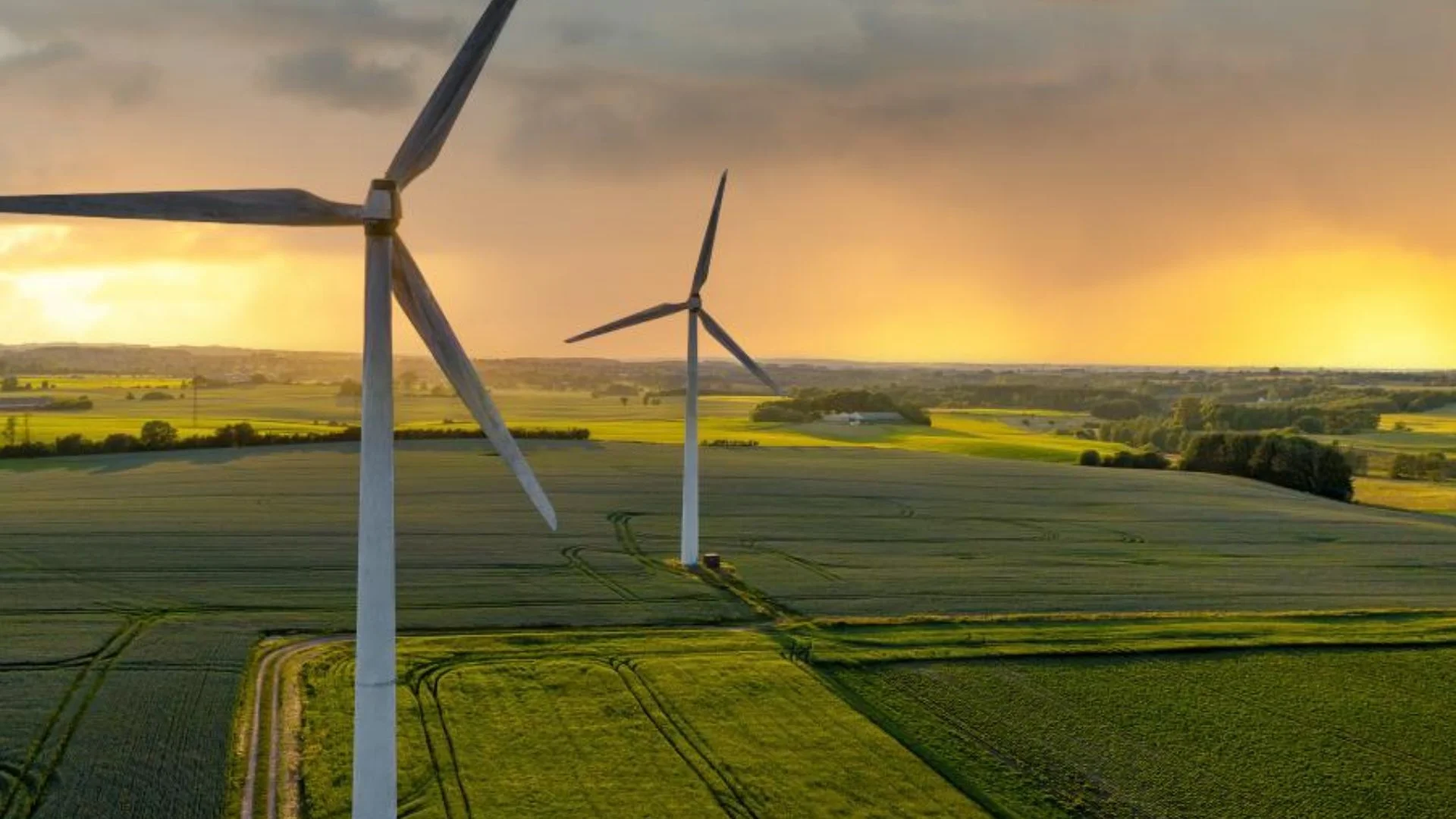
Germany is constructing the world’s tallest wind turbine in Brandenburg as the country accelerates its shift toward renewable energy.
The giant 365-meter structure, rising near the town of Schipkau in the former coal-mining region of Lusatia, will stand taller than the Eiffel Tower once completed.
The project has become a major symbol of Germany’s clean energy ambitions while also triggering political debate over the future of energy, industry, and local communities.
The project is led by Dresden-based engineering company Gicon. Workers recently lifted hundreds of tonnes of steel into place using giant construction cranes at the forest site. Despite difficult weather conditions, construction has moved quickly in recent weeks.
The turbine is expected to begin operating before the end of the year. Its large rotor blades will capture strong, high-altitude winds that are more stable than winds closer to the ground. Developers say this design allows the turbine to produce far more electricity than standard onshore wind systems.
READ ALSO: 5,000 Dinosaur Footprints in China Reveal Slowest Carnivore Walking Speed Ever Recorded
Wind Turbine Breaks Records
According to Gicon founder Jochen Grossmann, the turbine will generate enough power for around 7,500 households. He said the output is comparable to that of an offshore wind turbine despite being located on land. Offshore turbines are normally more productive because of stronger and more consistent sea winds.
The project has received between 20 and 30 million euros in financial support from a German government technology agency. Officials see the development as part of Germany’s long-term energy transition strategy. The country has spent years reducing its dependence on coal, oil, and nuclear energy.
Germany closed its last nuclear power plants in 2023 and continues to phase out coal-fired power generation. Renewable energy sources produced nearly 59 percent of Germany’s electricity last year. Wind power remains one of the country’s largest renewable energy sources.
The push for renewable energy gained urgency after Russia’s invasion of Ukraine disrupted European gas supplies in 2022. Rising global tensions in the Middle East have also increased concerns about energy imports and fuel security. German officials are now trying to strengthen domestic energy production to avoid future supply shocks.
Grossmann said Germany has limited natural resources and few alternatives beyond solar and wind energy. He argued that renewable power is essential for meeting climate goals and improving energy independence. Supporters believe projects like the Schipkau turbine can reduce long-term reliance on imported fossil fuels.
WATCH ALSO: A Brazilian skateboarder set a world record as he turned 22-storey skyscraper into giant ramp
However, the project has also faced criticism from the far-right Alternative for Germany party(AfD). The party has questioned the environmental and social impact of large wind farms across the country. Local opposition has grown in parts of eastern Germany where jobs in the coal industry have disappeared.
AfD regional lawmaker Birgit Bessin said local residents should have more influence over such projects. She pointed to concerns from hunters and operators of a nearby airfield. She also argued that nuclear energy remains a better option for low-emission electricity generation.
The AfD has also raised concerns about turbine materials and microplastics from rotor blades. Scientific studies have not found evidence of health risks linked to those particles at current exposure levels. Environmental agencies continue to monitor the issue as turbine technology evolves.
Germany’s current government under Chancellor Friedrich Merz has taken a more cautious approach toward renewable energy expansion than the previous administration. Economy Minister Katherina Reiche has announced plans for new gas-fired power plants to support the national grid. Officials say gas plants are needed because wind and solar power depend on weather conditions.
Germany has struggled with high electricity prices in recent years. Energy costs increased sharply after disruptions in global gas markets and geopolitical conflicts. Industry groups have warned that high energy prices have weakened economic growth and manufacturing competitiveness.
Local leaders in Schipkau are trying to ensure residents benefit directly from renewable energy projects. Mayor Klaus Prietzel has suggested the town could eventually take ownership of the giant turbine. He believes this could help lower electricity bills for local households.
READ ALSO: Soft Ionogel Supports 5,000x Weight While Staying Flexible on Human Skin
Residents near existing wind farms already receive annual payments funded by energy revenues. Local authorities currently distribute about 80 euros per resident each year. Officials describe the payments as a way to improve public acceptance of renewable energy projects.
Critics from the AfD have dismissed the payments as political incentives. Supporters argue that sharing profits with local communities creates stronger support for energy infrastructure. Similar community-benefit programs are being discussed in other parts of Germany and Europe.
The Schipkau turbine represents more than an engineering project for Germany. It reflects the country’s wider struggle to balance clean energy goals, economic pressure, and political divisions. As construction continues, the project is expected to shape future debates about Europe’s energy transition and industrial future.