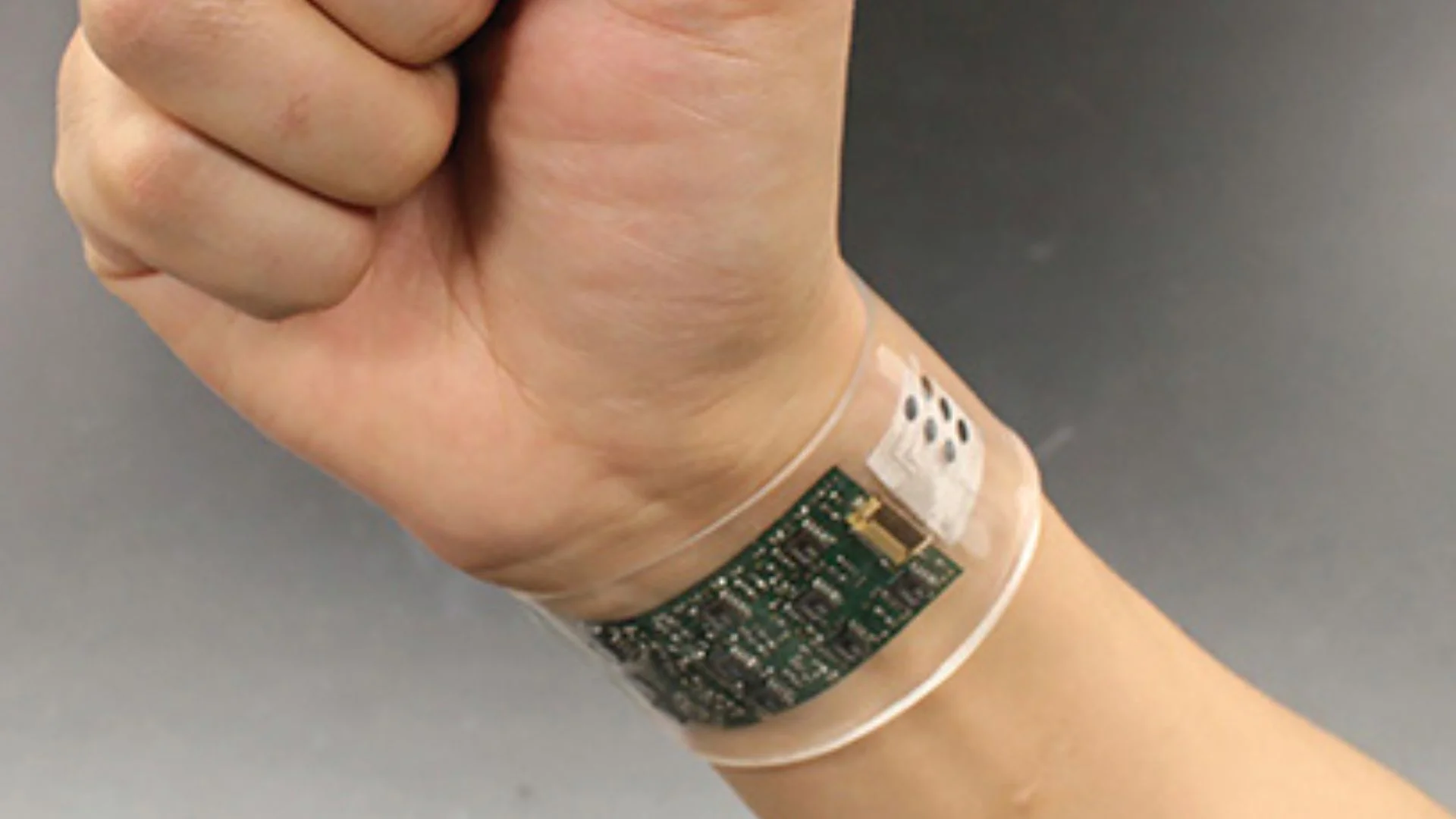
Researchers at the University of Hong Kong have developed a powerful new soft material that could improve the future of wearable medical devices and bioelectronics.
The material, known as an ionogel, is soft, flexible, and comfortable, allowing it to stay in close contact with human skin. At the same time, it is strong enough to support more than 5,000 times its own weight without breaking.
The breakthrough was led by Professor Lizhi Xu from the university’s Department of Mechanical Engineering. The findings were published in the journal Science Advances.
Ionogel: Strong Like Plastic, Soft Like Skin
Soft electronic materials are becoming increasingly important for wearable health monitors, smart bandages, and future medical technologies. However, many existing soft materials tear easily or lose performance after repeated use.
READ ALSO: Collins Aerospace Wins Bell Contracts to Supply Five Key Systems for US Army’s MV-75 FLRAA
The newly developed ionogel solves this problem by combining flexibility with exceptional durability.
Researchers said the material has mechanical strength comparable to that of some plastics while remaining soft and stretchable. This was achieved through a specialized microstructural engineering process that strengthens the internal bonding between the material’s components.
“The key is to strengthen the bonds between different parts within the material,” Professor Xu explained. “This interfacial engineering significantly enhances the mechanical strength, which is vital for real-world biomedical uses.”
Better for Wearable Medical Devices
The research team also showed that the ionogel works well as a wearable sensor. In tests, it successfully monitored important body signals, including electrocardiogram (ECG) heart activity and electromyography (EMG) muscle activity.
WATCH ALSO: DRDO Reveals Advanced Armoured Platform, Boosting India’s Defence Power
Its performance was reported to be similar to that of commercial medical monitoring devices already in use today.
According to the first author, Dr. He Zhang, ionogels are especially useful for wearable electronics because they can continue to work reliably under everyday conditions.
The material is resistant to drying, breathable, antibacterial, and ion-conducting, making it suitable for long-term skin contact. These features are important for medical wearables that need to stay attached to the body for hours or even days.
Smart Bandage Speeds Up Healing
Beyond sensors, the team also created a smart electronic bandage using the new ionogel.
The bandage can deliver medicine directly to wounds, provide electrical stimulation to promote tissue repair, and help prevent bacterial infections.
In animal studies, wounds treated with the smart bandage healed faster and showed lower levels of inflammation than those treated with traditional treatments.
READ ALSO: REK: S.F.’s Robot Fight Hub, Humanoid Bots Battle, Perform & Are Available to Rent or Buy
Researchers believe the technology could eventually help patients with chronic wounds, injuries, or post-surgery recovery.
Future of Soft Bioelectronics
Scientists around the world are working to develop next-generation wearable technologies that are lighter, softer, and more durable. Advances in ionogel materials could help make flexible electronics more practical for healthcare, fitness tracking, rehabilitation, and even human-machine interaction.
The HKU team says their durable ionogel opens new possibilities for safer and longer-lasting wearable medical devices that remain comfortable on human skin.