NATO countries are rapidly expanding purchases of low-cost interceptor drones as modern warfare shifts toward cheaper and scalable air defense systems.
American startup Perennial Autonomy has won new military contracts in Europe and the Middle East for its Merops interceptor drone. Ukrainian companies are also attracting attention with cheaper interceptor drones that have already been tested in large-scale combat.
The growing race reflects a major change in defense priorities, where affordability and production speed now matter as much as advanced technology.
NATO Expands Low-Cost Drone Defense Systems
Lithuania has become the latest NATO member to adopt the Merops interceptor drone system developed by American defense company Perennial Autonomy. The Baltic nation approved the purchase of 48 interceptors on April 22 as part of a pilot program to strengthen defenses along its borders with Russia and Belarus.
READ ALSO: US Firm CycloKinetics Launches Fuels That Extend Jet and Missile Combat Range
The purchase followed earlier training and deployments involving Polish and Romanian forces along NATO’s eastern flank. Lithuanian officials said the system can intercept Iranian-designed Shahed drones and similar aerial threats increasingly used in modern conflicts.
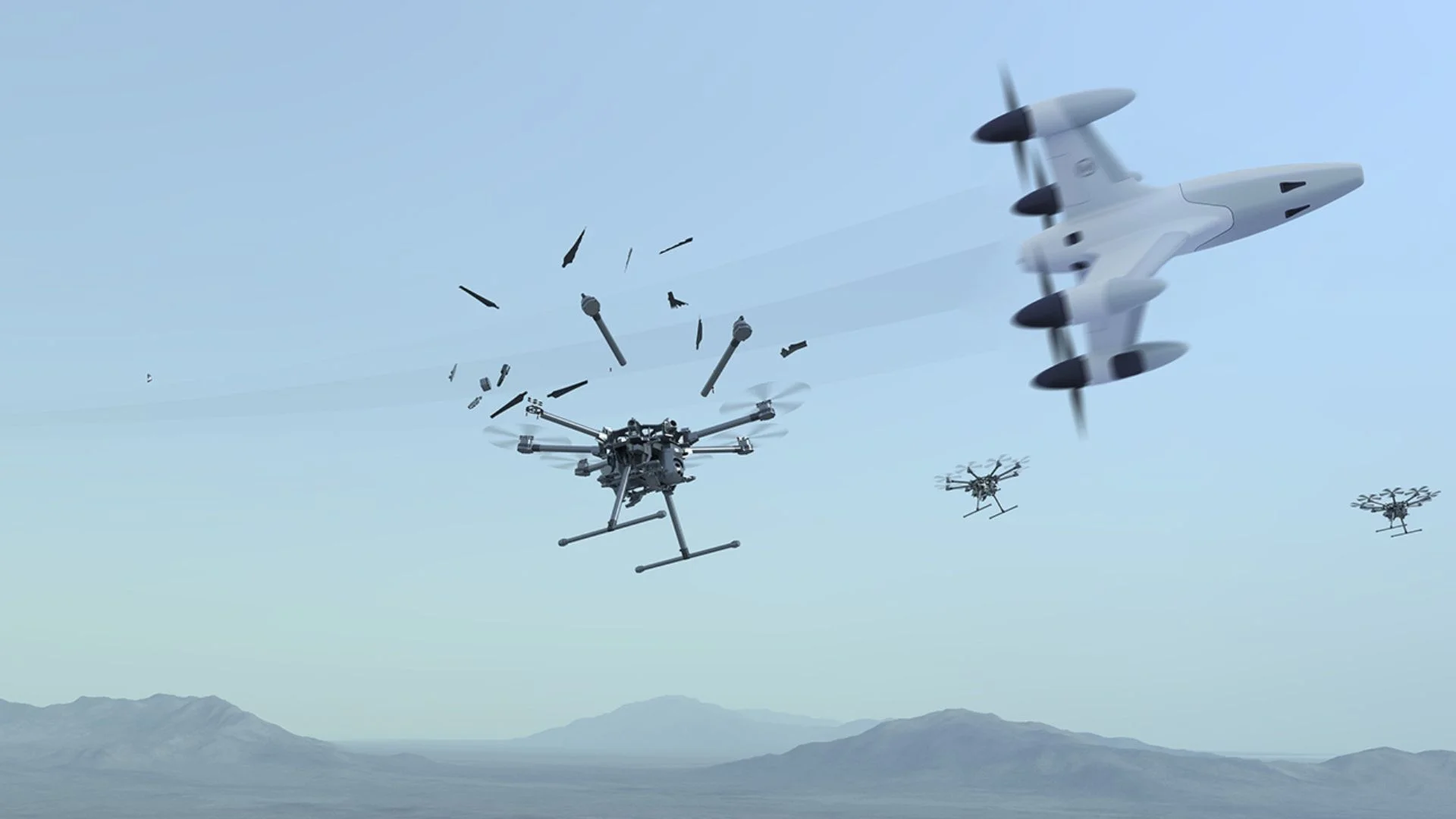
Merops is part of a new category of low-cost air defense systems designed specifically to counter inexpensive attack drones. Traditional missile defense systems often cost millions of dollars per launch, creating a major financial imbalance when defending against drones that may cost only tens of thousands of dollars to produce.
The issue became more urgent after Iranian drone attacks targeted American military positions in the Middle East earlier this year. During congressional testimony in April, US Army Secretary Dan Driscoll confirmed that Merops drones had successfully intercepted Iranian Shahed drones aimed at American forces.
The Pentagon moved quickly to expand purchases after those attacks intensified in February. Driscoll told lawmakers the Army bought 13,000 Merops interceptors within eight days, arguing the roughly $15,000 cost per interceptor was far cheaper than using Patriot missiles that cost more than $3 million each.
WATCH ALSO: DRDO Reveals Advanced Armoured Platform, Boosting India’s Defence Power
The growing use of interceptor drones highlights how warfare is changing across multiple regions. Military planners are increasingly focused on finding systems that can handle large waves of low-cost drones without exhausting expensive missile stockpiles.
Ukrainian Drone Makers Challenge Western Firms
Although Merops has attracted NATO interest, Ukrainian manufacturers already dominate much of the low-cost interceptor market. Ukrainian companies have spent years refining drone defense technology during the ongoing war with Russia, giving them extensive battlefield experience and large-scale production capabilities.
Most Ukrainian-built interceptor drones cost between $1,000 and $3,000 per unit. These systems have reportedly destroyed thousands of Russian Shahed drones since 2024 using coordinated battlefield tracking and targeting systems developed during the war.
One of the leading Ukrainian firms is General Cherry, whose Bullet interceptor drone has gained attention for its speed and combat record. The jet-powered system reportedly reaches speeds above 300 kilometers per hour and operates at altitudes up to 6,000 meters.
General Cherry co-founder Stanislav Gryshyn said no single interceptor system dominates the market across all categories. He explained that different systems perform better under different conditions, including speed, altitude, range, weather, and operational requirements.
The company reported more than 11,000 confirmed enemy drone kills during March alone through Ukraine’s battlefield monitoring systems. Gryshyn said the company is scaling production rapidly and can now manufacture up to 100,000 drones each month.
READ ALSO: DeepSeek V4 Emerges as Huawei’s Chips Begin Shaping the Future AI Power Game
Several other Ukrainian interceptor systems have also become widely used during the conflict. These include SkyFall’s P1-SUN, Wild Hornets’ Sting, the Ukrainian-British Octopus platform, and General Cherry’s Bullet interceptor.
Ukraine’s expanding drone industry is now moving beyond domestic military use. President Volodymyr Zelenskyy recently introduced a new arms export strategy designed to open international markets while ensuring Ukrainian forces continue to receive priority access to production.
Officials in Kyiv say parts of Ukraine’s defense sector now operate with a surplus of up to 50 percent. The government has identified Europe, the Middle East, the Persian Gulf, and the Caucasus as key export markets for future drone sales.
Pentagon Spending Signals Massive Drone Defense Shift
The US is rapidly increasing its investment in drone warfare and counter-drone technology. Pentagon spending on drone and interceptor systems has accelerated since the start of the Middle East conflict, where drone attacks have caused major operational and financial challenges.
According to defense reports, the Pentagon has committed more than $600 million to counter-drone procurement programs since the conflict began.
Defense Secretary Pete Hegseth recently told lawmakers that total drone-related spending may reach $54 billion to $74 billion during the 2027 fiscal cycle, once counter-drone programs are fully included.
Competition for those defense contracts is becoming increasingly intense. Ukrainian firms are now competing directly against American and European companies in international drone programs focused on affordability and rapid manufacturing.
WATCH ALSO: India Tests Powerful Naval Anti-Ship Missile
SkyFall, working through its British partner Skycutter, recently won the opening stage of the Pentagon’s $1.1 billion Drone Dominance competition in Georgia. The program aims to field more than 300,000 low-cost drones for US military forces, with Ukrainian-designed systems finishing among the top performers.
Perennial Autonomy, meanwhile, continues to expand its defense partnerships. The company was launched in 2023 by former Google chief executive Eric Schmidt under the name White Stork, and later rebranded twice.
The company now employs former engineers from major technology firms, including Apple, Google, and SpaceX. It has also recruited former Pentagon innovation officials as it seeks to secure long-term military procurement contracts.
Military analysts say the competition now centers less on advanced hardware alone and more on production scale and operational cost. Systems that can be produced quickly and deployed in large numbers are increasingly viewed as essential for future conflicts involving mass drone attacks.
Ukraine’s experience has heavily shaped that thinking over the past two years. Russian forces launched a record 6,663 drones against Ukraine during April alone, averaging more than 220 drone attacks each night.
That level of sustained pressure has forced Ukrainian companies to prioritize cheaper interceptor systems capable of operating at scale. Gryshyn said large drone attacks cannot be countered effectively with systems costing tens of thousands of dollars per intercept.
The expanding global demand for low-cost interceptor drones suggests the defense market is entering a new phase where affordability, manufacturing speed, and combat adaptability may determine future military advantage.