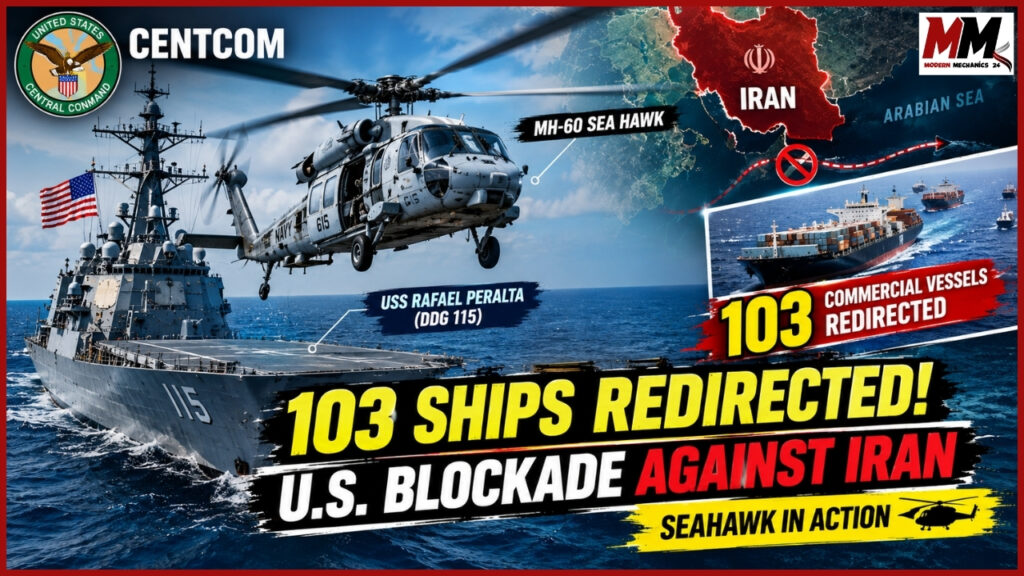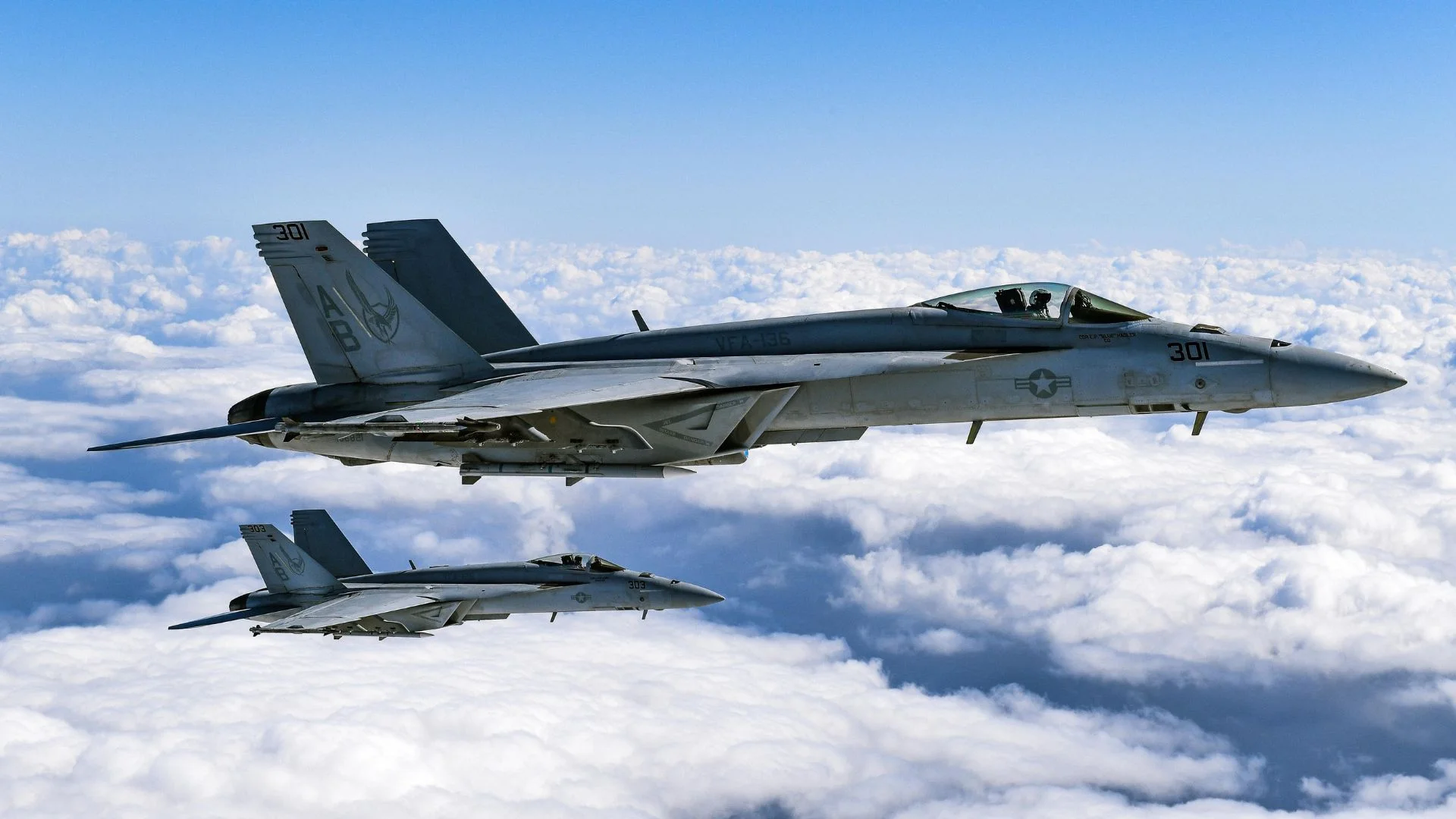
The US Navy used an F/A-18 Super Hornet fighter jet to disable an Iranian-flagged ship in the Gulf of Oman during an escalating maritime standoff near the Strait of Hormuz.
American officials said the aircraft targeted the vessel’s rudder with precise 20mm cannon fire after repeated warnings were ignored.
The operation highlighted not only the growing tensions in the region but also the unique capabilities of the Navy’s frontline carrier-based fighter jet.
Why the F/A-18 Super Hornet Was Used
US Central Command said the incident involved the Iranian-flagged tanker M/T Hasna, which was reportedly traveling toward an Iranian port despite an active US naval blockade. American forces tracked the vessel in international waters before issuing multiple radio warnings. When the ship failed to comply, the Navy launched an F/A-18 Super Hornet from the aircraft carrier USS Abraham Lincoln.
READ ALSO: B-1B Apocalypse II Returns From Boneyard as US Air Force Expands Bomber Fleet
Instead of sinking the vessel, the fighter jet used controlled cannon fire to damage the ship’s steering system. The Super Hornet reportedly fired several rounds from its M61 Vulcan 20mm rotary cannon directly at the rudder area. Officials said the action forced the vessel to stop its movement toward Iran without causing catastrophic damage.
The operation demonstrated one of the F/A-18 Super Hornet’s key strengths. The aircraft is designed for precision strike missions and can quickly respond to threats at sea or on land. Its speed, maneuverability, and advanced targeting systems allow pilots to engage specific parts of a target with high accuracy.
The F/A-18 Super Hornet is one of the US Navy’s most important combat aircraft and operates from aircraft carriers worldwide. Built by Boeing, the twin-engine fighter entered service in the late 1990s as an upgraded and larger version of the earlier F/A-18 Hornet. Today, it serves as the backbone of the Navy’s carrier air wings.
The aircraft can perform several missions during a single deployment. It can carry out air combat, ground attacks, reconnaissance, electronic warfare support, and maritime strike operations. This flexibility makes the Super Hornet valuable in fast-changing military situations, such as the current Gulf crisis.
WATCH ALSO: Poland and Portugal Gain New Space Capabilities After ICEYE Launch
Its M61 Vulcan cannon fires up to 6,000 rounds per minute and is commonly used in close-range combat or precision strafing missions. In the Gulf of Oman incident, the weapon allowed the Navy to disable the vessel without using missiles or larger naval guns. That reduced the risk of sinking the ship or causing major casualties.
Super Hornet Features Give Navy Fast Response Power
The Super Hornet carries advanced radar and sensor systems that help pilots identify and track targets over long distances. Its APG-79 Active Electronically Scanned Array radar can simultaneously monitor air and sea targets. This allows the aircraft to operate effectively in crowded and high-risk maritime environments.
The fighter also includes secure communications and data-sharing systems that connect it with warships, surveillance aircraft, and command centers. That networked capability helps American forces coordinate operations quickly during tense encounters at sea. In blockade enforcement missions, fast communication can prevent misunderstandings and reduce escalation risks.
Carrier-based operations are another major advantage of the Super Hornet. Because it launches from aircraft carriers, the jet can operate close to conflict zones without relying on foreign air bases. In this case, USS Abraham Lincoln provided immediate air support in the Gulf region.
Aircraft carriers allow the Navy to maintain a continuous military presence far from the US mainland. A carrier strike group can move rapidly into contested areas and launch fighter jets within minutes. This mobility makes the Super Hornet an important tool for maritime security operations.
READ ALSO: US Firm CycloKinetics Launches Fuels That Extend Jet and Missile Combat Range
The aircraft’s design also supports long missions over water. External fuel tanks and aerial refueling capabilities allow the Super Hornet to stay airborne for extended periods. Endurance is crucial in regions like the Gulf of Oman, where ships may need to be monitored for hours before action is taken.
Military experts often compare the Super Hornet to a multi-tool because of its versatility. Unlike specialized aircraft built for only one task, the jet can shift between combat roles during the same mission. This adaptability reduces the need for multiple aircraft types during naval operations.
The latest incident also showed how fighter jets can be used in limited-force enforcement missions instead of full-scale attacks. By targeting the rudder rather than the hull or engine room, the Navy disabled the ship without causing a major maritime disaster. Such precision actions are increasingly important in crowded global shipping lanes.
Gulf Tensions Continue to Rise
The Hasna incident came shortly after President Donald Trump paused Project Freedom, a US operation created to protect commercial shipping near the Strait of Hormuz. The mission was launched after repeated attacks on vessels operating in the region. However, the operation lasted only briefly before diplomatic discussions with Iran resumed.
The Strait of Hormuz remains one of the world’s most strategically important waterways. Nearly 20 percent of global oil shipments pass through the narrow corridor linking the Persian Gulf with international markets. Any military confrontation in the area can quickly affect global trade and energy prices.
The attack on the Iranian-linked ship was the second known US action against a blockade-running vessel in recent weeks. Earlier, the destroyer USS Spruance fired inert rounds into the engine room of the Iranian cargo ship Touska after it allegedly ignored warnings. Both operations focused on disabling ships instead of destroying them.
At the same time, maritime threats against civilian vessels continue to grow. A French-owned container ship, CMA CGM San Antonio, was reportedly struck by an Iranian drone and left drifting without power. Maritime agencies confirmed that several crew members were injured in the attack.
WATCH ALSO: Elon Musk’s Neuralink Robot Makes Brain-Computer Connection Possible
Shipping companies and international organizations still consider the Strait of Hormuz unsafe for normal transit. Major firms, including Maersk and Hapag-Lloyd, have warned that risks remain extremely high despite ongoing diplomatic talks. Many commercial operators continue to avoid the route whenever possible.
The latest use of the F/A-18 Super Hornet highlights how modern naval aviation is shaping maritime security operations. Fighter jets are now being used not only for combat but also for rapid enforcement and precision-response missions at sea.
As tensions continue in the Gulf region, aircraft like the Super Hornet are expected to play an even larger role in future naval operations.