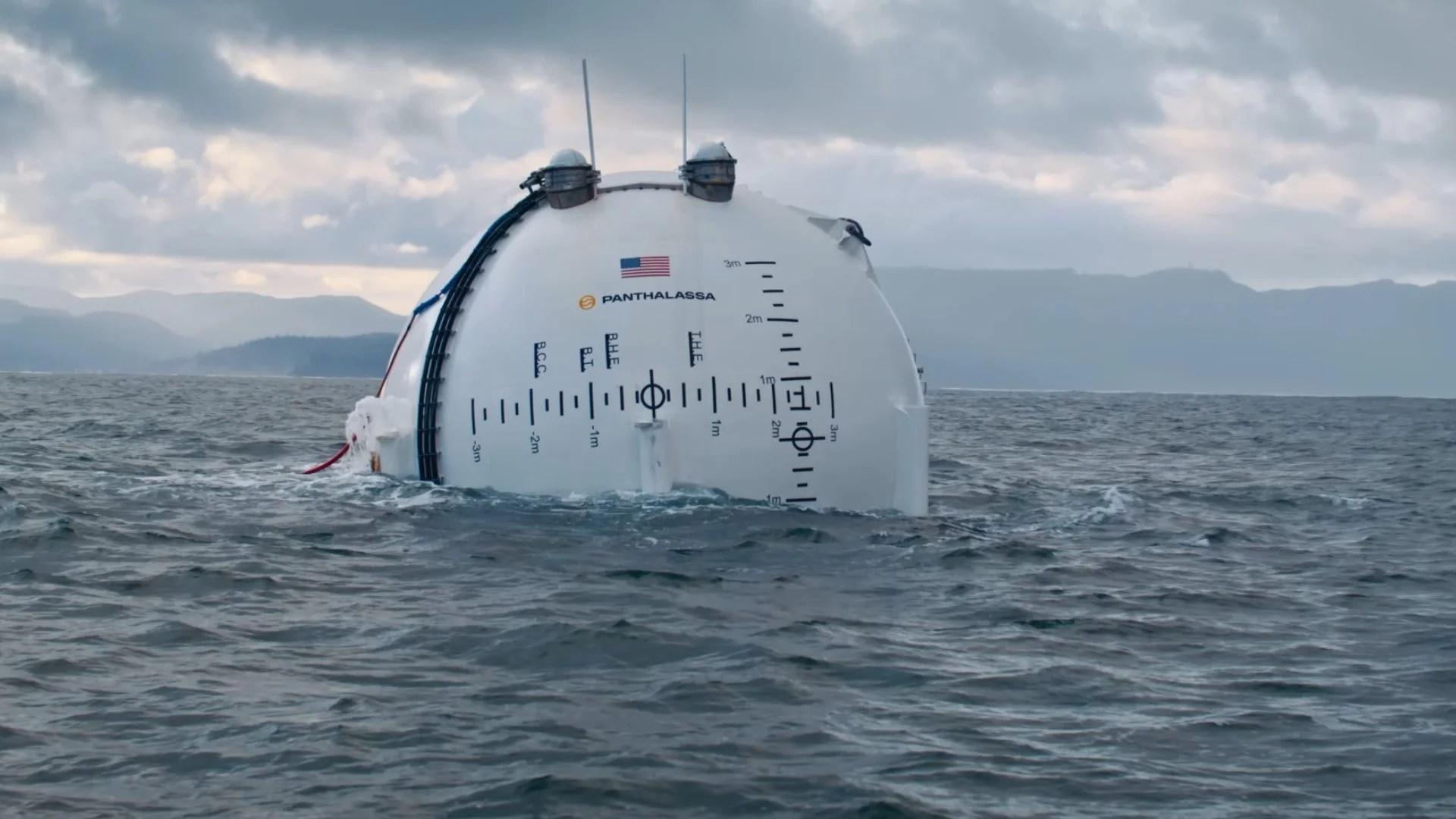
As artificial intelligence companies race to secure power, cooling, and space for expanding data centers, a Silicon Valley-backed startup plans to move AI computing into the ocean using floating systems powered by waves.
The company, Panthalassa, plans to test its latest offshore AI node in the Pacific Ocean in 2026 as interest in alternative data center infrastructure continues to rise.
Silicon Valley Backs Floating AI Data Centers
Panthalassa has raised about $210 million so far to develop floating AI data centers that operate far from land. The latest funding round added $140 million and will help the company build a pilot manufacturing facility near Portland, Oregon. The startup says the investment will also speed up deployment of its ocean-based computing systems.
READ ALSO: Russia Starts Nuclear-Capable Missile Tests Before Moscow Victory Day Parade
Among the investors supporting the company is Peter Thiel, a well-known figure in Silicon Valley technology and defense sectors.
The project reflects growing pressure on tech firms to find new ways to power AI systems. Large AI companies are struggling with electricity shortages, rising land costs, and opposition from communities concerned about water use and environmental impact.
Panthalassa’s idea focuses on bringing computing power directly to renewable energy sources rather than transmitting energy long distances to land-based data centers. The company wants its floating systems to generate electricity from ocean waves and use that power to run AI chips onboard. Data generated by the AI models would then be transmitted to users worldwide through satellite networks.
The company describes the concept as transforming an energy distribution problem into a data transmission problem. Instead of building massive land-based power lines and cooling systems, the nodes would generate energy and run AI tasks directly at sea. This approach aims to reduce pressure on traditional energy grids already strained by AI expansion.
How Ocean AI Nodes Work
Each Panthalassa node resembles a large steel sphere floating on the ocean surface with a long vertical tube extending underwater. Ocean waves force water upward through the tube into a pressurized chamber inside the structure. The stored water then flows through a turbine that generates electricity for onboard computing systems.
WATCH ALSO: DRDO Reveals Advanced Armoured Platform, Boosting India’s Defence Power
The surrounding seawater would also naturally help cool the AI hardware. Cooling is one of the highest operating costs in modern data centers because AI chips generate significant heat during processing. Traditional facilities often consume significant amounts of electricity and fresh water to prevent systems from overheating.
Panthalassa believes ocean cooling could improve efficiency while reducing environmental stress on local water supplies. Experts say cooler ocean temperatures may give them an advantage over many land-based facilities in warmer regions.
However, engineers also note that saltwater environments can create corrosion and maintenance challenges for sensitive equipment.
The company’s newest prototype, called Ocean-3, is expected to begin testing in the northern Pacific Ocean later in 2026. The structure measures about 85 meters long and stands nearly as tall as famous buildings such as Big Ben or the Flatiron Building. Earlier versions, including Ocean-1 and Ocean-2, already completed smaller-scale testing operations between 2021 and 2024.
Ocean-2 underwent a three-week sea trial off the coast of Washington in February 2024. According to company leadership, those earlier tests focused on wave energy conversion and offshore durability. Panthalassa now hopes to scale the technology into a large network of autonomous floating computing systems.
Major Challenges for Offshore AI Computing
Despite strong investor interest, the project faces serious technical and operational hurdles. One major issue involves communication speeds between offshore nodes and users on land. Modern AI systems rely heavily on high-speed fiber-optic cables, while satellites still offer lower bandwidth and higher delays.
READ ALSO: US Navy F/A-18 Super Hornet Disables Iranian Tanker With Cannon Fire in Gulf of Oman
Experts say satellite communication may work for basic AI responses and inference tasks, but may struggle with larger workloads that require constant coordination across multiple computing systems. Moving huge datasets between floating nodes may also become difficult and expensive. Some analysts suggest physical transport of storage devices by ship may still be necessary for large-scale data transfers.
Maintenance is another major concern for floating AI infrastructure. Ocean conditions expose equipment to storms, saltwater corrosion, and long periods without human access. Panthalassa says its systems are designed to survive harsh ocean conditions for more than a decade with minimal maintenance.
The company also plans for the nodes to operate autonomously and move under their own power when necessary. Initial deployments would likely require support ships for transportation and installation. Building reliable offshore systems at this scale remains largely untested in the AI industry.
The concept of underwater or offshore data centers is not entirely new. Microsoft previously experimented with underwater data centers through its Project Natick initiative in 2015 and 2018. Those tests showed that sealed underwater systems experienced lower failure rates because cooler seawater reduced hardware stress.
Although Microsoft did not commercialize the idea, other companies have continued exploring ocean-based computing infrastructure. Chinese firms have deployed underwater data centers near Hainan Island and offshore near Shanghai. Singapore-based company Keppel has also worked on floating data center projects.
Interest in alternative AI infrastructure is growing rapidly because demand for computing power continues to rise worldwide.
WATCH ALSO: The Future of Work: Robots That Think, Move, and Learn Like Humans
Major technology companies are expected to spend around $765 billion on AI data center projects in 2026 alone. Many projects are already facing delays linked to power shortages, labor constraints, and environmental concerns.
Panthalassa’s offshore model represents one of the boldest attempts yet to solve those problems using renewable energy and unconventional infrastructure. While experts remain cautious about scalability, the project highlights how far the tech industry is willing to go to secure future AI computing capacity.
If successful, floating AI nodes may become part of a broader shift toward decentralized, energy-efficient data infrastructure in the years ahead.