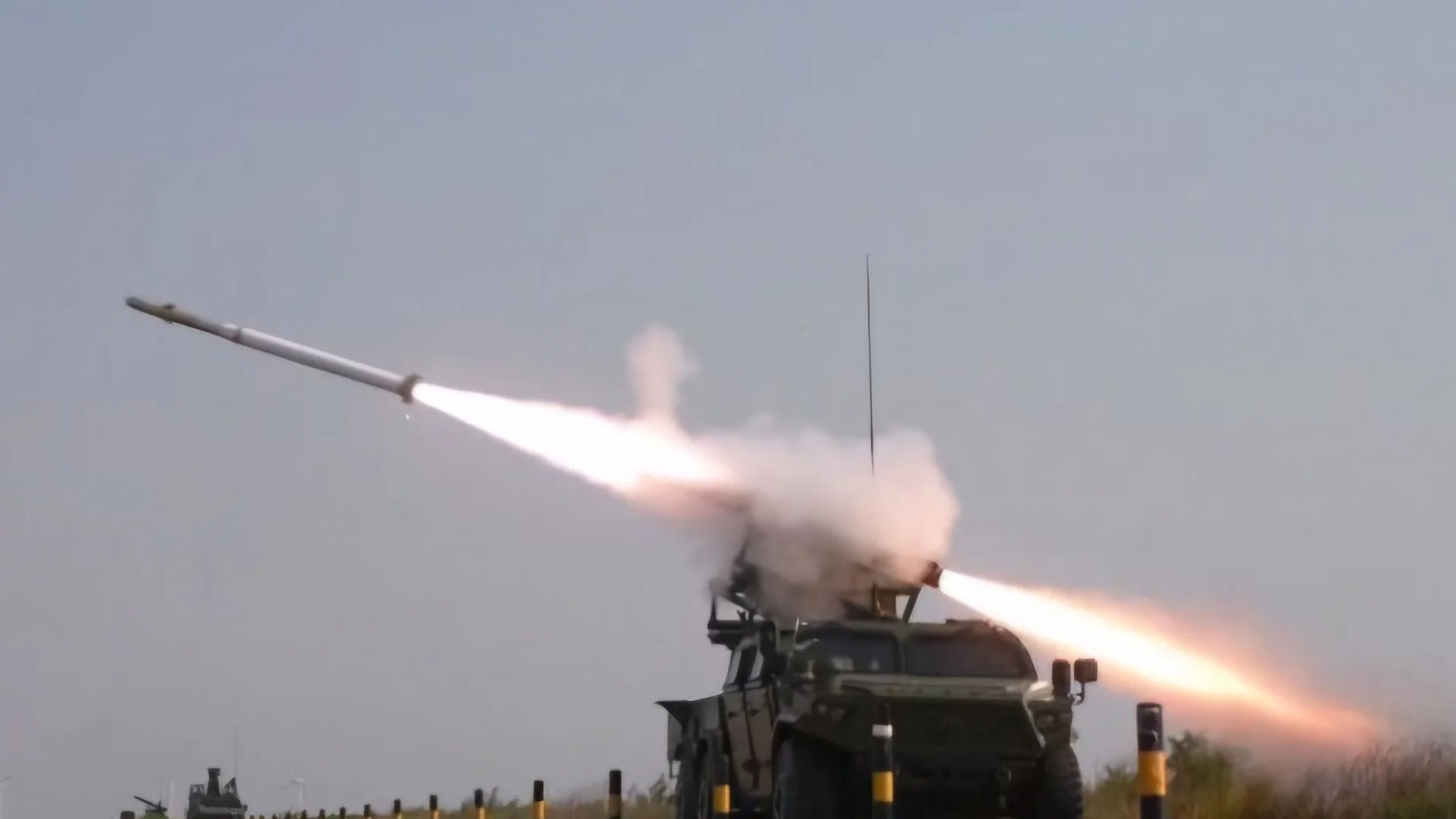
China’s military has revealed a new air defense system built to counter drone attacks targeting naval vessels.
State broadcaster CCTV said the system recently passed a finalization test in the Bohai Sea. The successful test means the weapon is now approved for mass production and future deployment.
China Expands Naval Drone Defense
According to the report, the system intercepted several drones during realistic combat simulations. The drones reportedly carried out complex ultra-low-altitude attacks designed to avoid radar detection.
READ ALSO: Space Rider: Europe’s First Reusable Spacecraft Clears Major Reentry and Landing Tests
Chinese officials said the exercise tested the system under difficult electromagnetic and battlefield conditions.
CCTV footage released showed drones skimming just above the sea surface before being destroyed. However, the broadcaster did not show detailed images of the interception system itself. The report also avoided revealing the exact type of weapon or the platform used during the trial.
The Chinese military has focused on drone threats after studying recent wars in Ukraine and the Middle East. Modern drones have shown that relatively cheap weapons can damage expensive warships and military infrastructure. Military planners worldwide are now adapting naval defense systems to address these new risks.
Why Low-Flying Drones Are Hard to Stop
One of the biggest challenges for naval forces is detecting drones flying just above the surface of the sea. These drones stay below the radar horizon for most of their flight path. As a result, ship crews often receive only a few seconds of warning before impact.
Sea conditions also make drone detection more difficult for radar and sensors. Waves, reflections, and electronic interference can hide small drones from defensive systems. This poses serious risks to warships operating in contested waters or narrow sea routes.
WATCH ALSO: DRDO Reveals Advanced Armoured Platform, Boosting India’s Defence Power
The conflict between Russia and Ukraine has highlighted the growing role of naval drones in warfare. Ukrainian forces have repeatedly used unmanned surface and aerial drones against Russia’s Black Sea Fleet. Several Russian ships suffered damage or were forced to relocate from key naval bases.
Drone warfare has also become more important in the Middle East. Iran has used drones for surveillance and maritime operations near the Strait of Hormuz. These developments have pushed regional navies to improve short-range air defense and electronic warfare systems.
China Develops New Layers of Naval Protection
The People’s Liberation Army Navy has been expanding multiple defense systems to counter drone attacks. China has upgraded existing short-range interceptor missiles to improve reaction times against small aerial targets. Military analysts say layered defenses are now essential because swarm drones can attack from multiple directions simultaneously.
READ ALSO: Silicon Valley Pushes $200M Into Floating AI Data Centers Across the Pacific Ocean
China has also introduced directed-energy weapons as part of its naval defense strategy. One of the most notable systems is the Liaoyuan-1 high-powered laser weapon. The laser system was publicly displayed during a military parade in Beijing last year.
Laser weapons offer several advantages compared to traditional missiles. They can engage targets quickly and reduce the need for expensive interceptor ammunition. Such systems are considered especially useful against small drones operating in large numbers.
READ ALSO: Meet Gabi: South Korea’s Robot Monk Joins Buddhist Rituals Ahead of Buddha’s Birthday
The growing use of drones is changing military planning across the world’s major navies. Countries are investing heavily in radar upgrades, electronic jamming, laser systems, and automated interception technologies. China’s latest test shows how rapidly naval warfare is evolving as unmanned systems become central to future conflicts.
Military experts expect anti-drone systems to become standard equipment on modern warships over the next decade. Future naval battles will depend as much on electronic defense and drone interception as on missiles or traditional guns. China’s latest development reflects a wider global race to adapt naval forces for a new era of warfare at sea.