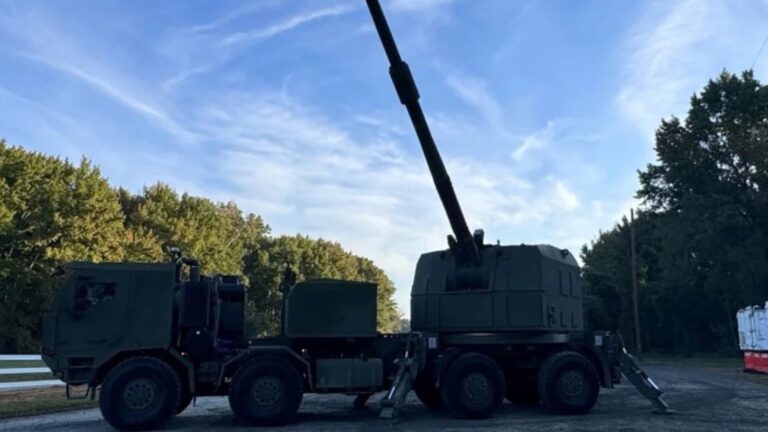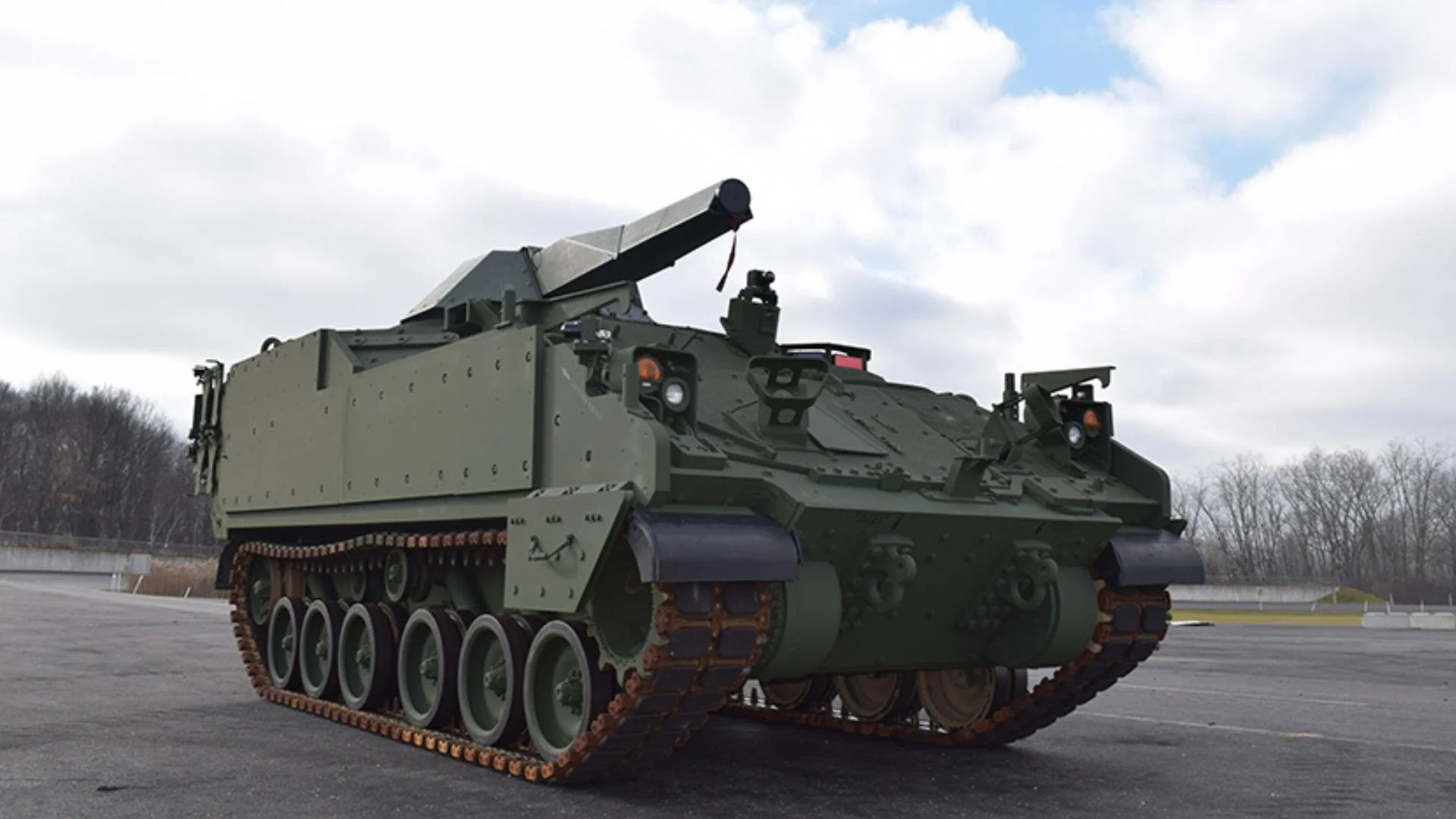
The US Army is testing a new Armored Multi-Purpose Vehicle (AMPV) variant equipped with a 30mm cannon to boost firepower for support units on the battlefield.
The move highlights a shift toward turning traditionally non-combat platforms into active fighting assets, reshaping how armored brigades operate in high-threat environments.
The prototype was recently delivered to the 1st Cavalry Division for testing and training. Soldiers have started working with the vehicle in real conditions. Early feedback will guide future decisions about its role.
The AMPV was developed by BAE Systems to replace the older M113 armored personnel carrier. It was designed primarily for support roles such as transport and medical evacuation. Now, the addition of a cannon changes its purpose in a major way.
READ ALSO: USS Eisenhower Completes Sea Trials Ahead of Schedule After Major Norfolk Overhaul
With the 30mm cannon, the AMPV can engage enemy troops and light armored vehicles. It can also target fortified positions with precision. This makes it far more capable than earlier support vehicles.
The weapon system is expected to be similar to the one used on the Stryker Dragoon. That system uses the Mk44 Bushmaster II, known for its accuracy and high rate of fire. It can hit targets beyond 2,000 meters.
This type of cannon also supports advanced ammunition. Programmable airburst rounds allow it to hit enemies behind cover. This gives units a strong advantage in urban combat.
Until now, support vehicles lacked strong offensive weapons. Combat roles were primarily handled by platforms such as the M1A2 Abrams and M2A4 Bradley. These systems are powerful but limited in number.
WATCH ALSO: Drum-shaped antenna reflector on NASA-ISRO NISAR satellite deployed
The new AMPV variant helps close that gap. It spreads firepower across more vehicles in a brigade. This reduces the need to rely only on heavy combat units.
The Army sees this as a step toward more flexible forces. Units can fight and defend themselves without waiting for backup. This is important in fast-moving and unpredictable battles.
The AMPV 30mm also works alongside existing systems. It supports Bradley vehicles without replacing them. This balance helps maintain strong frontline operations.
At the same time, the Army is preparing for the future XM30 Mechanized Infantry Combat Vehicle. This new platform will replace the Bradley over time. However, its rollout will take years.
The AMPV upgrade offers a faster solution. It can be deployed sooner across many units. This ensures that combat readiness stays high during the transition.
READ ALSO: REK: S.F.’s Robot Fight Hub, Humanoid Bots Battle, Perform & Are Available to Rent or Buy
Support units will benefit the most from this change. They can now defend themselves in dangerous areas. This reduces risk and increases mission success.
The testing program is taking place at Fort Cavazos. This base is known for large-scale military exercises. It is an ideal location to evaluate new systems.
The 1st Cavalry Division plays a key role in these efforts. It often leads Army modernization projects. Its experience helps refine new technologies quickly.
Early testing focuses on training and integration. Soldiers learn how to operate and maintain the system. They also test how it performs in different scenarios.
The Army will study these results carefully. Lessons learned will shape future upgrades and doctrine. This ensures the system meets real battlefield needs.
There are also industrial impacts to consider. The AMPV program is already in full production. Adding a 30mm variant could further expand its capabilities.
WATCH ALSO: NASA rover discovered ancient microbial life signature on Mars
This may lead to new versions or upgrade packages. It also supports the Army’s broader modernization goals. These include enhanced protection, greater firepower, and improved connectivity.
The shift reflects changes in modern warfare. Armies now face threats from many directions at once. Every vehicle must be ready to fight if needed.
This approach also supports cooperation with NATO allies. Many allied forces use similar weapon systems. This improves joint operations in combined missions.
The AMPV 30mm is still in testing. Final decisions will depend on performance and cost. However, early signs suggest strong potential.
If adopted, it could change how support vehicles are used. They would no longer stay behind the front lines. Instead, they would actively take part in combat.
This shift increases both survivability and effectiveness. Units become more self-reliant in contested environments. It also reduces pressure on frontline combat vehicles.
READ ALSO: DeepSeek V4 Emerges as Huawei’s Chips Begin Shaping the Future AI Power Game
The Army is moving toward a more distributed force structure. Firepower is spread across many platforms. This makes units harder to defeat.
In future conflicts, flexibility will be key. The AMPV 30mm fits into this strategy. It brings mobility, protection, and firepower together.
As testing continues, more insights will emerge. The Army will refine tactics and training. This ensures the system delivers real value in combat.
The AMPV 30mm shows a clear direction. Support vehicles are no longer just support. They are becoming active players on the battlefield.