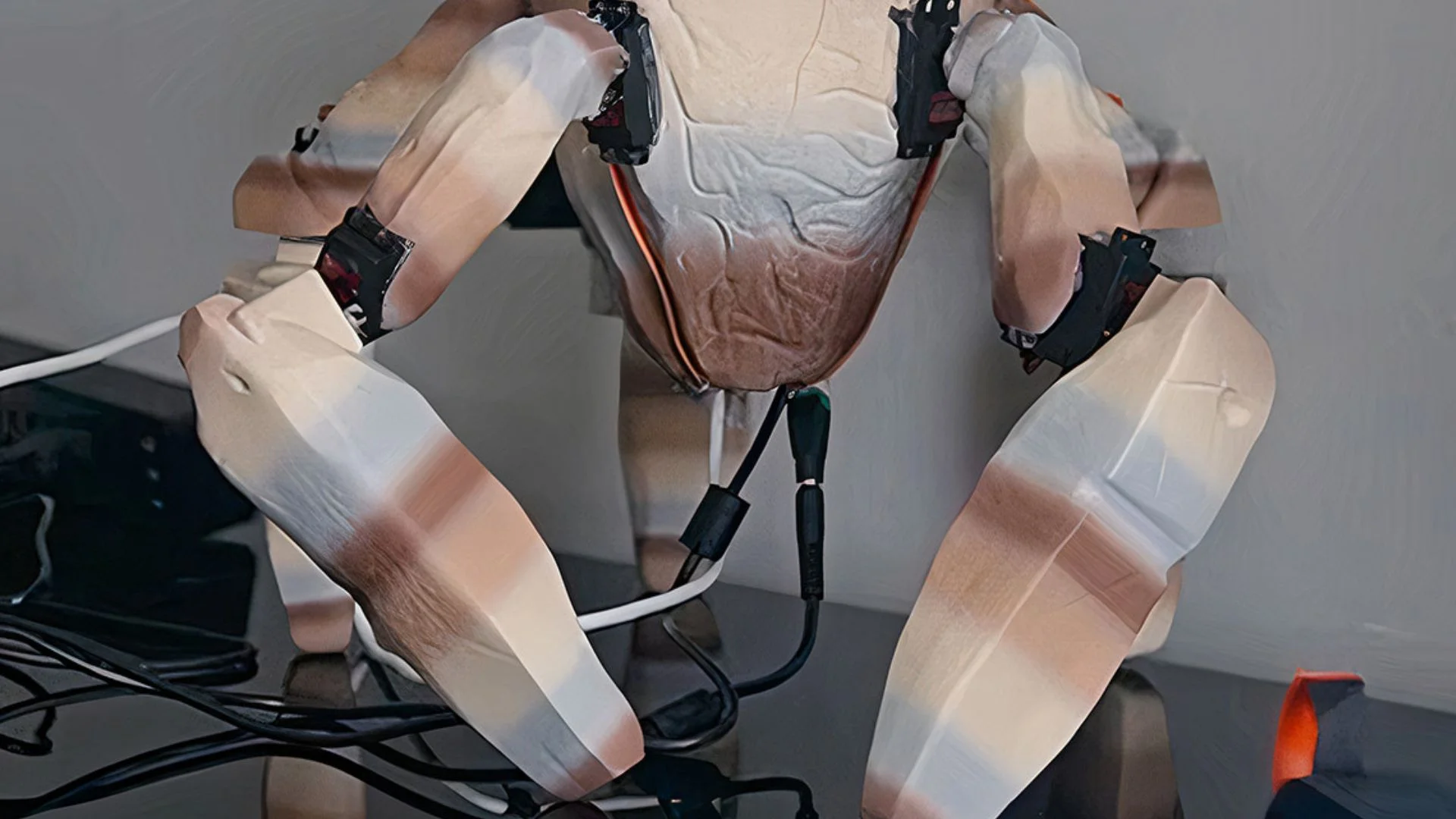
An engineer from Leviathan Engineering has built a real-life Rocky robot inspired by the beloved alien from Andy Weir’s novel Project Hail Mary.
The project combines 3D printing, artificial intelligence, and robotics into a functioning tabletop machine.
The robot was designed to capture Rocky’s appearance, movements, and unusual speaking style from the book.
Rocky became one of the most memorable characters in modern science fiction after the release of Project Hail Mary in 2021. Readers connected with the alien because of his unique personality and friendship with the story’s main character. The new robot project aims to recreate that same feeling in physical form.
The engineer spent several months designing and assembling the machine. The process started with digital 3D models purchased from 3D Totems, a company known for detailed printable character designs. Software tools, including Fusion 360 and Tinkercad, were then used to modify and strengthen the parts for real-world movement.
READ ALSO: AeroKoi Used a 3D Printer to Recreate Classic Steam Locomotive Whistle Sounds
The final robot has four legs and long movable arms that resemble Rocky’s appearance in the novel. Printed components form the outer structure, while metal-geared servos power the internal movement system. The result is a compact robot that behaves more like an animated creature than a static display model.
AI Gives the Rocky Robot a Personality
The robot uses ten servos to create gestures, arm swings, and crouching motions. Additional servos in the shoulders allow wider arm movement for actions like waving or fist-bumping. Servo motors are commonly used in robotics because they provide accurate and repeatable motion control.
A Raspberry Pi 5 acts as the robot’s main computer. The small single-board computer connects to a PCA9685 HAT, which controls all the servos. An external power supply is used because the motors require more energy than the Raspberry Pi can safely supply on its own.
Voice interaction is one of the project’s most advanced features. The engineer integrated Vosk speech recognition software so the robot can understand spoken commands without relying on cloud-based processing. This allows faster responses and reduces delays caused by internet connections.
The robot’s voice is generated using Piper, a text-to-speech system designed for natural-sounding speech. The speech pattern was adjusted to resemble Rocky’s short and rhythmic communication style from the novel. When the robot speaks, its movements also change to match the conversation’s tone.
Google’s Gemini AI model handles dialogue and behavior selection. Instead of using pre-programmed animations, the AI decides which movements fit the situation. If someone asks for a fist bump, the robot extends its arm and responds in a Rocky-like manner.
The engineer wrote the software with help from Claude AI through a command-line coding workflow. AI-assisted coding tools are becoming increasingly common in robotics, as they speed up development and debugging. This project highlights how consumer AI systems are now being used in creative engineering builds.
WATCH ALSO: Drum-shaped antenna reflector on NASA-ISRO NISAR satellite deployed
Building the Robot Took Months of Testing
The project faced several mechanical challenges during development. Early experiments used pulleys and linear actuators to move the limbs, but those systems proved difficult to control. Servos were eventually selected because they provided smoother, more reliable motion.
Durability also became an important concern during assembly. Some 3D-printed joints failed under pressure and had to be redesigned multiple times before working properly. The engineer strengthened key areas to prevent cracks and improve long-term stability.
Internal wiring was carefully organized using extension cables routed through the robot’s body. Adhesives such as hot glue and super glue helped secure smaller parts during final assembly. Despite its compact size, the finished robot moves with enough fluidity to resemble a living character.
The project arrives at a time when hobby robotics and AI development are rapidly expanding together. Affordable computers, open-source software, and accessible 3D printing tools now allow independent engineers to build machines that once required large research budgets. Projects like this also show how science fiction continues to inspire real-world technology development.
Interest in AI-powered companion robots has increased in recent years across entertainment, education, and consumer technology markets. While this Rocky robot is mainly a fan-made creation, it demonstrates how conversational AI can be combined with expressive robotics in small-scale systems. Similar technology is already appearing in customer service machines, educational robots, and interactive home devices.
READ ALSO: NASA Tests Powerful Nuclear-Ready Ion Engine for Future Human Missions to Mars
The creator has not announced plans to commercialize the robot. However, the project is likely to inspire other builders interested in combining robotics with fictional characters and AI interaction. As hardware becomes cheaper and AI tools grow more capable, projects like this may become increasingly common in the maker community.