China has publicly confirmed for the first time that its engineers provided technical support to Pakistan’s J-10CE fighter jets during last year’s military conflict with India.
The revelation came from interviews aired on Chinese state television, in which engineers described working alongside Pakistan’s military during the four-day clash.
China’s state broadcaster CCTV aired interviews with engineers from the Aviation Industry Corporation of China(AVIC). The engineers said they were deployed to Pakistan during the fighting between India and Pakistan in May last year.
Their comments marked the first public acknowledgment that Chinese personnel were directly involved in supporting Pakistan’s air force during the conflict.
READ ALSO: B-52 Successor? US Air Force Begins Planning for a Future Heavy Bomber Program
One of the engineers, Zhang Heng, works at AVIC’s Chengdu Aircraft Design and Research Institute. The institute is responsible for developing several advanced Chinese fighter jets and unmanned aircraft systems. Zhang said his team worked under difficult conditions while supporting Pakistan’s air force operations during the conflict.
He described hearing fighter jets take off regularly while air-raid sirens sounded nearby. Zhang also said temperatures at the support base approached 50 degrees Celsius by late morning. Despite the pressure, he explained that his team focused on ensuring the aircraft and systems performed effectively during combat operations.
Another engineer, Xu Da, also spoke during the television interview. He compared the fighter jet program to raising a child before handing it over to its operator. Xu said the aircraft’s combat performance did not surprise the engineering team because they had confidence in the system’s capabilities long before the conflict began.
J-10CE Fighter Jet Draws Global Attention
Pakistan operates the Chinese-made J-10CE fighter jet, which is an export version of China’s J-10C multirole combat aircraft.
The aircraft is considered a 4.5-generation fighter, placing it in the same broad category as several advanced Western and Russian combat jets. The model includes modern radar systems and can carry long-range air-to-air missiles developed in China.
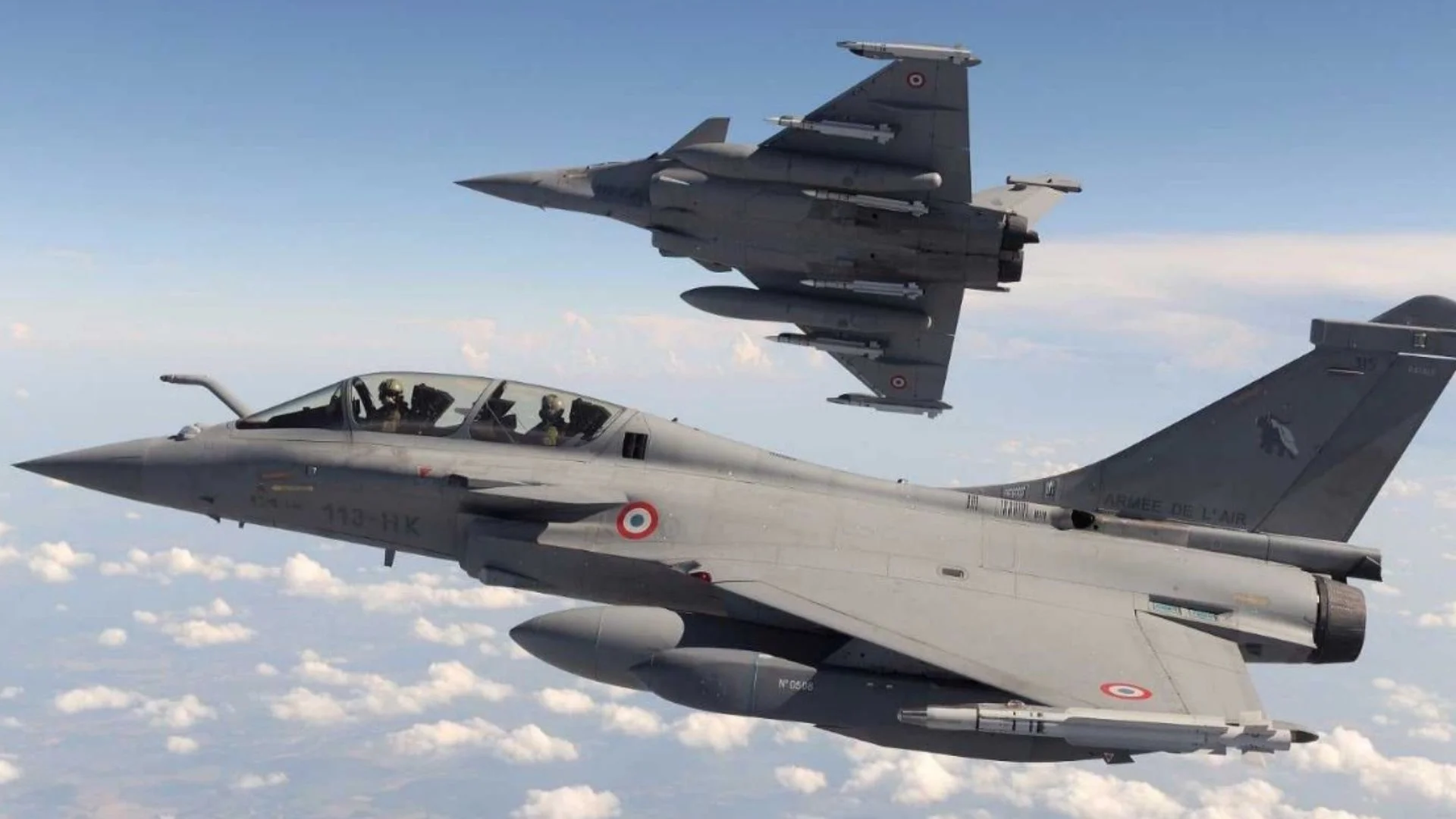
Reports from the conflict stated that at least one Indian-operated Rafale fighter jet was shot down during the fighting. The Rafale, made by French defense company Dassault Aviation, is regarded as one of the most advanced fighter aircraft in India’s fleet. If confirmed independently, the incident would represent the first known combat loss of a Rafale fighter.
The reported success of the J-10CE has attracted significant attention from defense circles worldwide. Military analysts closely monitor real combat performance because it provides insights that training exercises and simulations cannot fully offer. The incident has also increased interest in Chinese-made fighter aircraft and missile technology among several countries.
WATCH ALSO: Humanoid robot plays table tennis like human beings
Pakistan ordered 36 J-10CE fighters and around 250 PL-15 air-to-air missiles from China in 2020. The PL-15 missile is designed for long-range aerial combat and is often compared with advanced Western missile systems. Pakistan remains the only known foreign operator of the J-10 series outside China.
Growing China-Pakistan Defense Partnership
China has become Pakistan’s largest defense supplier over the past decade. According to data from the Stockholm International Peace Research Institute, nearly 80 percent of Pakistan’s arms imports between 2021 and 2025 came from China. The partnership covers fighter jets, drones, missiles, radar systems, naval equipment, and air defense technology.
Pakistan’s air force also relies heavily on the JF-17 Thunder fighter jet, which was jointly developed by China and Pakistan. The aircraft serves as the backbone of Pakistan’s combat fleet and is used for multiple mission types. The cooperation between the two countries has enabled Pakistan to modernize its military at a lower cost than many Western defense systems.
China’s confirmation of direct technical support is important because it highlights the deeper military coordination between Beijing and Islamabad. It also signals how defense partnerships are evolving beyond equipment sales into operational cooperation and battlefield support.
READ ALSO: BMW’s AI Slashes EV Battery Development Time and Waste by Over 50% at Munich Lab
As countries continue modernizing their air forces, the combat performance of Chinese military technology will likely remain under close international scrutiny in the years ahead.