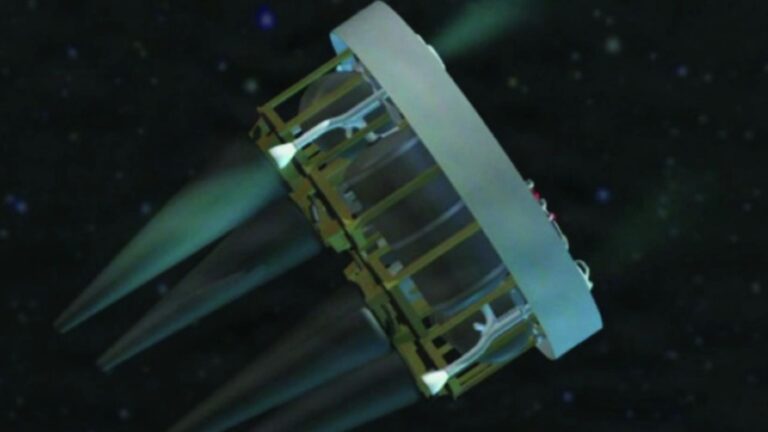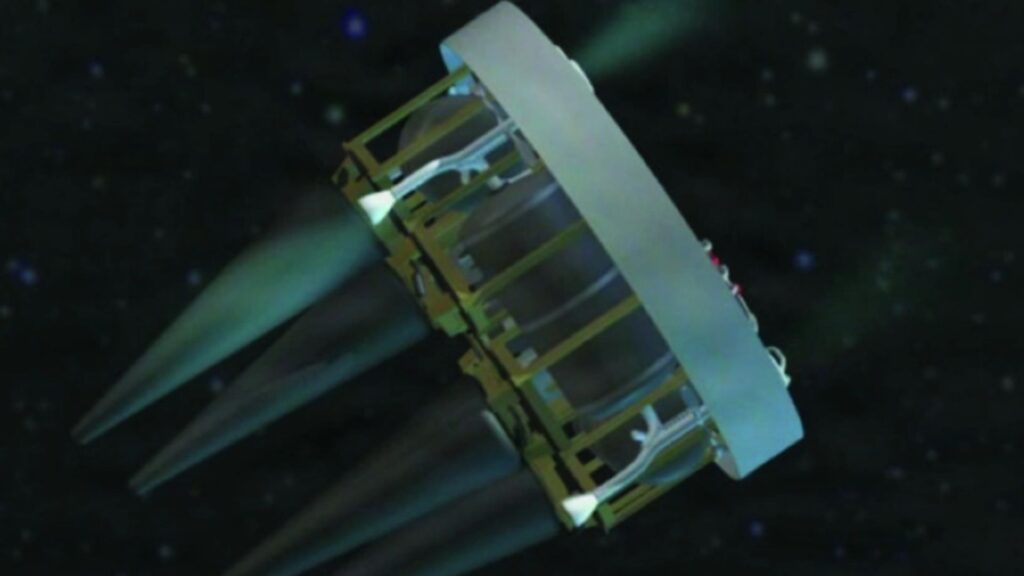
NASA has successfully tested a powerful new magnetoplasmadynamic (MPD) ion engine designed to support future human missions to Mars and deep space.
The lithium-fueled propulsion system uses advanced electromagnetic technology to generate far greater thrust than current ion engines while using fuel more efficiently.
The engine was developed at NASA’s Jet Propulsion Laboratory (JPL) as part of long-term plans for deep-space exploration. Engineers say the technology performed successfully during a series of high-power firings earlier this year.
NASA Tests High-Power Ion Engine
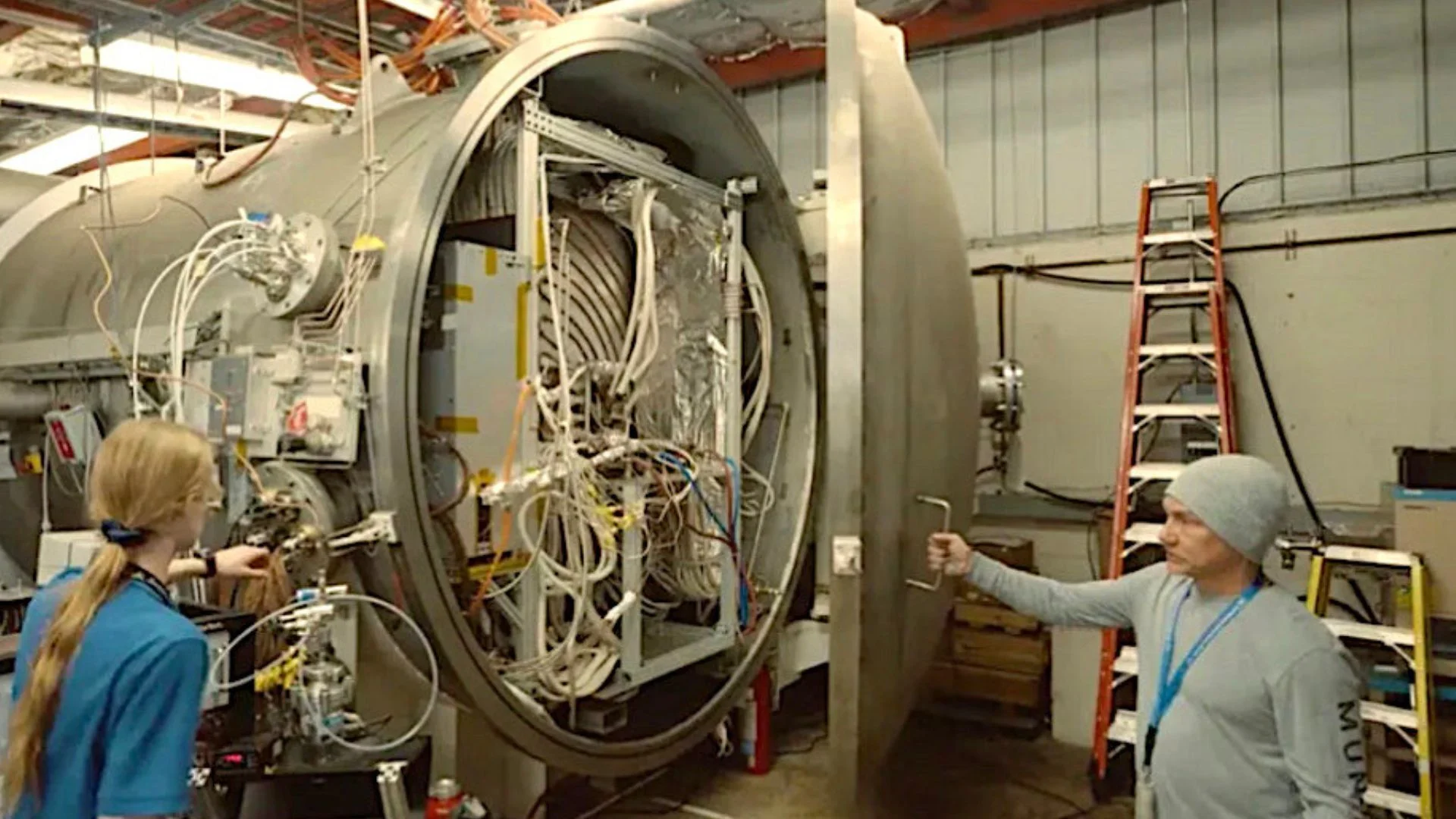
The prototype engine reached 120 kilowatts during five test runs conducted in February. The tests took place inside JPL’s Condensable Metal Propellant, or Comet, vacuum chamber. According to NASA officials, this is the first time an electric propulsion system in the US has operated at this level of power.
NASA administrator Jared Isaacman described the test as an important step for future space travel. He said NASA plans to continue investing in propulsion systems that can support long-range human missions. The agency sees electric propulsion as a key technology for future exploration beyond the Moon.
READ ALSO: US Army Launches Baltic Balloon Surveillance Test to Strengthen NATO Border Security
Ion engines work differently from traditional rocket engines that burn chemical fuel. Instead of combustion, they use electricity to accelerate charged particles called ions and push them out through a nozzle. This method produces less immediate thrust, but it is highly efficient and uses much less propellant.
Traditional chemical rockets consume large amounts of fuel during long missions. Ion engines can achieve much higher speeds over time while using significantly less fuel mass. NASA says some ion propulsion systems use nearly 90 percent less propellant than standard rocket engines.
NASA first experimented with ion propulsion during the 1960s. The agency later used the technology on the Deep Space 1 mission launched in 1998, marking the first use of ion propulsion beyond Earth orbit. Since then, several NASA and international missions have relied on similar systems for deep-space travel.
One of NASA’s most advanced current ion engines is operating on the Psyche spacecraft. That mission launched in 2023 and is en route to the asteroid 16 Psyche. The spacecraft’s propulsion system can eventually reach speeds of around 124,000 miles per hour.
Lithium-Fed MPD Thruster Explained
The newly tested MPD thruster differs from earlier ion engines in several ways. Most traditional ion engines use xenon gas as their propellant source. NASA’s new prototype instead uses lithium, which researchers believe may enable much higher performance.
Inside the engine, strong electrical currents interact with magnetic fields to accelerate lithium ions at very high speeds. This process generates greater thrust than many earlier electric propulsion systems. NASA says the prototype engine is roughly 25 times more powerful than the propulsion system currently used on the Psyche spacecraft.
JPL senior research scientist James Polk said the successful tests marked an important milestone for the team. He explained that engineers spent several years designing and building the thruster before reaching the current testing stage. Polk added that the successful operation confirmed the engine and test systems are ready for future scaling efforts.
Researchers are now targeting much higher power levels for future versions of the engine. The next goal is to operate between 500 kilowatts and 1 megawatt. After that, NASA hopes to eventually reach power levels near 4 megawatts.
WATCH ALSO: World’s first motorbike backflip between two moving trucks successfully completed
Such power levels would allow multiple engines to work together on a large spacecraft. These systems may one day transport astronauts, cargo, and scientific equipment across deep space. Engineers believe the technology may shorten travel times for missions to Mars and other distant destinations.
Nuclear Power and Future Mars Missions
Current ion engines used in space are generally powered by solar panels. Solar energy works well near Earth and in some deep-space missions, but available sunlight becomes weaker farther from the Sun. That limitation makes solar power less practical for very large spacecraft traveling long distances.
NASA is therefore studying nuclear fission reactors as a future power source for electric propulsion. A compact space-based reactor could continuously generate large amounts of electricity during long missions. That electricity could then power high-thrust ion engines, such as the new MPD system.
The agency plans to test this idea through the Space Reactor-1 Freedom mission. NASA expects the mission to launch before the end of 2028. The spacecraft will use a nuclear reactor to power a xenon-fueled ion engine during operations near Mars.
The mission is also expected to carry a small rotorcraft designed for operations around the Martian environment. Researchers hope the project will demonstrate how nuclear-powered propulsion can support future robotic and human exploration. Success could help shape transportation systems for missions deeper into the solar system.
Interest in nuclear power for space missions has grown steadily in recent years. In April, the White House Office of Science and Technology Policy released a memorandum discussing future nuclear technologies for space exploration. The document outlined plans and policy goals related to nuclear propulsion and power systems beyond Earth orbit.
READ ALSO: USS Robert R. Ingram to Become the 98th Arleigh Burke Destroyer in the US Navy Fleet
NASA’s latest engine tests show how electric propulsion technology is evolving beyond earlier designs. The combination of powerful ion engines and compact nuclear reactors may eventually enable faster, more efficient travel across the solar system. As development continues, these systems may become central to future missions carrying humans farther into space than ever before.