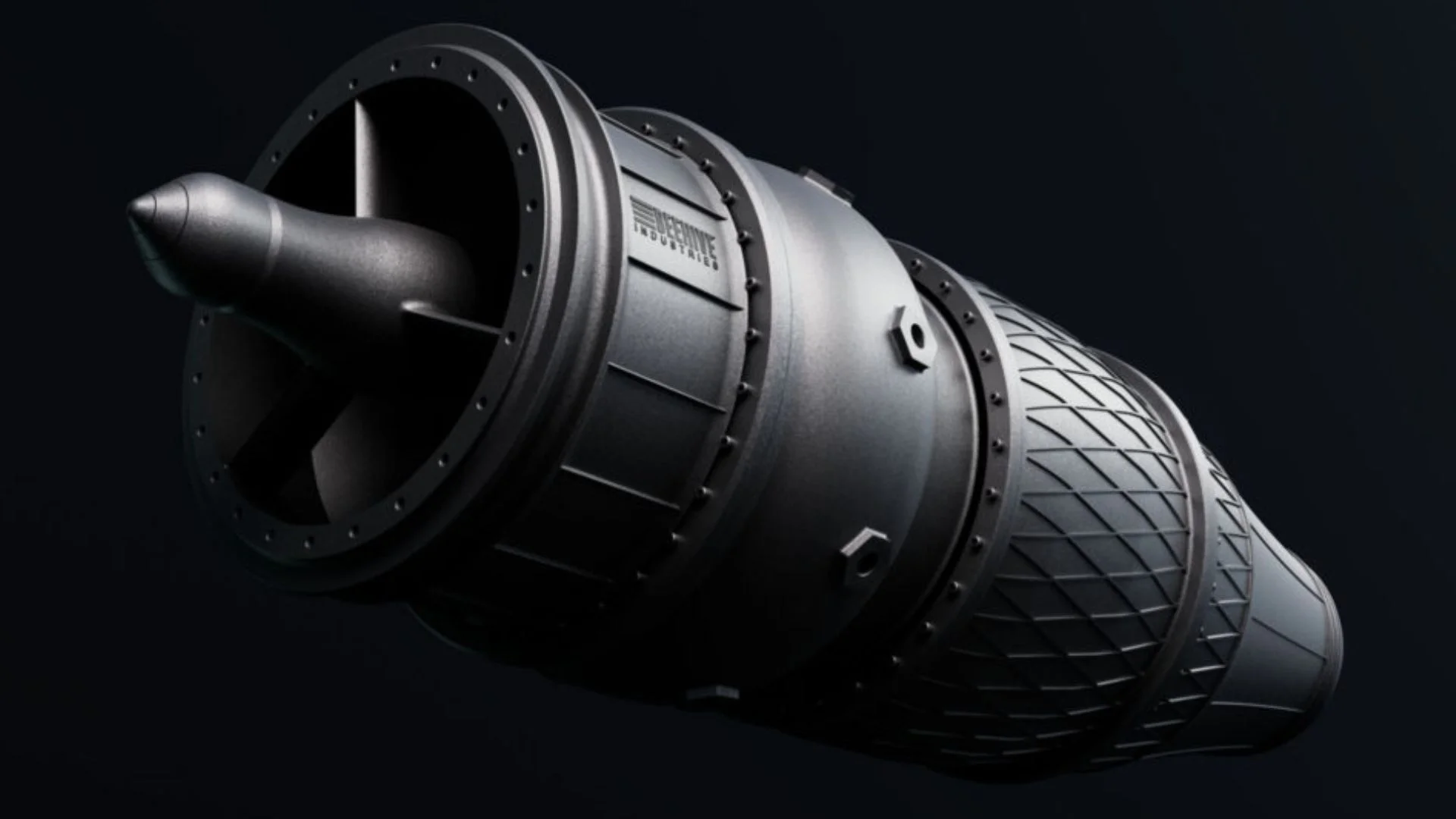
A new US-built jet engine is aiming to change how uncrewed combat aircraft are powered. Beehive Industries has introduced ‘Rampart,’a 3D-printed turbofan designed to deliver 1,000 pounds of thrust for a wide range of military missions.
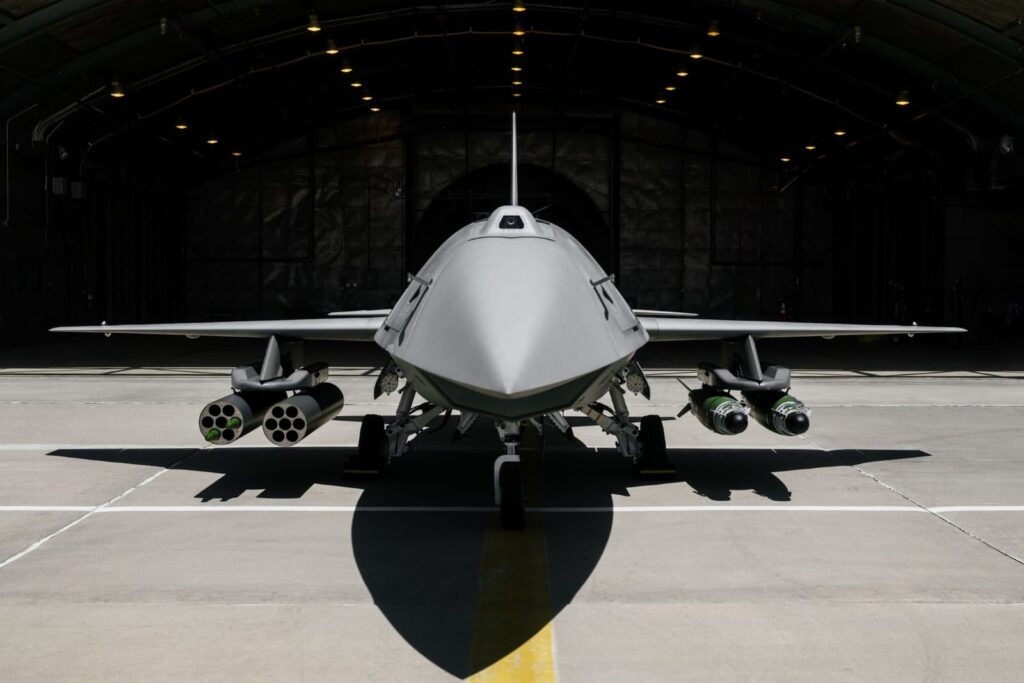
The Colorado-based company says the engine is built for uncrewed fighter aircraft, as well as reconnaissance and decoy roles. Its design emphasizes flexibility, enabling it to adapt to diverse mission needs across modern battlefields.
Rampart stands out for its use of advanced 3D-printing techniques. Beehive says this approach allows faster production compared to traditional engine manufacturing. The company also highlights its fully US-based supply chain, which it says helps speed up assembly and reduce dependency on overseas parts.
“Rampart delivers the endurance and performance needed to operate where it matters most without the delays of traditional manufacturing,” the company said.
READ ALSO: Ukraine’s AMRAAM Mystery Deepens as AIM-120C-8 Wreckage Emerges
The engine is designed to support tactical payloads while operating in challenging and contested environments. It is also built to handle damage and continue functioning, a key requirement for modern combat systems where reliability is critical.
The push comes as demand grows for propulsion systems tailored to uncrewed aircraft. The US Air Force has already awarded contracts to companies like Honeywell and Kratos to develop similar engines. Larger defense firms are also working on lighter and more cost-efficient designs to compete in this space.
WATCH ALSO: This Microsoft AI Could Change Cancer Treatment Forever
Despite the growing interest, some industry experts have raised questions about Beehive’s ability to compete with more established players. As a startup, the company faces the challenge of proving its technology in a highly competitive market.
Still, Beehive is moving ahead with its plans. The company is preparing to flight-test a smaller engine called ‘Frenzy 6,’ which produces 200 pounds of thrust. This system is being developed under a $30 million contract with the US Air Force.
At the same time, part of that funding will support the development of an even smaller engine, ‘Frenzy 8,’ designed to produce 100 pounds of thrust.
READ ALSO: Humanoid Robot Malfunction at China University Ignites Debate on AI Safety and Control
Together, these efforts show Beehive’s strategy to build a full range of propulsion systems for uncrewed aircraft. As testing progresses, the company will aim to demonstrate that its 3D-printed approach can deliver both speed and performance in real-world conditions.