Researchers at Rowan University have developed a faster way to repair damaged composite materials using polymer cold spray.
The method restored up to 80% of the original strength of impacted composite structures in laboratory testing. The findings were published in the Journal of Thermal Spray Technology.
The research focused on glass fiber-reinforced polymer composites, which are widely used in modern engineering. These materials combine low weight with high strength and durability. They are commonly found in aircraft, vehicles, wind turbines, pipelines, and marine structures.
Composite materials can suffer hidden damage after an impact, even when the surface appears intact. Small cracks inside the material weaken its structure over time. If left unrepaired, the damage can spread and eventually lead to failure.
How Cold Spray Works
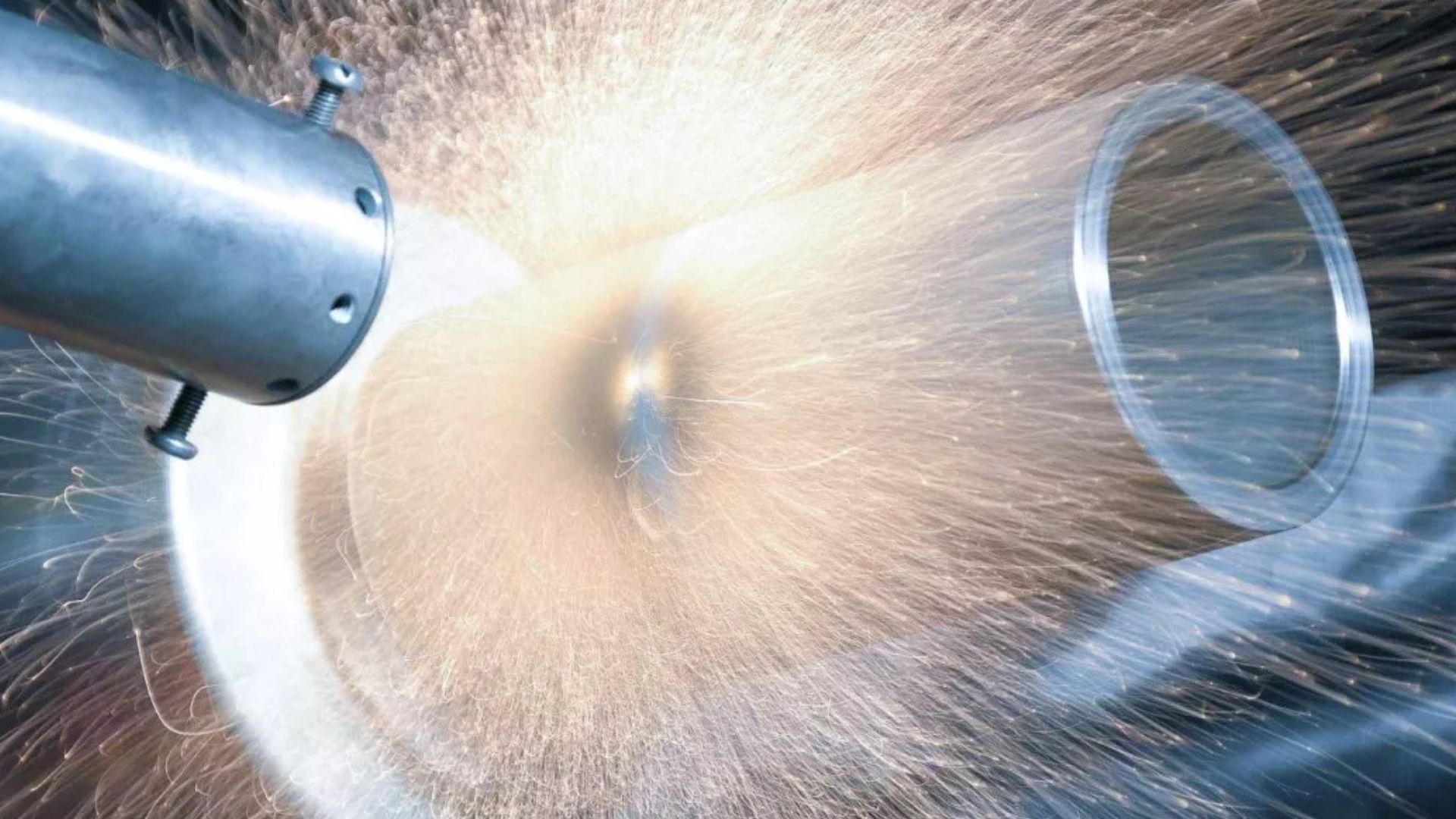
The Rowan research team explored the use of polymer cold spray as an alternative to traditional repair methods. Cold spray works by applying fine polymer powder onto a damaged surface at high speed. Unlike many repair techniques, the process does not rely on high temperatures.
The low-temperature process helps protect the surrounding material during repairs. Excessive heat can damage certain composite structures or change their properties. Cold spray avoids that risk while creating a strong repair layer.
The researchers compared the new method with conventional resin-based repairs. They found that polymer cold spray delivered stronger repairs across every damage level tested. It also completed repairs much faster than existing techniques.
Traditional composite repairs often require long curing times before a structure can return to service. In many cases, curing can take up to 48 hours. The polymer cold spray process reduced the repair time to about 30 minutes.
The team reported the highest performance in samples with relatively shallow damage. Those repairs restored up to 80% of the material’s original mechanical strength. Even severely damaged samples regained about 40% of their original strength.
Researchers explained that the repair material works similarly to a dental filling. It fills damaged areas and helps the structure carry loads again. This improves the overall strength of the repaired component.
Co-author Francis Haas, an associate professor of mechanical engineering at Rowan University, explained how composite damage spreads. He said that once one fiber breaks, nearby fibers begin carrying more of the load. That chain reaction can continue until the material fails under additional stress.
READ ALSO: China’s 6G DISACM Tech Turns Walls Into Smart Sensors and Boosts Wireless Signals
The study also examined different repair materials to identify the strongest option. An epoxy-based polymer powder reinforced with chopped glass fibers produced the best results. It improved both strength recovery and resistance to future impacts.
Mechanical strength measures how much force a material can withstand before it fails. Restoring that strength is essential for keeping composite structures safe during everyday operation. Better impact resistance also reduces the risk of repeated damage.
The research brought together experts from several engineering disciplines at Rowan University. Faculty and students from the mechanical and chemical engineering departments participated in the project. The Advanced Materials & Manufacturing Institute also supported the work.
The team designed repair experiments and produced test samples for evaluation. Researchers carried out mechanical testing to measure strength after repairs. They also studied how well the repair material bonded with the damaged composite surfaces.
Scientists from the US Army Research Laboratory collaborated on the project. Isaac Nault and Tristan Bacha contributed their expertise in materials durability and repair. The partnership combined academic research with federal engineering experience.
The technology has potential uses across industries that rely on lightweight composite materials. Wind turbine blades, aircraft structures, pipelines, ships, and composite vehicle parts all experience wear or accidental impacts during service. Faster repairs may reduce maintenance downtime while extending the life of critical equipment.
Demand for composite materials continues to grow because they improve fuel efficiency and reduce overall weight. As more industries adopt these materials, efficient repair methods become increasingly important. Faster restoration can lower maintenance costs and reduce operational interruptions.
The Rowan University study shows that polymer cold spray offers a practical repair option that combines speed with improved structural performance.
The results provide a foundation for expanding the technology beyond laboratory testing into real-world maintenance operations. Future development may help industries repair valuable composite structures more quickly while maintaining higher levels of safety and reliability.