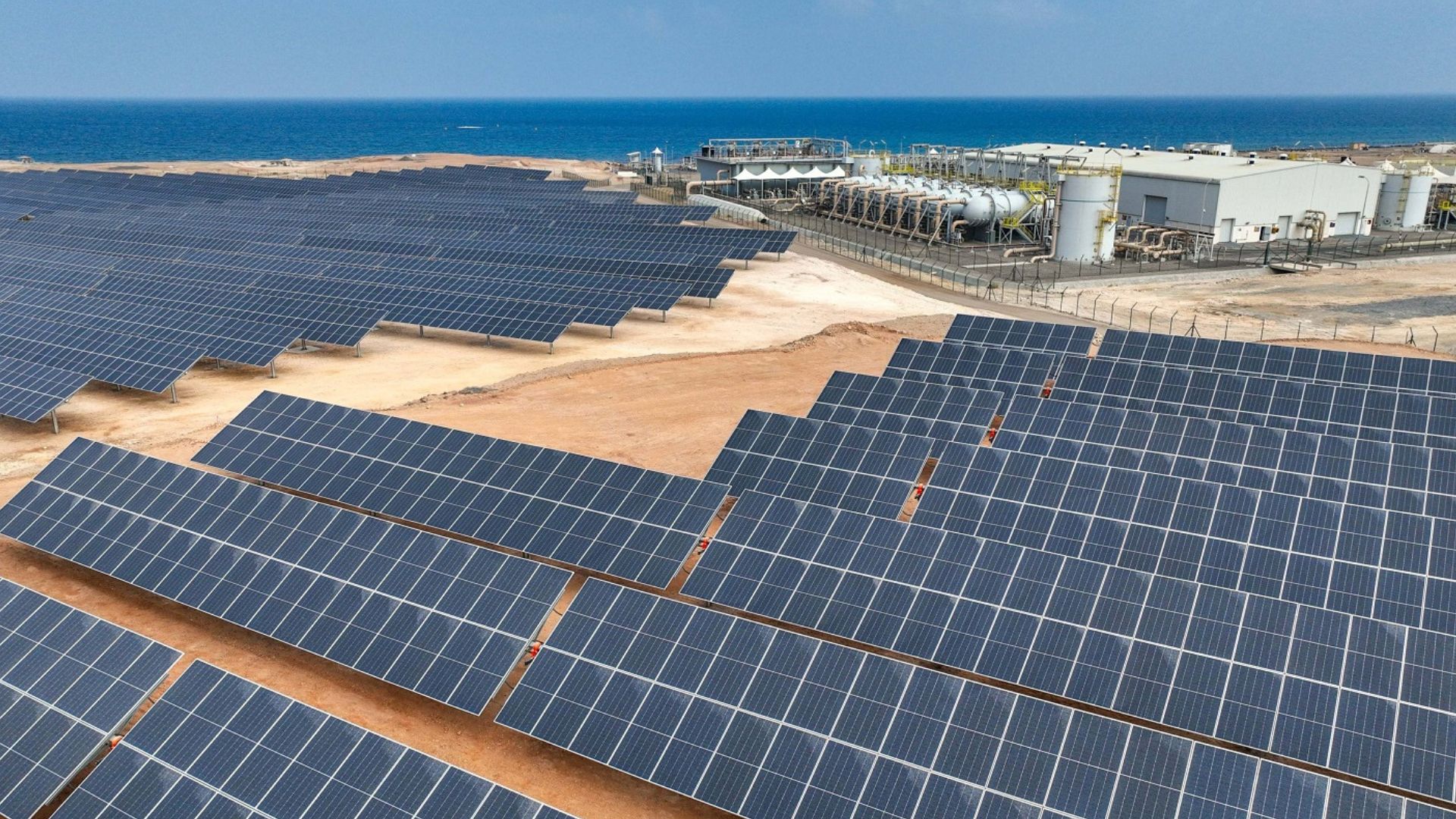
Chinese researchers have developed a solar-powered desalination system that significantly lowers the cost of producing freshwater from seawater.
The technology runs without electricity from the power grid and remained stable during a year-long outdoor demonstration. Researchers say the system can eventually produce freshwater at a lower cost than bottled water when used over an extended period.
The research was carried out by scientists from the Institute of Process Engineering under the Chinese Academy of Sciences and Shenzhen University.
Their findings were published in the journal Advanced Materials. The study focuses on making desalination more affordable and energy efficient through a new type of photothermal material.
Desalination removes salt and other impurities from seawater to produce freshwater for drinking and irrigation. However, traditional desalination methods consume large amounts of electricity and require expensive infrastructure. These high costs have limited widespread adoption in many parts of the world.
The most common desalination process today is reverse osmosis. It pushes seawater through specialized membranes that allow water molecules to pass while blocking salt. The process is effective but depends heavily on electrical power to maintain high pressure.
Countries in the Gulf region have relied on desalination for decades because of limited freshwater resources. Their access to abundant energy has helped them build hundreds of desalination plants. According to an Al Jazeera report, Gulf nations produce around 40 percent of the world’s desalinated water through more than 400 coastal facilities.
Scientists have long explored solar evaporation as an alternative to conventional desalination systems. Instead of relying on electricity, this method uses sunlight to heat seawater until it evaporates. The resulting water vapor is then cooled and collected as clean freshwater.
Although solar desalination offers environmental benefits, building efficient systems has remained difficult. The main challenge lies in creating materials that absorb sunlight efficiently while maintaining long-term durability. Many existing materials lose performance after continuous exposure to harsh outdoor conditions.
How the Desalination Works
The Chinese research team addressed this problem by designing a new three-dimensional photothermal material. They developed an innovative way to organize tiny nanoparticles into a strong, stable structure. This design improved sunlight absorption while preventing the particles from clumping together.
The researchers compared their design to sewing buttons onto fabric. They transformed nanoparticles into small “buttons” and connected them using polymer threads. This arrangement formed a stable three-dimensional framework that remained intact during operation.
READ ALSO: Renault and Thales Reveal 4 TROOP Tactical Vehicle Built for Modern Battlefield Operations
To build the material, the team first created hollow nanospheres with several shell layers. Polymer chains were then threaded through tiny openings inside these shells using a special solvent. After cooling, the polymer locked the particles together, creating what researchers described as a dense three-dimensional nanoforest.
This structure improved both durability and efficiency. Light entering the material bounced repeatedly among the tiny structures rather than escaping. As a result, the system achieved a solar absorption rate of 90.2 percent.
The improved material also reduced the energy required to evaporate seawater. According to the researchers, it lowered energy demand by 45.7 percent compared with conventional approaches. This makes the desalination process far more efficient while relying only on sunlight.
The team tested the material under demanding conditions to measure its durability. They placed it in seawater and continuously stirred it at 450 revolutions per minute for 30 days. Microscopic analysis showed that almost no nanoparticles detached from the structure.
Researchers also built a pilot desalination system covering 0.75 square meters. Solar panels powered a fan that moved water vapor into a separate condensation unit. The vapor cooled there and turned into clean freshwater ready for use.
During outdoor testing under natural sunlight, the system produced more than 20 liters of freshwater each day. That amount is enough to meet the basic daily drinking needs of around 10 people. According to the Institute of Process Engineering, the water met the World Health Organization’s drinking water quality standards.
The freshwater also supported agriculture during the field trial. Researchers used it to irrigate a five-square-meter test plot growing spinach, corn, and Chinese cabbage. The crops completed their full growth cycles using only water produced by the solar desalination system.
The photothermal material continued performing effectively throughout a year of outdoor operation. Researchers observed no significant decline in efficiency during the long-term testing period. This stability is important for systems expected to operate in remote locations with minimal maintenance.
The researchers estimate that operating the system for two years would reduce water production costs below the price of bottled water. They also expect costs to fall further if larger systems are deployed or operated over longer periods. These economic benefits could improve access to clean water in regions facing chronic shortages.
The team is now working to improve the efficiency of the condensation process while lowering manufacturing costs. Future development will focus on scaling the technology for coastal communities, islands, and remote regions with limited freshwater supplies.