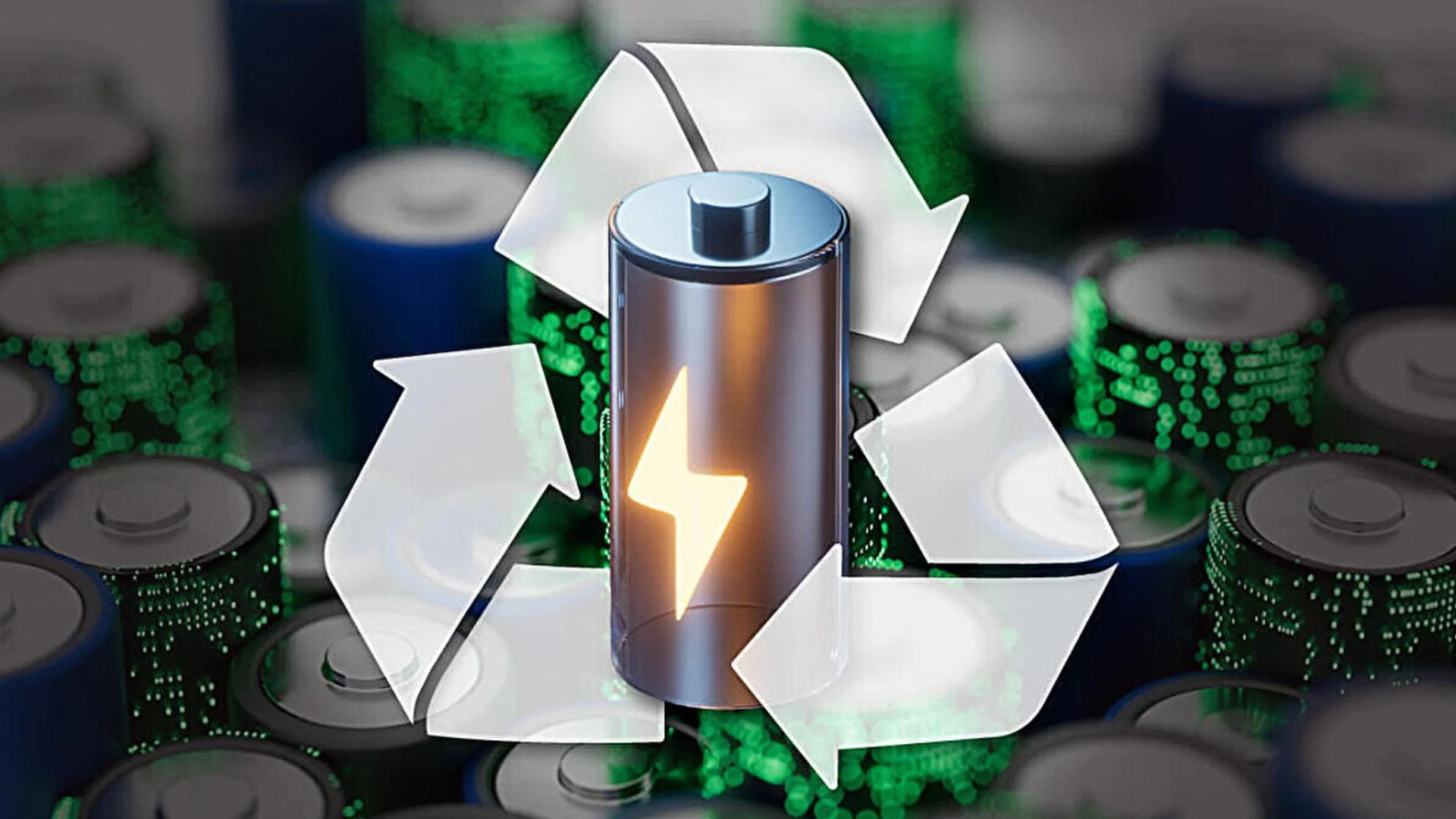
Researchers at Cornell University have developed a new way to recycle lithium-ion batteries without destroying their main components.
The technique restores up to 95% of the battery’s original power capacity. It also reduces recycling costs by 56% compared with current methods.
The findings were published in the journal Energy & Environmental Science. The research was led by postdoctoral researcher Kiwon Kim. The project was directed by Vibha Kalra, the Fred H. Rhodes Professor of Chemical Engineering at Cornell University.
Lithium-ion batteries power electric vehicles, smartphones, laptops, and energy storage systems. Demand for these batteries continues to grow worldwide. At the same time, supplies of important battery minerals remain limited.
Many of the materials used in batteries, including nickel and cobalt, are difficult to source domestically in the US. As a result, manufacturers often depend on imported supplies. This creates supply chain risks and exposes industries to geopolitical uncertainties.
Kalra said battery production has traditionally followed a linear model. Companies extract materials, manufacture batteries, use them, and eventually discard them. This approach creates waste and places additional pressure on limited natural resources.
How DEER Process Repairs Battery Electrodes
Most current recycling methods rely on breaking batteries apart. One common approach uses extremely high temperatures to melt battery materials and recover valuable metals. Another method shreds batteries into a powder and uses strong acids to extract useful elements.
READ ALSO: BMW Motorrad proudly introduces the all-new BMW R 1300 R
These processes recover raw materials but destroy the original battery structure. Manufacturers must then rebuild battery components from scratch. This adds time, cost, and energy to the recycling process.
The Cornell team developed a method called Direct Electrode-to-Electrode Regeneration(DEER). Instead of shredding batteries, researchers carefully remove the battery electrodes while keeping them intact. The electrodes remain attached to their current collectors during treatment.
The electrodes are then placed in a separate electrochemical solution known as 1,3-dimethyl-2-imidazolidinone. This solution removes a layer called the solid electrolyte interphase. The layer naturally forms inside batteries over years of charging and discharging.
As this insulating layer grows thicker, battery performance gradually declines. The buildup restricts the movement of lithium ions and reduces energy storage capacity. Removing the layer helps restore the battery’s original function.
Researchers found that the treatment returned battery capacity to about 95% of its initial level. The repaired electrodes can then be assembled into new batteries. This avoids many of the complex manufacturing steps required by conventional recycling methods.
Kalra explained that the process repairs the electrodes directly rather than reducing them to raw materials. This significantly shortens the recycling cycle. It also keeps more value within the existing battery components.
READ ALSO: Mediterranean Beetles Defy Norm as Rare Insects That Can See Red
Reviving Lithium-Ion Battery Life
The research team also studied the economic and environmental impact of the new process. They worked with researchers from Argonne National Laboratory’s ReCell Center to conduct detailed analyses. The team used open-source software tools to evaluate performance and costs.
Their assessment showed that DEER lowers recycled battery manufacturing costs by 56%. The process also reduces water consumption and cuts harmful air pollution compared with traditional recycling techniques. These improvements could help make large-scale battery recycling more sustainable.
The technology is especially relevant as electric vehicle adoption continues to rise. Millions of EV batteries will eventually reach the end of their service life. Efficient recycling systems will be needed to recover valuable materials and reduce waste.
WATCH ALSO: India recently tested carried out the successful launch of Intermediate Range Agni-Prime Missile
The batteries used in the study still retained around 70% to 80% of their original health. This condition is typical for batteries removed from electric vehicles. Researchers believe the method can be expanded to address additional forms of battery degradation.
Future work will focus on testing the technology on industrial-scale battery systems. The team also plans to tackle issues such as lithium loss, which contributes to battery aging. Solving these challenges could help recover even more performance from used batteries.
Cornell’s DEER process offers a new approach that keeps batteries in circulation longer, reduces costs, and supports a more sustainable battery supply chain for the future.