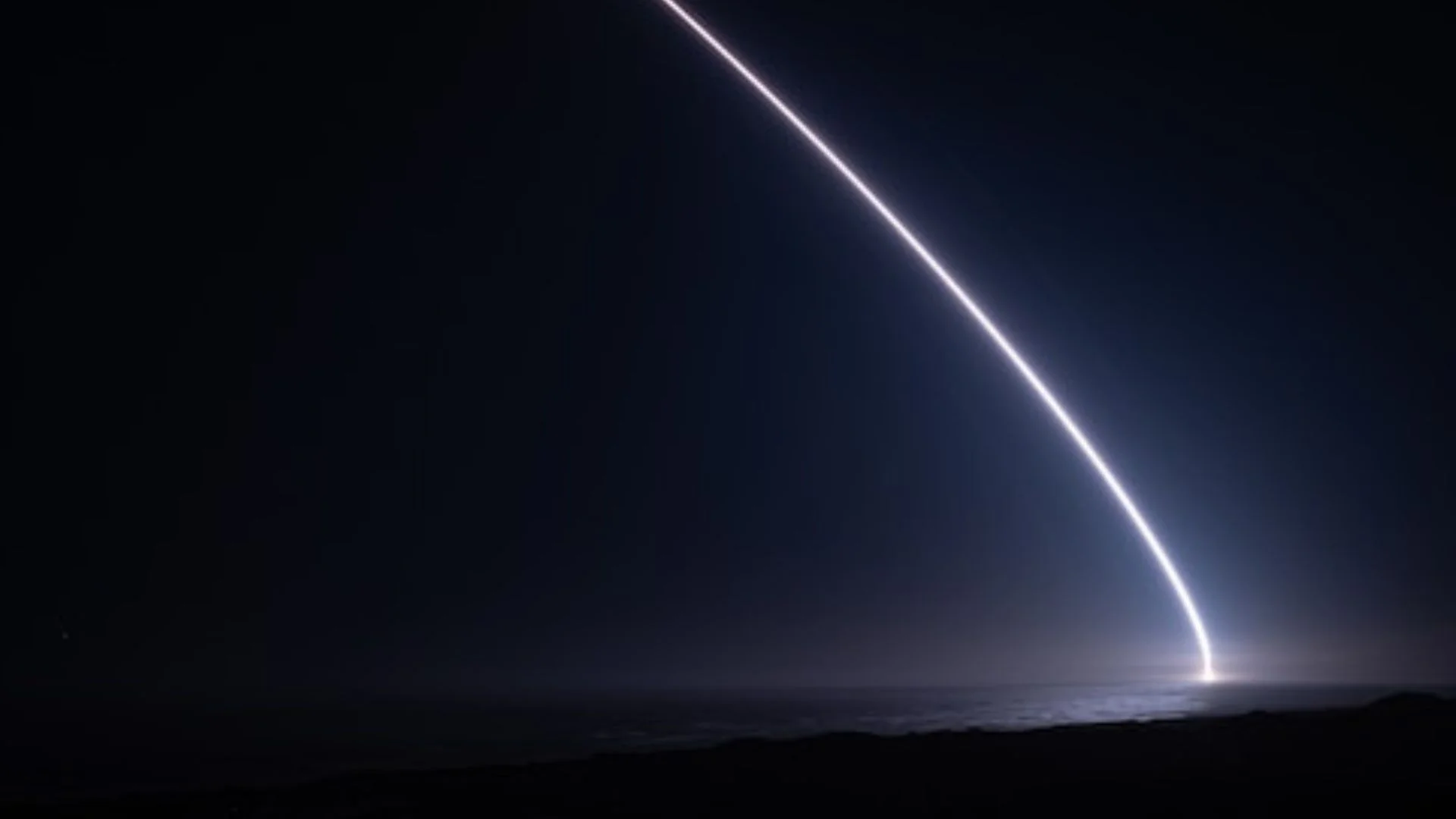
The US Air Force carried out a scheduled test launch of the Minuteman III intercontinental ballistic missile from California on May 20.
The mission tested the reliability of the US’s land-based nuclear force and checked the readiness of crews, equipment, and support systems. Officials said the launch was planned years in advance and was not linked to current global tensions.
The unarmed missile lifted off at 12:01 a.m. Pacific Time from Vandenberg Space Force Base. The launch was conducted by Air Force Global Strike Command as part of a long-running operational testing program. Military officials identified the mission as test launch GT 256.
Minuteman III Test for Nuclear Force Readiness
The Minuteman III is a key component of the US nuclear deterrence system. It is designed to travel thousands of miles and deliver a nuclear payload if ordered during a conflict. The missile has remained in service for decades through upgrades and maintenance programs.
READ ALSO: Su-57D Two-Seat Stealth Fighter Completes First Test Flight With Drone Control Capability
Air Force officials said the latest launch tested both the missile system and the personnel operating it. Crews carried out procedures similar to real-world operations during the exercise. The goal was to confirm that the missile force remains ready for immediate response if required.
Gen. S.L. Davis, commander of Air Force Global Strike Command, said regular testing is critical for national security. He explained that the launch confirmed the readiness of the missile system and the teams supporting it. Davis added that the tests help verify every part of the ICBM mission.
Engineers tracked the missile throughout its flight across the Pacific Ocean. They monitored the propulsion system, guidance controls, and the reentry vehicle during high-speed flight conditions. These checks help experts measure accuracy, stability, and overall system performance.
WATCH ALSO: Blue dogs spotted in Chernobyl nuclear disaster site spark concern
Lt. Col. Karrie Wray said the mission confirmed the missile’s ability to deliver its reentry vehicle accurately. She explained that the test validated the complete performance profile of the Minuteman III system. Officials use this information to study long-term reliability and future upgrades.
Data Supports Future Nuclear Modernization
The launch also provided technical data to several US government agencies. Information from the test was shared with the Department of Defense, the Department of Energy, and the US Strategic Command. These agencies use the results to guide maintenance planning and lifecycle management.
Col. Dustin Harmon said operational launches are among the most important measures of force readiness. He praised missile crews and support teams for maintaining high standards during the mission. Officials described the launch as a full-scale rehearsal for daily nuclear operations.
The Minuteman III has served as the backbone of the US land-based nuclear force since the 1970s. Even with its age, the missile remains a central part of the country’s nuclear triad alongside submarines and strategic bombers. Continuous testing helps ensure the aging system remains safe and effective.
READ ALSO: Stamp-Sized Aircraft Sensor Detects Ice Build-Up in Real Time to Boost Aviation Safety
Sentinel Program Set to Replace Aging Missile Fleet
The US Air Force is now preparing to replace the Minuteman III with the new LGM-35A Sentinel missile system. The Sentinel program aims to modernize the US’s land-based nuclear capability with updated technology and infrastructure. Officials expect the transition to continue over the coming years.
Until the Sentinel enters full deployment, the Air Force plans to continue regular Minuteman III test launches. These missions help maintain confidence in the current nuclear deterrent while newer systems are developed. The latest test also signals that the US intends to sustain a reliable nuclear force during a period of growing global security competition.