The US Space Force is preparing a major 2027 mission to test satellite refueling and in-space servicing in geostationary orbit.
The effort will involve multiple commercial space companies working alongside military agencies. The mission is designed to improve how satellites move, survive, and operate during long-term space missions.
The mission, known as USSF-23, will carry several spacecraft into geostationary orbit. These spacecraft will test technologies for fuel transfer, satellite docking, and orbital maneuvering. The project is part of a wider Space Force effort to build an orbital logistics network.
Military officials believe future satellites will require support systems similar to those for ships and aircraft.
Satellites today often become useless once they run out of fuel or suffer technical problems. In-space servicing aims to extend its operational life and improve mission flexibility.
Space Force Expands In-space Refueling Plans
One of the main demonstrations involves a refueling spacecraft built by Astroscale US. The vehicle, called Provisioner, carries a refillable hydrazine fuel tank. Hydrazine is a commonly used spacecraft propellant that powers satellite maneuvering systems.
Provisioner weighs around 300 kilograms and was developed under a Space Force partnership signed in 2023. The agreement included $25.5 million in government funding and additional investment from Astroscale.
The mission is expected to become the first commercial in-space refueling operation involving a US Space Force satellite.
The spacecraft will attempt to refuel two military research satellites called Tetra-5. These satellites are being developed through a separate project led by the Air Force Research Laboratory. The operation will test whether fuel can safely transfer between spacecraft in orbit.
READ ALSO: Northrop Grumman Delivers 1,000th APG-83 AESA Radar to Modernize Global F-16 Fleets
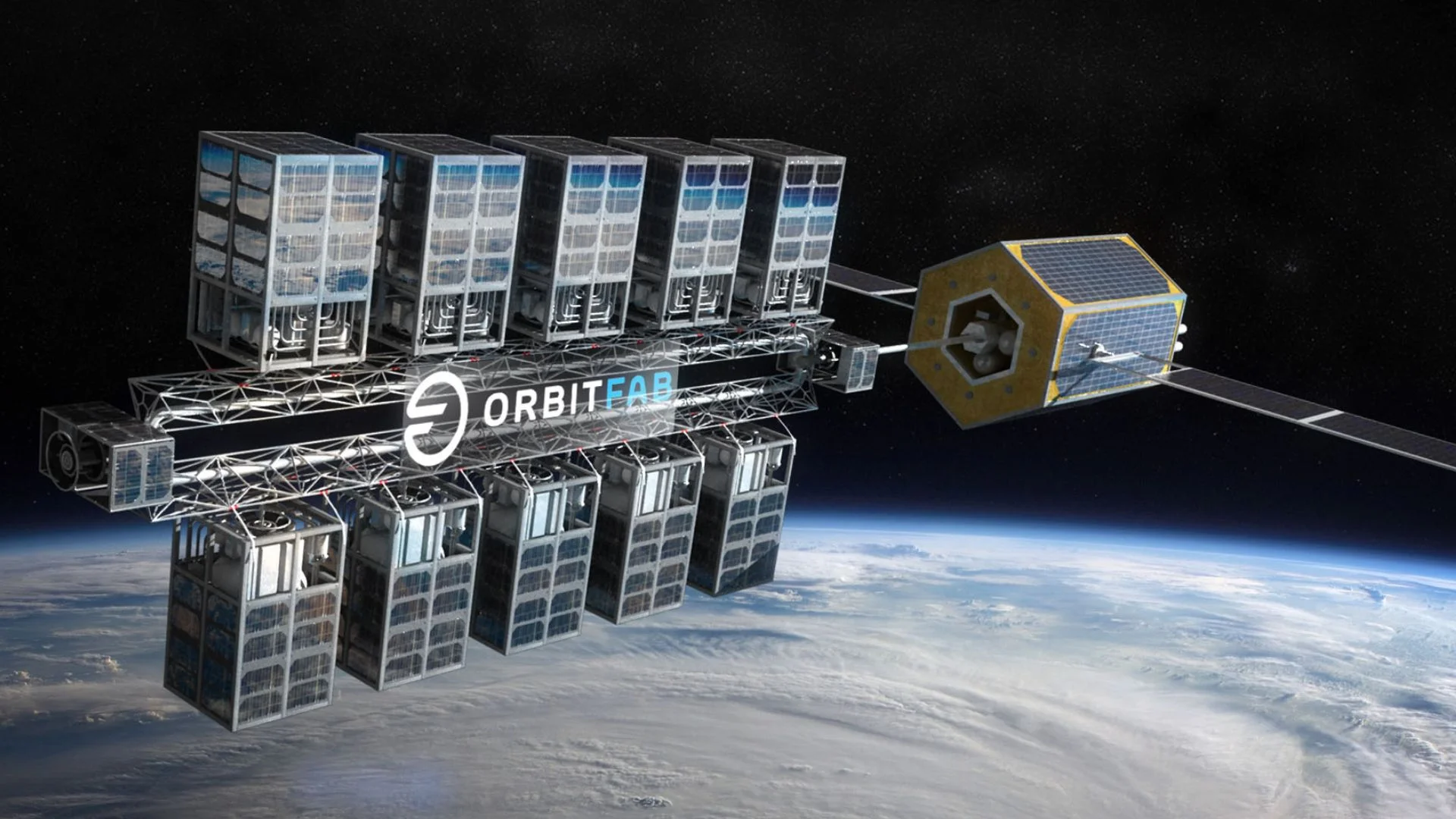
After refueling the first satellite, Provisioner will travel to a fuel storage depot in orbit. That depot is being developed by Orbit Fab and hosted on a spacecraft platform from Impulse Space. The servicing vehicle will refill its own tank before returning to refuel the second Tetra-5 satellite.
Space Systems Command official Col. Scott Carstetter said the goal is to understand how orbital fuel supply chains could work in real missions.
Officials want to study whether fuel depots and servicing spacecraft can operate together reliably. The mission will also help determine how future military satellites can stay active longer in orbit.
The geostationary orbit sits about 35,786 kilometers above Earth. Satellites in this orbit move at the same speed as Earth’s rotation, allowing them to remain fixed over one location. Many military communications and missile-warning satellites operate in this region because of its stable coverage.
Replacing satellites in geostationary orbit is extremely expensive and time-consuming. Launching new spacecraft often costs hundreds of millions of dollars and takes years of preparation. Refueling systems could reduce those costs by extending the life of satellites already in orbit.
USSF-23 will also carry a servicing spacecraft from Starfish Space. The company’s Otter vehicle is designed to dock with satellites that were never built for servicing. This type of operation is considered highly challenging because older satellites lack docking ports or servicing tools.
WATCH ALSO: India’s indigenous Zorawar light tank has fired an anti-tank guided missile
The Space Force wants Otter to demonstrate what it calls augmented maneuver. This concept allows one spacecraft to provide movement and propulsion support to another satellite. It works like a tugboat helping a larger ship move through water.
Officials said the two-year experiment will dock with a non-operational satellite already in orbit. The servicing vehicle will then move that satellite into a disposal orbit away from active spacecraft. Disposal orbits help reduce congestion and collision risks in crowded regions of space.
If the demonstration succeeds, the same technology could later support operational satellites. Satellites running low on fuel could receive mobility assistance rather than end their missions. This would allow military spacecraft to reposition more often during emergencies or threats.
The Space Force awarded Starfish Space a $37.5 million contract for the demonstration in 2024. The company also invested roughly $30 million of private funding into the project. Earlier in 2026, the Pentagon awarded another $54.5 million contract to Starfish for a future operational mission planned for 2028.
That future mission will support multiple satellites instead of a single target spacecraft. It is being funded through the Pentagon’s Accelerate the Procurement and Fielding of Innovative Technologies(APFIT) program. The initiative aims to speed up the adoption of new defense technologies.
Orbital Logistics Market Gains Military Attention
The Space Force is also preparing to use Northrop Grumman’s commercial satellite servicing systems. One important project is the Mission Robotic Vehicle(MRV), developed with support from DARPA. The spacecraft uses robotic arms developed by the US Naval Research Laboratory.
MRV is designed to dock with satellites in geostationary orbit and extend their operational life. The spacecraft will provide maintenance and movement support without requiring satellite replacement. The mission is scheduled to launch later this year.
READ ALSO: Space Debris Threatens Climate Satellites as Collision Risks and Avoidance Maneuvers Rise
Space Force officials said they plan to access MRV services when needed after deployment. The military intends to work with commercial operators rather than own every servicing spacecraft directly. This approach aligns with a broader Pentagon strategy of using private industry to support military operations.
Col. Carstetter said the government is still studying whether orbital logistics can become a profitable industry. Military leaders want to know if commercial demand will grow enough to sustain these services long term. If private demand remains weak, government agencies may need to continue leading the sector.
The Space Force is also trying to increase competition in the orbital logistics industry. A new $20 million initiative, the In-Domain Orbital Logistics Challenge, will open this summer through SpaceWERX. The program will invite small businesses to submit ideas for servicing, inspection, repair, and propellant delivery technologies.
The initiative will include design exercises, tabletop simulations, and prototype testing programs. Officials believe future space operations will depend heavily on rapid movement and sustained satellite operations. Orbital logistics systems could become as important to space missions as fuel tankers are to air forces today.
WATCH ALSO: Lightweight advanced materials are transforming aerospace innovations
The growing focus on in-space servicing reflects wider changes in military space strategy. Nations are deploying more satellites than ever before for communications, surveillance, navigation, and missile defense. As orbital traffic increases, maintaining and protecting spacecraft is becoming a major strategic priority.
The 2027 USSF-23 mission will serve as one of the largest tests yet of military orbital logistics technology. Its success could shape how future satellites are maintained, moved, and supported in orbit.
The mission also marks another step toward building a long-term space infrastructure that enables spacecraft to operate far beyond their original limits.