A newly discovered fossil site in northwestern Canada is reshaping scientists’ understanding of early animal evolution on Earth.
Researchers uncovered more than 100 ancient fossils, some dating back nearly 567 million years. Several of the species found at the site had never been identified in North America before.
Fossils Rewrite Evolution
Scientists say the discovery shows that complex animals appeared millions of years earlier than previously suggested by fossil evidence. The findings, published in the journal Science Advances, offer fresh insight into a major turning point in Earth’s biological history.
Researchers said the site contains fossils from the White Sea assemblage, a group of early animals previously known mostly from Europe, Asia, and Australia.
The Canadian fossils appear to be between 5 million and 10 million years older than similar fossils discovered elsewhere. That makes this one of the oldest known records of mobile and complex animal life.
READ ALSO: ISS Astronauts See 16 Sunrises Daily as Orbital Life Forces a Redesign of Human Routines
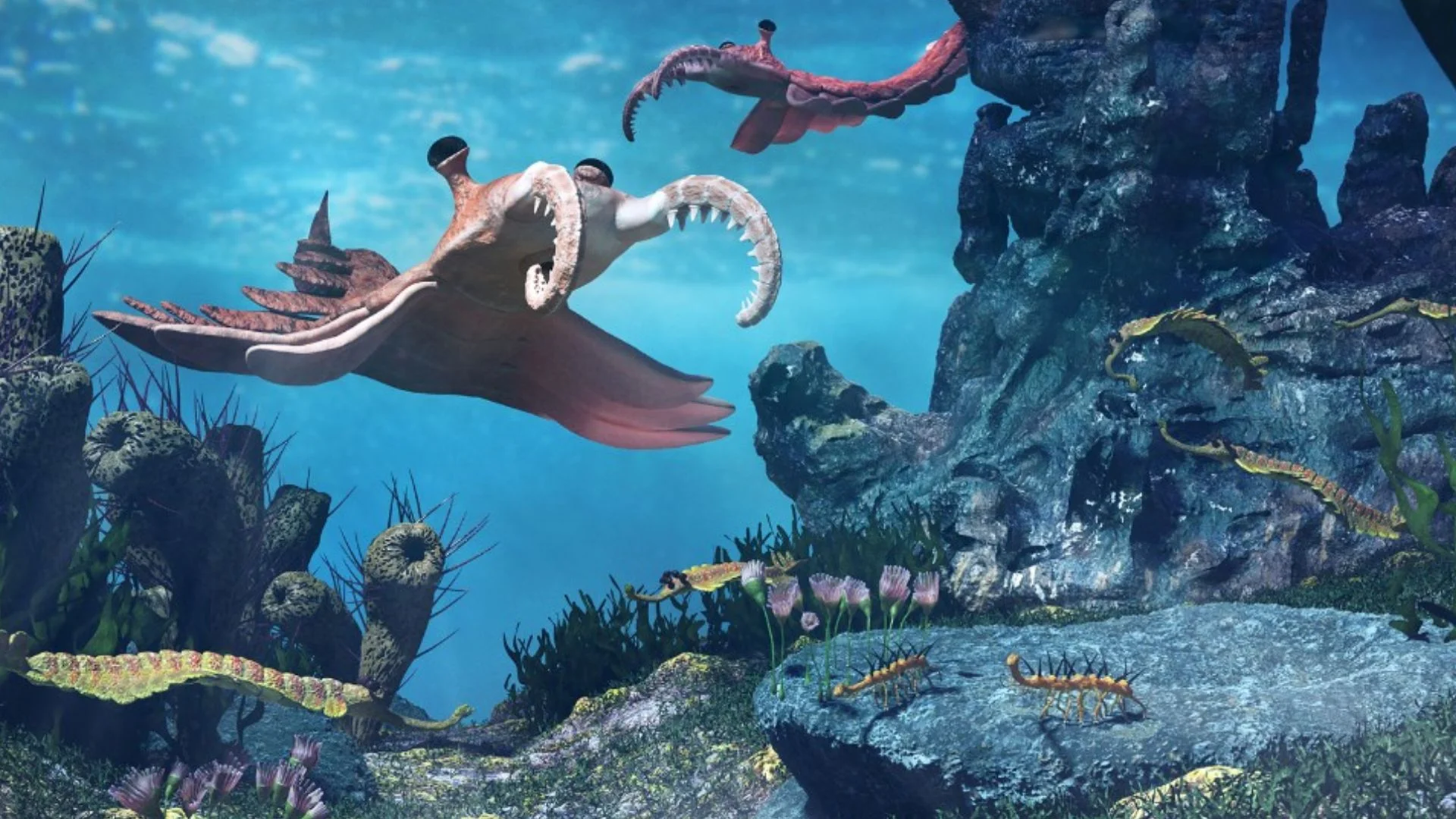
The discovery site lies in northwestern Canada, a region that was once part of the ancient continent Laurentia. Laurentia existed long before the supercontinent Pangaea formed. During the Ediacaran Period, the area was covered by ancient oceans that supported early marine ecosystems.
Study co-author Scott D. Evans said life on Earth was dominated by microbes for nearly 3 billion years.
He explained that larger marine animals suddenly appeared during the Ediacaran era and displayed behaviors similar to those of living animals today. Evans said the fossil site offers important clues about when animal life became large, complex, and clearly recognizable.
Most animals from this period had soft bodies without bones or shells. That makes Ediacaran fossils extremely rare because soft tissue does not preserve easily over millions of years. Scientists rely on rare fossil beds like this one to study the earliest stages of animal evolution.
Rare Species Found in North America
Among the fossils found at the site was Dickinsonia, a flat and oval-shaped organism that absorbed nutrients across the bottom of its body.
Scientists consider it one of the earliest known complex life forms. The fossil helps researchers better understand how ancient organisms survived before modern ecosystems developed.
Researchers also discovered fossils of Funisia, a tube-shaped creature linked to the oldest known evidence of sexual reproduction in animals. This organism lived in colonies on the seafloor and reproduced in groups. Scientists believe it represents an important step in the development of complex life cycles.
READ ALSO: University of Utah and DARPA Launch SMART Hub for Critical Minerals Expansion
Another major find was Kimberella, an early organism connected to modern mollusks. Scientists say it may now represent the oldest known animal with bilateral symmetry, meaning both sides of its body are mirror images of each other. Bilateral symmetry later became a defining feature of many modern animals, including humans.
The fossils belong to the White Sea assemblage, one of three major fossil groups from the Ediacaran Period. Earlier groups, such as the Avalon assemblage, mostly included stationary deep-sea organisms. Later groups, including the Nama assemblage, contained some of the first animals with hard shells and skeletons.
Study co-author Justin Strauss said the discovery fills an important gap in the fossil record.
He explained that scientists previously lacked fossil evidence from this part of the rock sequence in northwestern Canada. Strauss said the region now offers strong potential for new discoveries about ancient Earth history.
Deep Ocean Theory Changes Understanding of Early Life
The surrounding rock layers revealed another surprising detail about the ancient animals. Researchers believe the organisms lived in deeper ocean waters than scientists previously associated with White Sea fossils. This challenges long-standing ideas about where early animals first evolved.
Scientists traditionally believed animal life began in shallow coastal environments before moving into deeper oceans. The new findings suggest the opposite pattern may have occurred. Early animals may have first evolved in deeper, more stable marine environments before spreading into shallow seas.
Evans explained that deep oceans remain more stable than shallow waters because temperature and oxygen levels change less dramatically. Stable conditions may have helped fragile early animals survive and evolve. Researchers believe this environment provided an ideal setting for the rise of complex life.
WATCH ALSO: High-pressure monster gun can make 40-ton military vehicle more lethal on battlefields
The discovery also adds to growing scientific efforts to understand one of Earth’s biggest evolutionary transitions. The jump from microscopic organisms to large multicellular animals permanently changed the planet’s ecosystems. It laid the foundation for the later evolution of fish, reptiles, mammals, and eventually humans.
Scientists expect the Canadian fossil site to provide more answers in the coming years. Further research may reveal new species and help explain how early animals adapted to changing oceans and climates.
The findings are already reshaping the timeline of animal evolution and expanding knowledge about the origins of life on Earth.