HII unveiled its latest autonomous maritime technologies during the Combined Naval Event(CNE) 2026 in the UK, showcasing advanced unmanned underwater and surface platforms built for modern naval operations.
The company also highlighted its expanding role in live, virtual, and constructive training systems used by the US Navy and allied forces to improve combat readiness. Held from May 19 to 21 at the Farnborough International Exhibition Centre, the event featured HII’s focus on artificial intelligence, autonomous operations, and manned-unmanned naval teaming.
HII is known as America’s largest military shipbuilder and an important supplier of naval defense systems. The company develops technologies for both underwater and surface operations. Its systems support military, commercial, and scientific missions worldwide.
Duane Fotheringham, president of HII’s Unmanned Systems group, said the company continues to support the growing demand for autonomous naval capabilities.
He explained that HII systems already operate in some of the world’s toughest maritime environments. He also said the company is working closely with the US Navy, the Royal Navy, NATO allies, and international partners.
One major focus at the exhibition was the REMUS family of unmanned underwater vehicles(UUVs). These robotic submarines can perform missions without a crew. They are used for tasks such as mine detection, intelligence gathering, underwater mapping, and surveillance.
READ ALSO: Firefly Aerospace Expands Texas Space Campus to Speed Up Lunar Spacecraft Production
This year marks the 25th anniversary of the REMUS platform. HII has delivered more than 750 REMUS vehicles to over 30 countries worldwide. According to the company, more than 90 percent of those systems remain operational after over two decades of service.
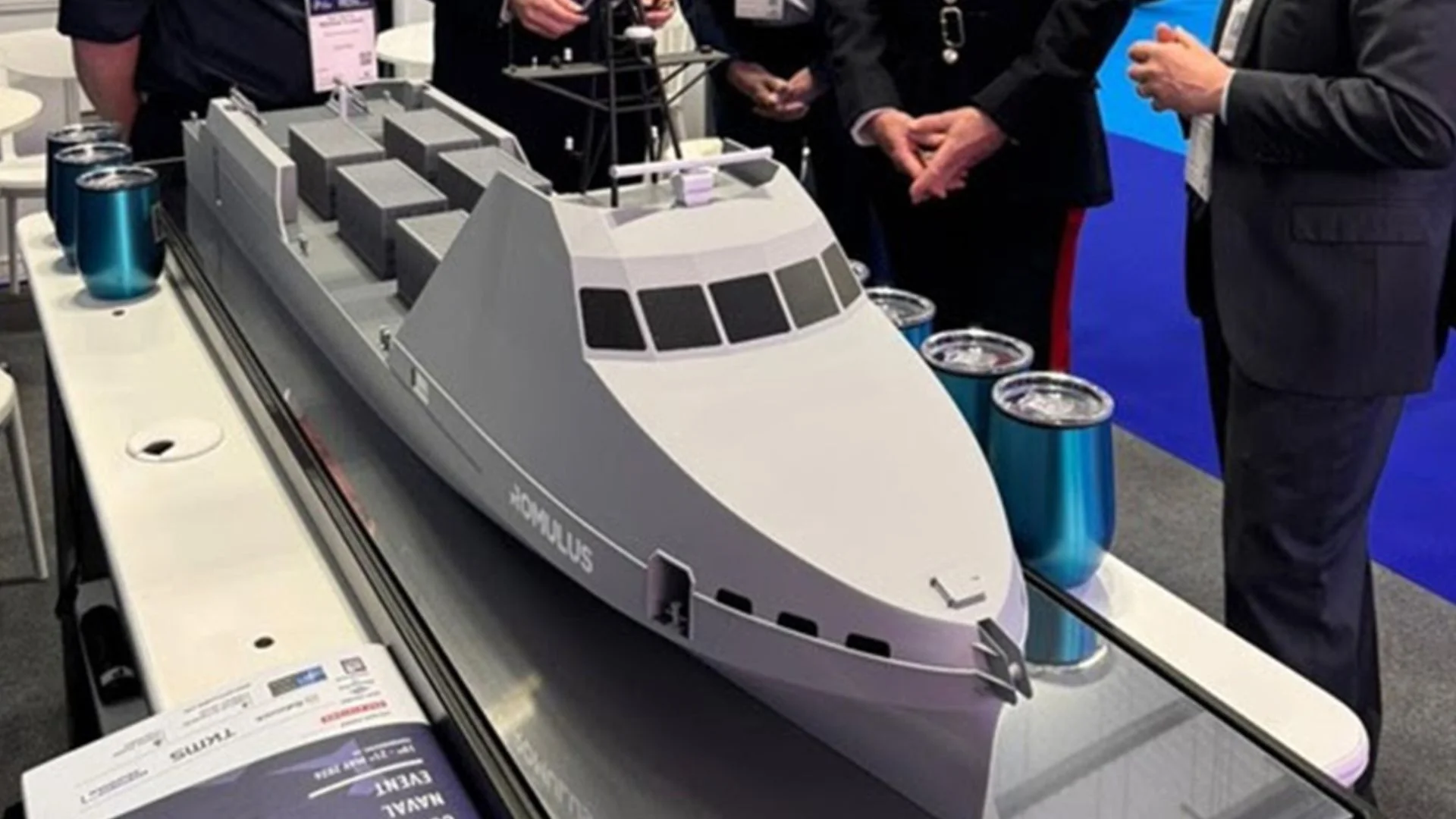
HII also showcased the ROMULUS family of unmanned surface vessels, or USVs. These vessels operate on the water’s surface and use artificial intelligence to support naval operations. They can work alongside crewed ships to extend mission range and improve fleet awareness.
The company displayed its Odyssey Autonomous Control System software during the event. Odyssey ACS is designed to control unmanned systems across multiple domains from a single interface. The software helps operators manage unmanned vehicle swarms more efficiently during combat and surveillance missions.
REMUS and ROMULUS Support Modern Naval Missions
HII explained that autonomous systems are becoming increasingly important for naval forces. Many modern missions require long-duration operations in dangerous or contested areas. Unmanned systems help reduce risks to sailors while improving operational reach.
The REMUS UUVs support a wide range of naval tasks. These include mine countermeasures, seabed warfare, hydrographic surveys, and intelligence missions. The systems are also capable of operating in deep water and difficult underwater conditions.
One recent milestone involved the launch and recovery of a REMUS 600 vehicle from the USS Delaware submarine. The operation used a torpedo tube system to deploy and recover the unmanned vehicle. HII described the test as a major step forward for manned-unmanned teaming in submarine operations.
The company also recently secured a contract from the US Defense Innovation Unit. The contract focuses on developing a Torpedo Tube Launch and Recovery system for autonomous underwater vehicles. The system is intended to allow submarines to deploy and recover unmanned systems without exposing crew members to additional risks.
READ ALSO: China Prepares Older Carriers to Deploy J-35 Stealth Fighter Across Full Naval Fleet
HII also highlighted progress in the production of its ROMULUS 151 unmanned surface vessels. The company said multiple vessels are currently under construction. HII is also investing in manufacturing improvements to speed up production for allied naval fleets.
The ROMULUS vessels are designed to support missions such as surveillance, strike operations, and counter-drone activities. These systems can also assist in launching and recovering unmanned aerial and underwater vehicles. Their AI-enabled design allows them to operate with reduced human control during missions.
HII Strengthens European Naval Partnerships
HII announced that it recently expanded its Portchester facility in the UK. The site serves as a regional hub for European operations and support services. It also provides training, sustainment, and future deployment support for allied naval customers.
The company continues to work closely with Babcock International Group on autonomous maritime technologies. The partnership focuses on integrating launch and recovery systems for unmanned underwater vehicles through submarine torpedo tubes. This cooperation supports future naval modernization programs for the Royal Navy.
Babcock’s ARMOR Force initiative also includes HII’s ROMULUS unmanned surface vessels. The program aims to combine autonomous and crewed systems into a more connected naval force. Such integration is becoming increasingly important as navies prepare for complex multi-domain operations.
HII also emphasized its leadership in live, virtual, and constructive training systems. These systems combine real-world equipment, computer simulations, and virtual environments into a single training platform. Military forces use LVC environments to prepare for modern battlefield conditions across sea, air, land, space, and cyber domains.
The company stated that its LVC systems maintain tactical realism even when battle conditions change rapidly. HII combines military expertise with vendor-neutral software tools to build flexible training networks. These systems help naval forces improve readiness while reducing training costs and operational risks.
WATCH ALSO: Falcon 9 rocket of SpaceX recently launched 24 Starlink internet satellites
The growing focus on autonomous systems reflects wider changes across the global naval industry. Many countries are increasing investments in unmanned platforms to improve surveillance, fleet protection, and operational flexibility. The technologies presented at CNE 2026 show how autonomous systems are becoming central to future naval strategy.
HII’s latest developments demonstrate how defense companies are accelerating efforts to integrate AI, robotics, and autonomous operations into frontline naval forces. The company’s expanding partnerships and production capabilities position it to play a larger role in the future of global maritime security.