A secret US Navy surveillance network created during the Cold War to detect enemy submarines made one of the most important discoveries in marine science.
The underwater system recorded mysterious sounds across the world’s oceans that were later identified as whale songs. When classified data became available to researchers after the Cold War, it opened new insights into whale communication, migration, and life beneath the sea.
During the 1950s, the US focused on submarine detection after the devastating impact of German U-boats during World War II. Military planners wanted a system that could identify enemy submarines from long distances. This effort became a major priority during the Cold War.
The result was the Sound Surveillance System(SOSUS). The network consisted of underwater microphones called hydrophones. These devices were placed on the ocean floor and connected to secret listening stations around the world.
The system was designed to monitor submarine activity. Operators listened for the sounds of propellers, engines, and other mechanical equipment. By studying these noises, analysts could often identify specific submarine classes.
SOSUS proved highly effective at tracking underwater military movements. The network became one of the most important intelligence tools used by the US Navy. Much of its operation remained classified for decades.
However, military operators soon noticed many sounds that did not match any known submarine signature. They heard deep booms, long moans, clicks, grunts, and repetitive low-frequency tones. These sounds appeared regularly across vast areas of the ocean.
READ ALSO: A Breakthrough Technology Set to Revolutionize Ultra-Fast, Eco-Friendly AI
At first, the source of these noises remained a mystery. Analysts searched their records for possible explanations. None of the sounds matched known machines or military equipment.
Eventually, the Navy discovered that many of the strange signals came from whales. The sounds were biological rather than mechanical. Yet this information remained hidden from the public because the surveillance system itself was secret.
Navy personnel learned to distinguish whale sounds from submarine sounds. Training materials included examples of these biological signals. The recordings helped operators avoid confusing marine life with potential threats.
For the military, whale calls were often considered background noise. They sometimes complicate submarine detection efforts. In many cases, analysts tried to filter them out to focus on military targets.
Declassified Data Changed Whale Research
The end of the Cold War created new opportunities for scientific research. Following the collapse of the Soviet Union, some military technologies became available for civilian use. Scientists gained access to previously restricted information.
In 1991, government leaders promoted programs that allowed military resources to support scientific and environmental projects. This initiative eventually brought marine researchers into contact with the SOSUS system. One of those researchers was bioacoustics expert Chris Clark.
Clark worked at Cornell University’s conservation bioacoustics program. His research focused on how animals use sound. He received an unexpected invitation from officials connected to the Navy’s research programs.
The invitation led him into a world that few civilians had ever seen. He visited military facilities filled with advanced monitoring equipment. There, he learned how extensively the oceans had been monitored for decades.
Clark quickly realized the scientific value of the recordings. The Navy had collected enormous amounts of underwater sound data. Much of it contained information about whales and other marine life.
READ ALSO: Study reveals Arabia’s rainfall was five times more extreme 400 years ago
Scientists suddenly had access to observations covering entire ocean basins. Traditional whale studies relied on ships, visual sightings, and small monitoring systems. SOSUS offered a completely different scale of observation.
Researchers could track whale movements across thousands of miles. They could study migration routes with unprecedented accuracy. They could also examine how whale sounds changed over time and distance.
The data benefited marine biology more than it did. Geologists used the recordings to locate underwater volcanic activity. The information also helped scientists study tectonic processes shaping the ocean floor.
One important detail remains classified. The exact accuracy of the Navy’s tracking capabilities has never been fully disclosed. Even so, researchers acknowledge that the system provides remarkable precision in a challenging underwater environment.
Unlike light, sound travels efficiently through seawater. This makes the ocean an acoustic world where hearing often takes precedence over sight. For many marine animals, sound is the primary means of communication and navigation.
Scientists studying whales quickly realized the significance of this fact. Large whales produce some of the lowest-frequency sounds in the animal kingdom. These sounds can travel extraordinary distances through water.
The newly available recordings provided evidence supporting theories that had existed for decades. Researchers began examining whether whales were communicating across entire ocean regions. The data suggested that long-distance communication was possible on a scale previously difficult to confirm.
Tracking Thousand-Mile Whale Songs
Among the most fascinating discoveries were blue whales and fin whales. These giant marine mammals produce extremely low-frequency sounds. Many of these calls are below the range of normal human hearing.
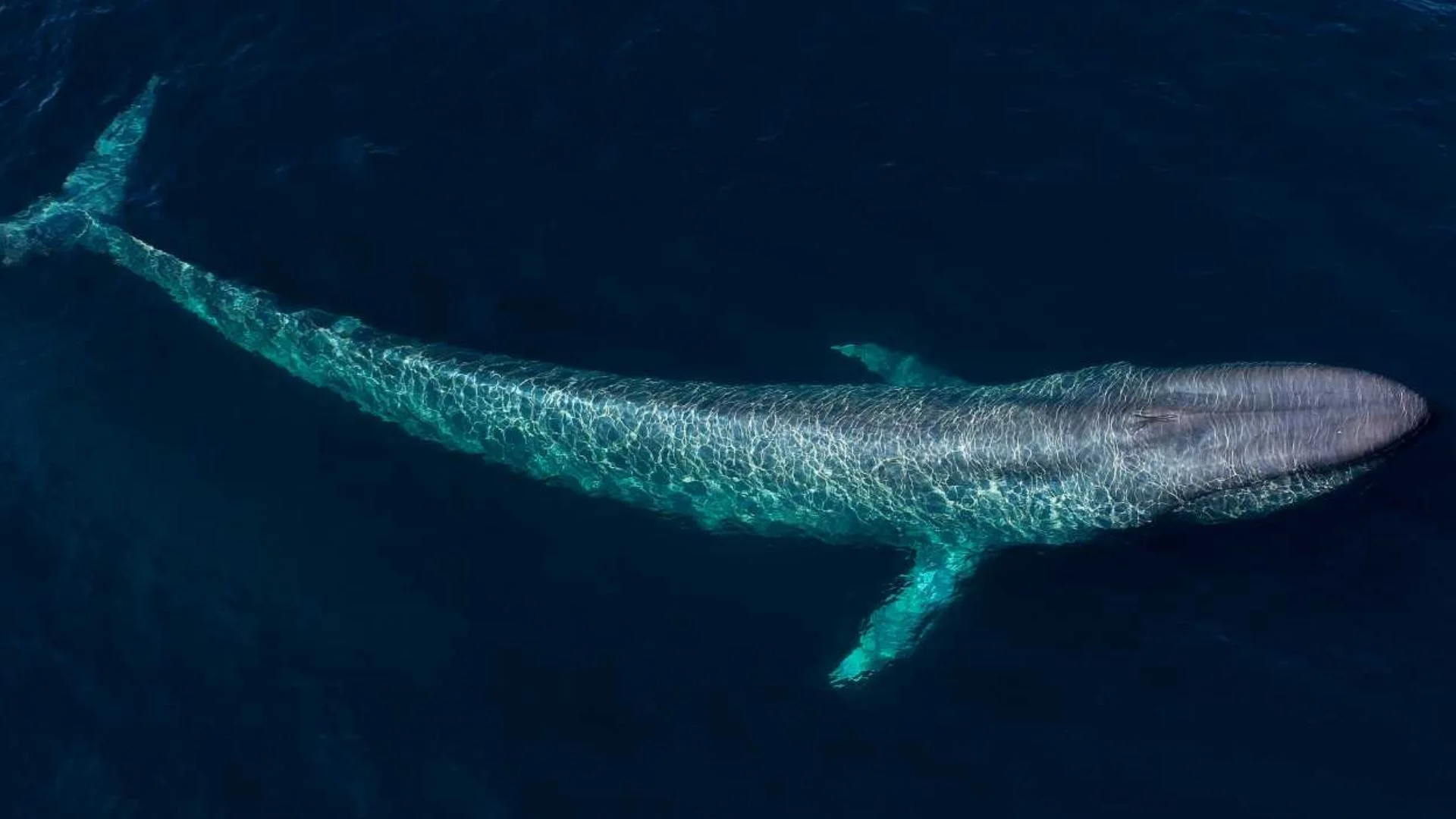
Blue whales are the largest animals ever known to live on Earth. Their calls consist of long, deep moans repeated at precise intervals. Some vocalizations last up to thirty seconds before the whale pauses and repeats the sound.
Researchers found that blue whales maintain these patterns for days at a time. The timing is remarkably consistent. Such precision intrigued scientists studying animal communication.
Fin whales produce an even simpler signal. Their calls often appear as low-frequency pulses repeated every few seconds. The regular rhythm makes them particularly useful for tracking studies.
During the Cold War, some analysts initially suspected these signals were artificial. The repetitive nature of the sounds seemed unusual. Some experts even considered whether foreign powers were using them for underwater detection systems.
WATCH ALSO: A Tesla car’s software systems have shown ultra-fast decision making during a ride
Further research eventually confirmed the true source. The mysterious sounds came from fin whales. What once appeared to be possible military technology turned out to be natural animal communication.
The recordings revealed how far whale sounds can travel. Researchers identified the same whales across listening arrays separated by great distances. This demonstrated the enormous reach of low-frequency whale calls.
One famous example involved tracking a blue whale for forty-three consecutive days. Scientists monitored the animal from roughly one thousand miles away. The whale continued singing throughout its journey.
During the tracking period, the whale traveled approximately 2,200 miles. Researchers mapped its route across the Atlantic Ocean. The animal moved through several regions while maintaining its vocal pattern.
This observation transformed scientific understanding of whale behavior. Researchers could now study movements continuously rather than relying on occasional sightings. The data revealed previously hidden migration details.
Scientists also explored how whales use sound for navigation. Some researchers suggested that whales might use echoes from underwater mountains and geological features. Such behavior would resemble large-scale echolocation.
This theory remains under investigation. Evidence has not yet confirmed exactly how whales use their songs. However, the possibility highlights the complexity of underwater communication.
Another important area of study involves bowhead whales. These whales live in Arctic waters beneath sea ice. In that environment, visibility is often extremely limited.
Researchers believe sound plays a major role in helping bowhead whales travel through icy waters. Their calls can help maintain contact between individuals moving through challenging conditions. Scientists sometimes describe these groups as acoustic herds.
The concept suggests that whales stay connected through sound rather than sight. Individuals hear one another across long distances. This acoustic connection helps maintain group cohesion during migration.
Scientists have also noted that bowhead whale songs contain sounds resembling the Arctic environment itself. Ice cracking, shifting, and grinding create a complex underwater soundscape. Whale vocalizations often blend into this acoustic environment.
The broader discovery changed how researchers view ocean ecosystems. It highlighted the importance of sound as a tool for survival and communication. It also demonstrated how much remains unknown about life beneath the waves.
The story represents an unusual partnership between military technology and environmental science. A system built to monitor submarines ultimately revealed hidden aspects of animal behavior. Information collected for national security purposes became a valuable scientific resource.
WATCH ALSO: This robot that you see mimicking meditation is a Chinese company’s new humanoid
Today, bioacoustic research continues to expand. Modern scientists use advanced listening systems to study marine mammals, fish, and other ocean species. New technologies build upon lessons first revealed through SOSUS data.
The research also raises important questions about ocean noise. Commercial shipping, industrial activity, and military operations generate increasing underwater sound. Understanding whale communication helps scientists assess how these changes affect marine life.
Whale songs remain one of nature’s most remarkable phenomena. Some calls appear capable of traveling across entire ocean basins. Researchers continue working to understand what information these animals exchange over such vast distances.
More than three decades after scientists gained access to Cold War recordings, the data continues to shape marine research. The discovery showed that some of the world’s most important scientific insights can emerge from unexpected places. As new monitoring technologies develop, researchers expect even deeper insights into the hidden acoustic world that whales have used for millions of years.