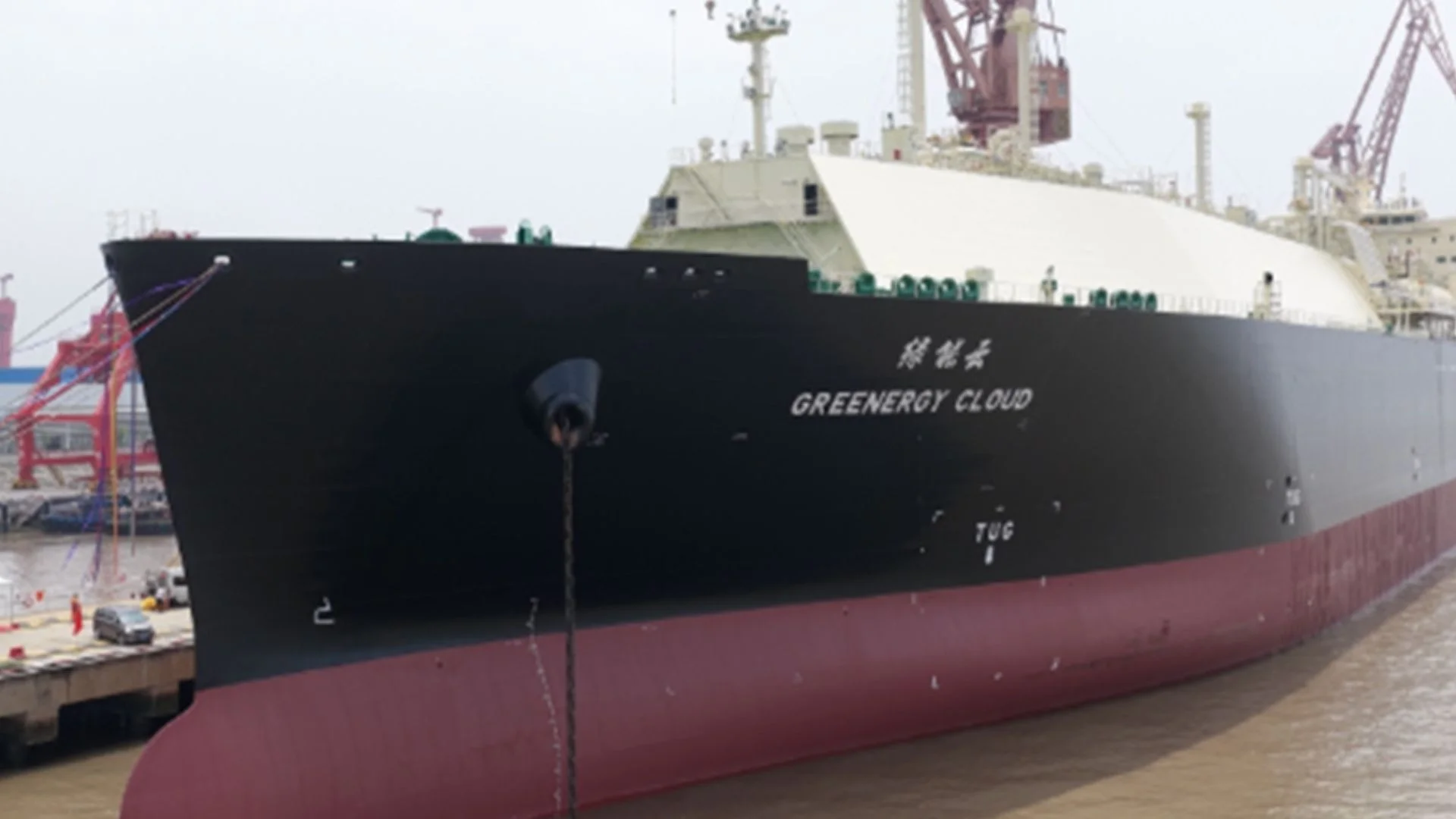
China has delivered two new 174,000-cubic-meter liquefied natural gas (LNG) carriers to customers.
The vessels were completed by Hudong-Zhonghua Shipbuilding, a subsidiary of China State Shipbuilding Corporation. The delivery marks another milestone in China’s effort to strengthen its high-end shipbuilding industry.
The new ships were built entirely with domestic design and manufacturing capabilities. This shows that China now has the expertise to independently produce advanced LNG carriers for international customers.
LNG carriers are among the most complex commercial ships because they transport natural gas in liquid form at extremely low temperatures.
Each vessel is 299 meters long and has a deck area equal to about three standard football fields. Every ship can carry up to 174,000 cubic meters of liquefied natural gas in a single voyage. Their large cargo capacity helps improve transport efficiency on long international shipping routes.
WATCH ALSO: Tesla’s Optimus humanoid robot steals spotlight at ‘Tron: Ares’ premiere
The vessels also feature technologies that improve fuel efficiency and reduce emissions. According to China Media Group, each ship is expected to lower daily carbon emissions by around 10 tons during operation. These improvements support the shipping industry’s effort to reduce its environmental impact.
China’s LNG Carriers Advance
Hudong-Zhonghua Shipbuilding has also begun construction of the world’s first QC-Max ultra-large LNG carriers. These ships will have a capacity of 271,000 cubic meters, making them the largest LNG carriers currently under construction. The project highlights China’s push toward larger and more advanced marine engineering equipment.
READ ALSO: Rare Titanosaur Fossil Found in Museum Drawer After Sitting Unnoticed for 40 Years
China is also expanding its position in the market for environmentally friendly ships. China Media Group reported that the country secured 80.2 percent of global new orders for green vessels during the first quarter of 2026. These orders include LNG, LPG, methanol, ethane dual-fuel ships, and fully electric vessels.
Green vessels use cleaner fuels or advanced propulsion systems to reduce emissions compared with conventional ships. LNG burns cleaner than traditional marine fuel, while dual-fuel ships can switch between different energy sources depending on operating needs. These technologies help shipping companies meet increasingly stringent environmental standards worldwide.
China’s share of the global LNG carrier market has now exceeded 30 percent. Hudong-Zhonghua Shipbuilding currently has nearly 60 LNG carriers on order. The company’s production schedule is already booked beyond 2030, reflecting strong international demand.
Growing Competition in Global LNG Market
Lin Boqiang, director of the China Center for Energy Economics Research at Xiamen University, said that larger, higher-capacity vessels will strengthen China’s role in the global LNG industry.
He said they will also support broader development and use of marine energy resources. The growing production capacity adds to China’s expanding influence in advanced shipbuilding.
South Korea has long led the global LNG carrier industry. However, China has steadily increased its manufacturing capacity and technical expertise in this highly specialized sector. The competition between the two countries is reshaping the global shipbuilding market.
WATCH ALSO: Microsoft delivers first large scale production cluster with more than 4,600 NVIDIA GB300 NVL72
Lin also said China’s progress is supported by advanced natural gas technologies, modern manufacturing equipment, and competitive production costs. These strengths make Chinese-built energy infrastructure attractive to countries seeking efficient and affordable solutions. They also support wider efforts to promote lower-carbon energy transportation, according to Global Times reports.
The latest deliveries reflect China’s continued investment in advanced shipbuilding and cleaner maritime transport.
As global demand for LNG shipping grows, Chinese shipyards are expected to play an important role in supplying next-generation vessels. The expansion of production and new ship designs is set to strengthen China’s position in the international maritime industry in the years ahead.