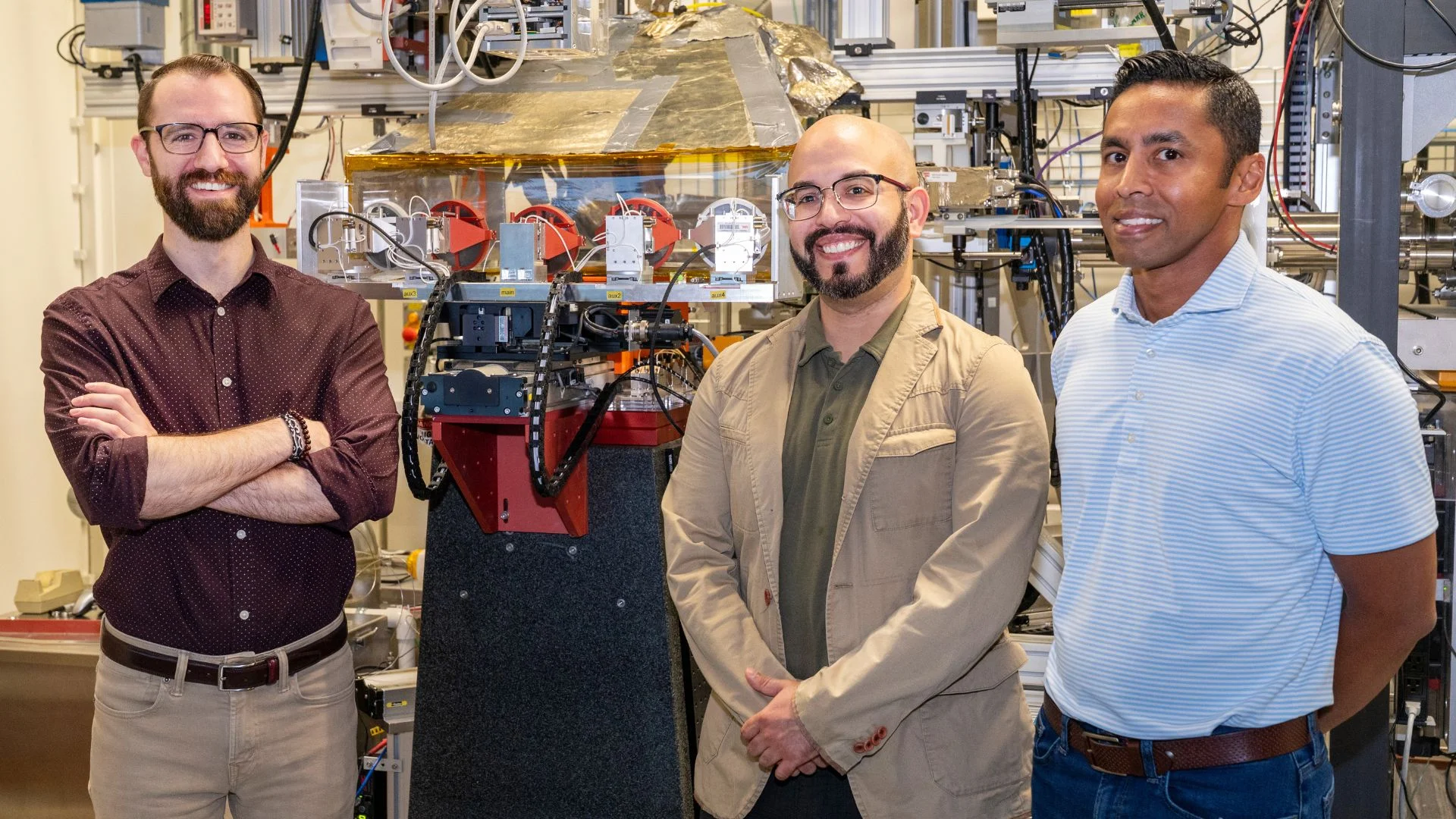
Researchers at the US Department of Energy’s Brookhaven National Laboratory have developed a new method to convert methane into useful liquid chemicals.
The study was published in Advanced Functional Materials. The work focuses on using molybdenum disulfide(MoS₂), as the main catalyst.
A catalyst is a material that speeds up a chemical reaction without being consumed during the process. Many industrial catalysts rely on costly precious metals such as palladium or rhodium. The new catalyst instead uses molybdenum and sulfur, which are much more abundant and less expensive.
The researchers found that this material converts methane into liquid oxygen-containing compounds with very high selectivity. One of the main products is methyl peroxide. This compound serves as an important building block for producing methanol, a liquid fuel and industrial chemical.
Methanol is easier and cheaper to transport than natural gas. It is widely used in the production of fuels and in chemical manufacturing. Turning methane into methanol-related products makes remote natural gas much more valuable.
The chemical reaction occurs at temperatures below 100 degrees Celsius (212 degrees Fahrenheit). During laboratory testing, the reaction performed well only at 75 degrees Celsius (167 degrees Fahrenheit). These relatively low temperatures reduce energy requirements compared with many existing industrial processes.
The catalyst also performed as well as, and sometimes better than, expensive precious metal catalysts. Researchers achieved high product yields while keeping the reaction focused on producing the desired liquid chemicals. This efficiency makes the technology attractive for future industrial development.
Scientists used commercially available molybdenum disulfide instead of creating a specially designed material. They made only minor adjustments before using it in the reaction. This simple preparation could help lower manufacturing costs if the process is expanded.
READ ALSO: Airbus and Kawasaki Explore Eurodrone Anti-Submarine Variant for Japan’s Maritime Defense
Researchers said the catalyst’s low cost is one of its biggest advantages. Molybdenum is widely available and is sourced domestically in the US. This reduces dependence on rare and expensive materials.
Why This Methane Conversion Tech Matters
Methane is the main component of natural gas. Large amounts of oil and gas are produced from wells around the world every year. However, much of this gas cannot be transported economically because pipelines are unavailable.
In many remote locations, companies burn methane through flaring or release it into the atmosphere. Both practices waste valuable energy resources. Finding a practical way to convert methane into transportable liquids has remained a major scientific challenge.
Liquid products are much easier to store and transport than gas. Trucks, ships, and storage tanks already handle liquid fuels efficiently. This makes liquid chemicals more practical for global markets.
The new catalyst addresses this problem by producing liquid oxygenates directly from methane. These products can later be processed into methanol and other industrial chemicals. This creates new value from gas that would otherwise be wasted.
The catalyst also performs well in the presence of sulfur. This is an important advantage because raw natural gas often contains sulfur compounds. Traditional catalysts often lose efficiency in the presence of sulfur.
Scientists explained that every natural gas field contains a different mix of gases and impurities. One catalyst does not always work for every location. Developing several sulfur-tolerant catalysts expands the range of natural gas resources that can be used efficiently.
Researchers said natural gas composition varies greatly from one well to another. Their long-term goal is to develop catalytic systems for a wide range of gas mixtures. This flexible approach would support both domestic and international energy production.
The work forms part of Brookhaven National Laboratory’s long-term methane conversion research program. Scientists aim to understand both the chemistry and the engineering needed for practical industrial applications. Better knowledge will further improve catalyst performance.
How the Catalyst Works
Understanding the chemical reaction required sophisticated scientific equipment. Scientists studied the catalyst while it was actively converting methane. Watching the reaction in real time revealed details that ordinary testing cannot show.
The experiments took place at Brookhaven’s National Synchrotron Light Source II. This research facility produces powerful X-rays that allow scientists to observe atoms during chemical reactions. The technique provides extremely detailed information about how materials behave.
The reaction itself involves three different phases. Methane is a gas. Molybdenum disulfide is a solid, while hydrogen peroxide is dissolved in water as a liquid.
Combining gas, liquid, and solid materials in one experiment is technically difficult. Researchers designed special pressurized reaction chambers for the study. These chambers kept all three materials together throughout the reaction.
The X-rays tracked both molybdenum and sulfur atoms during the process. Scientists observed changes in their electronic behavior as methane converted into liquid products. These small changes help explain why the catalyst works so efficiently.
Researchers discovered that the catalyst became more metallic during the reaction. This allowed electrons to move more freely through the material. Better electron movement helped drive the chemical reaction.
Scientists also examined the catalyst’s overall structure before and after testing. They found that its larger atomic arrangement remained unchanged. This indicates that the catalyst stays stable during use.
A stable catalyst is important for commercial production. Reusable materials reduce operating costs and improve long-term efficiency. The results suggest that molybdenum disulfide can withstand repeated use.
Hydrogen peroxide also played a key role in the reaction. Scientists originally believed it simply supplied oxygen. Further analysis revealed a more complex process.
Hydrogen peroxide naturally forms highly reactive hydroxyl radicals as it breaks down. These tiny chemical fragments help weaken methane’s strong carbon-hydrogen bonds. Breaking those bonds is one of the hardest parts of methane conversion.
Normally, hydroxyl radicals react with a wide range of materials. This often creates unwanted byproducts. The new catalyst controls these radicals and directs them toward methane rather than toward the other products.
The catalyst both generates and captures the reactive radicals. It guides them to react with nearby methane molecules. This improves selectivity and limits unwanted side reactions.
WATCH ALSO: World’s most powerful fighter jet F-35 is expected to get a new system soon
Researchers confirmed this mechanism using electron paramagnetic resonance studies performed at Ames National Laboratory. Additional Raman spectroscopy work at Oak Ridge National Laboratory verified the catalyst’s structural stability. These independent studies supported the overall findings.
Scientists from several universities in the US and Europe also contributed to the research. Teams provided advanced microscopy, computer modeling, and theoretical analysis. Together, these methods explained how the catalyst changes during operation.
The research team believes these findings provide a strong foundation for future catalyst design. Their goal is to create affordable systems that match or exceed the performance of precious metal catalysts. Brookhaven Science Associates has already filed a provisional patent covering the methane conversion process.
The development represents another step toward making natural gas easier to use worldwide. If future large-scale testing delivers similar results, industries could convert more wasted methane into valuable fuels and chemical products. That would improve resource efficiency while creating new opportunities for cleaner and more practical use of natural gas.