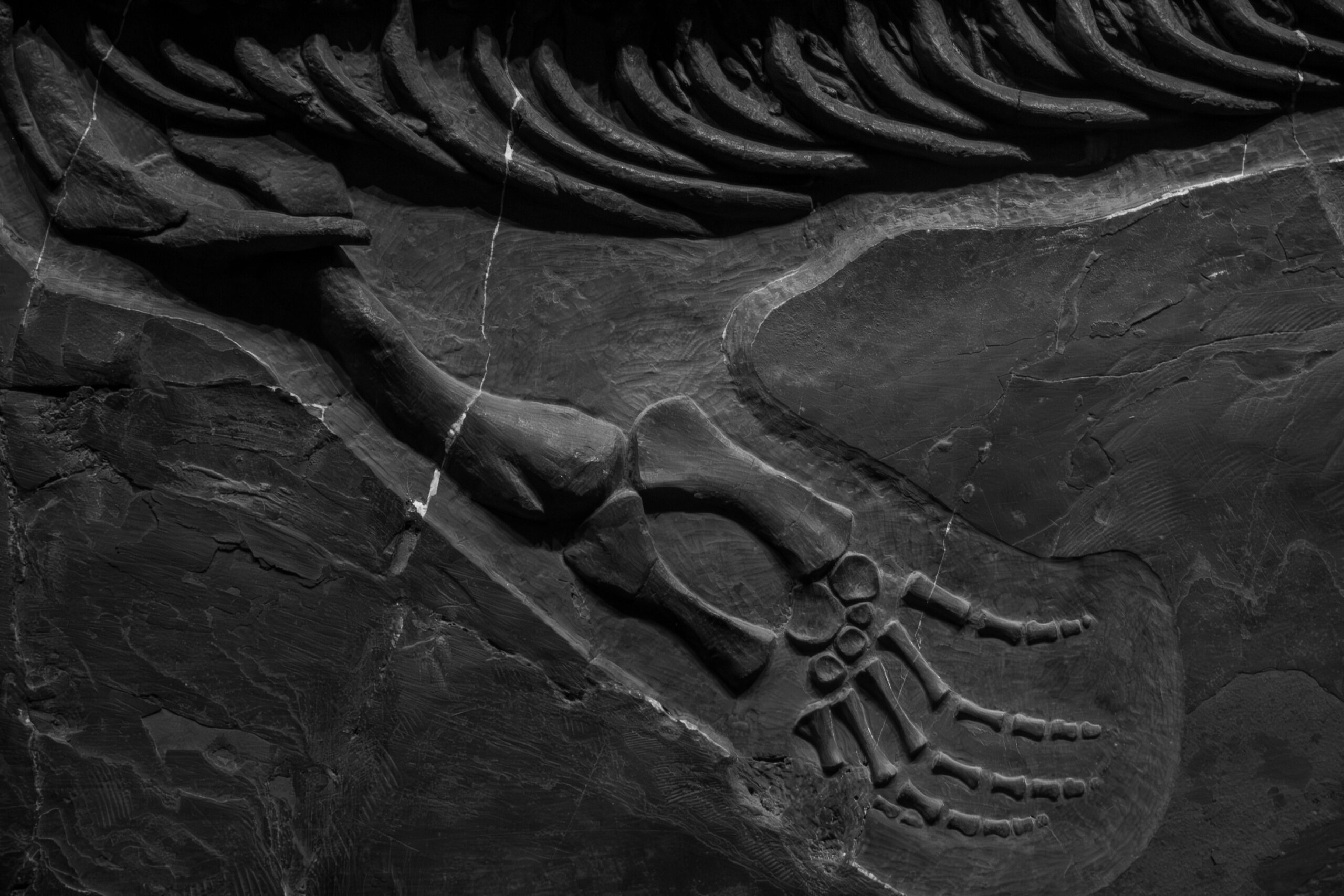
Researchers from the Chinese Academy of Sciences have discovered a new species of mammal-like reptile in northwestern China, providing the first fossil evidence of a cross-equator migration corridor on the supercontinent Pangaea over 250 million years ago. The find links prehistoric ecosystems in China and South Africa, suggesting large animals traversed the ancient world more easily than scientists believed.
Deep in the arid landscapes of Gansu province, Chinese paleontologists have unearthed a key that unlocks a forgotten map of the ancient world. The discovery of a new species of dicynodont—a tusked, herbivorous reptile that was a cousin to modern mammals—provides the first concrete proof that these creatures migrated across the equator of the supercontinent Pangaea. This finding, reported by the South China Morning Post (SCMP), rewrites our understanding of prehistoric animal movement and the planet’s ancient geography.
The newly identified creature has been named Dinanomodon guoi. According to a paper published on December 15 in the journal Cladistics, the fossil was found in Gulang county and represents a major breakthrough. “This discovery marks the first bidentalian genus shared between China and South Africa,” the research team, from the Institute of Vertebrate Palaeontology and Paleoanthropology (IVPP) at the Chinese Academy of Sciences, stated. Essentially, they found a very close relative of a species previously known only from the Karoo Basin in South Africa, some 20,000 km (12,400 miles) away during the Late Permian period.
READ ALSO: https://modernmechanics24.com/post/us-army-xm30-next-gen-ifv-2026/
Why is this connection so revolutionary? Pangaea was a single, massive landmass, but scientists long assumed its harsh, desert-like interior and extreme equatorial climate acted as a formidable barrier to large animal migration. This fossil evidence challenges that assumption head-on. The presence of Dinanomodon on both sides of the ancient equator suggests the existence of an “ecological corridor”—a habitable pathway with enough resources to support the journey of sizeable creatures. The team emphasised that “precipitation, rather than temperature” was likely the key factor, hinting at a narrow, life-sustaining belt of seasonal or ever-wet climate along Pangaea’s eastern margin.
Dicynodonts were not small creatures. As reported by SCMP, they ranged from burrowers to grazers as large as elephants and were among the most diverse land animals of their time, surviving the cataclysmic Great Dying extinction event 252 million years ago. The discovery of the approximately one-metre-long (three-foot) Dinanomodon guoi alongside fossils of an apex predator in the same Sunan Formation indicates the region was a resource-rich hub, capable of supporting a complex ecosystem. This “high ecosystem productivity” would have been crucial for fueling long-distance migration.
WATCH ALSO: https://modernmechanics24.com/post/transform-home-life-with-1x-neo-robot-1/
This fossil is more than just a new species; it’s a passport stamp from a journey taken 255 million years ago. It reveals that the narrative of a fragmented, impassable Pangaea needs revision. Large, mammal-like reptiles were traversing continents, connecting ecosystems from southern Africa to what is now central China. The discovery by the IVPP team doesn’t just add a new branch to the tree of life; it redraws the very routes that life took across our ancient planet.