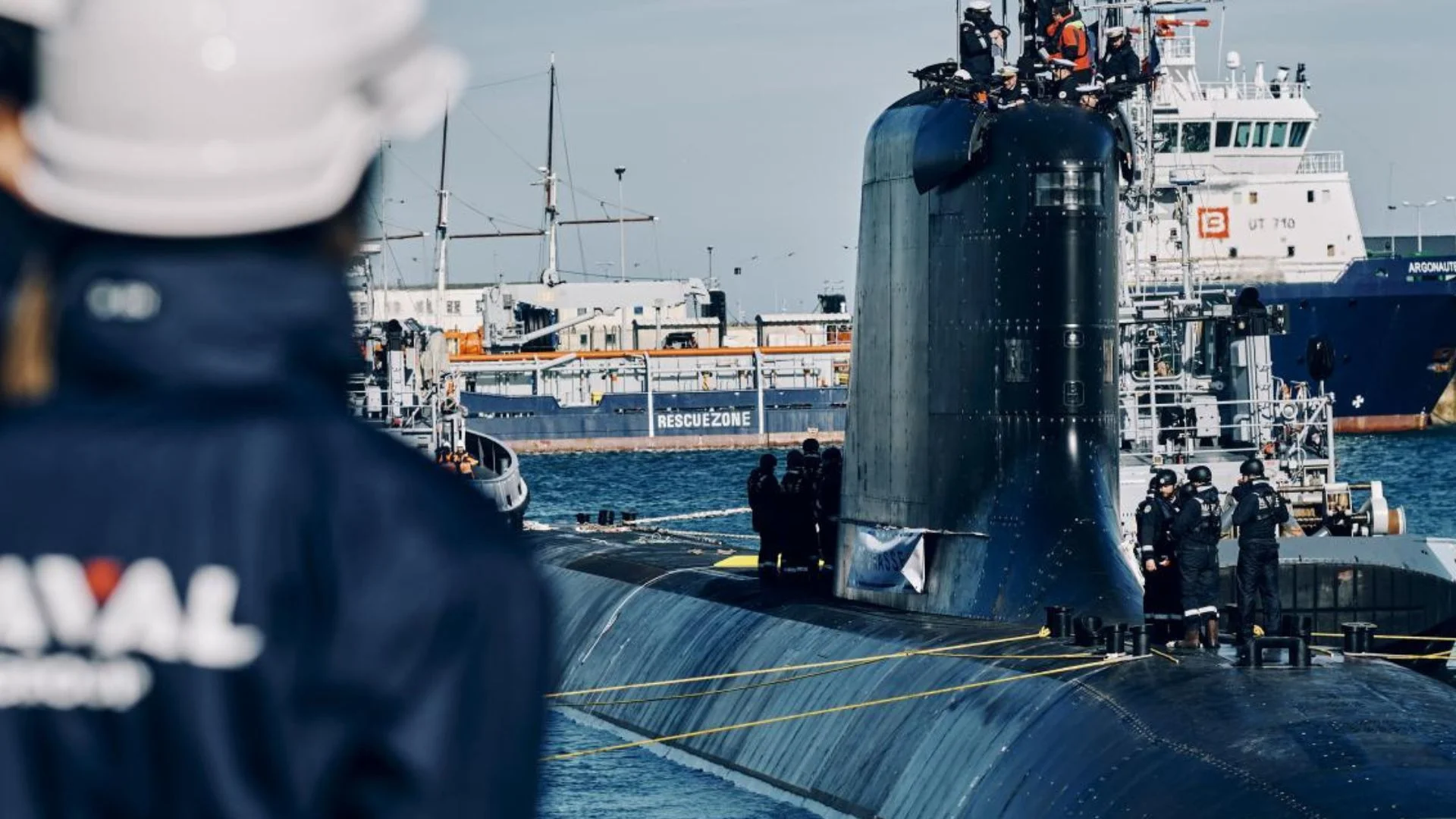
France has officially taken delivery of De Grasse, the fourth Barracuda-class nuclear-powered attack submarine, marking another major step in the country’s long-term naval modernization program.
Built by Naval Group, the submarine joins three sister vessels already in service with the French Navy. The delivery also keeps the six-submarine Barracuda program on schedule as France strengthens its underwater warfare capabilities.
De Grasse Joins Barracuda Fleet
Naval Group delivered De Grasse to the French Navy after completing construction at its shipyard in Cherbourg. The submarine reached this milestone only four months after beginning its sea trials on February 24, 2026. Before that, it completed dockside testing and activated its nuclear reactor in December 2025 after leaving the construction hall in May 2025.
The fast completion of testing reflects experience gained from building the first three submarines in the class. Those lessons helped improve production and testing processes. The delivery keeps the Barracuda program on track.
Barracuda Replaces Submarines
The Barracuda program will provide six nuclear-powered attack submarines to replace the aging Rubis-class fleet.
READ ALSO: US Army Launches Space Operations Branch to Dominate the Final Frontier of Modern War
Three submarines, Suffren, Duguay-Trouin, and Tourville, are already in active service after entering the fleet between 2022 and 2025. The remaining two submarines, Rubis and Casabianca, are under construction and are expected to enter service before the end of the decade.
The program is managed by the French Defence Procurement Agency (DGA) with support from the French Atomic Energy and Alternative Energies Commission (CEA) for nuclear reactor development.
Naval Group leads the design, construction, and long-term support of the submarines, while TechnicAtome works on the nuclear propulsion system. Maintenance and logistical support for the fleet will be carried out in Toulon.
The Barracuda class is designed for a wide range of naval missions, including anti-submarine warfare, anti-ship operations, land attacks, intelligence gathering, and special forces deployment.
Each submarine carries Naval Cruise Missiles for long-range land strikes, F21 heavyweight torpedoes, and upgraded Exocet SM39 anti-ship missiles. It also has space for commandos alongside its crew of 65 sailors.
The submarine displaces about 4,700 tonnes on the surface and 5,200 tonnes when submerged. It measures 99 meters in length with a hull diameter of 8.8 meters. Power comes from a pressurized water nuclear reactor derived from those used on France’s Triomphant-class ballistic missile submarines and the Charles de Gaulle aircraft carrier, driving a hybrid propulsion system with turbines and electric motors.
WATCH ALSO: A Brazilian skateboarder set a world record as he turned 22-storey skyscraper into giant ramp
The Barracuda-class submarines are built to remain operational for more than 270 days each year. Their combination of endurance, stealth, and advanced weapons strengthens France’s ability to protect its maritime interests and contribute to NATO and allied operations.