China has tested a new satellite-linked tracking device designed to improve cargo security on the China-Europe Railway Express.
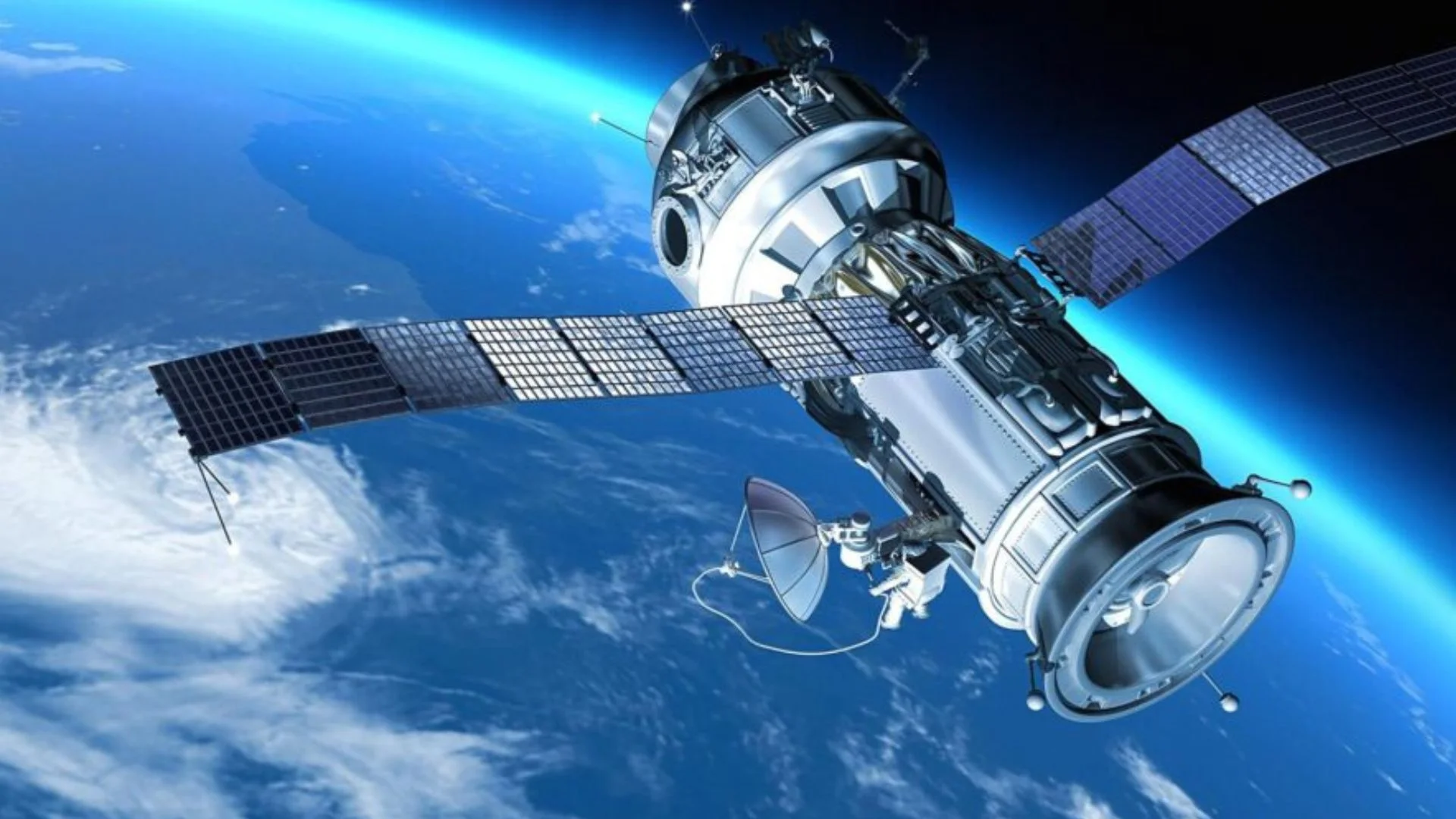
The system uses the country’s BeiDou satellite navigation network to monitor containers in real time throughout their journey.
The new technology aims to reduce cargo theft, improve transport safety, and provide railway operators with continuous visibility into freight moving across Asia and Europe.
BeiDou Brings Real-Time Monitoring
The new tracking device was developed by researchers from China Railway Chengdu Group, the China Academy of Railway Sciences, and China Railway Container Transport Corporation (CRCT).
They tested the equipment on both domestic and international sections of the China-Europe Railway Express. The trials measured satellite connection speed, signal reliability, battery performance, and overall tracking accuracy.
Unlike existing systems, the new device stays attached to the outside of a container during transport. It continuously reports the container’s location rather than recording its position only when it reaches railway stations. This gives operators a live view of cargo movements throughout the journey.
READ ALSO: Canada Buys Australia’s $2.5B Arctic Radar in Landmark Defence Export Deal
The research team said the system uses China’s BeiDou-3 satellite navigation network for accurate positioning in all weather conditions. It also collects additional information, such as temperature, humidity, door-opening status, and movement. These details help railway companies detect unusual events and improve cargo protection.
Solving Long-Standing Tracking Challenges
Current railway container tracking mainly depends on scanning identification tags at stations. This method provides only station-to-station updates, leaving long periods when operators cannot monitor cargo while trains are moving.
The researchers explained that this lack of visibility has become a major challenge for long-distance international freight services. China-Europe freight trains travel thousands of kilometres through deserts, mountains, tunnels, and remote regions where monitoring containers has always been difficult.
The new device was designed to overcome several technical problems. Metal containers often block satellite signals, making positioning difficult. Engineers improved antenna performance, enhanced radio frequency technology, and added intelligent software to help the device quickly connect to satellites even after a restart.
Another challenge was ensuring reliable operation across many countries. The system maintains satellite positioning while trains cross international borders, allowing continuous monitoring throughout the journey.
The tracking device is powered by solar energy through an integrated photovoltaic panel. It also includes intelligent power management technology that reduces energy use while maintaining continuous operation.
According to the research team, the equipment can operate at temperatures ranging from -40 degrees Celsius to 80 degrees Celsius. It is designed to withstand harsh weather, including humidity, extreme cold, rapid temperature changes, and sandstorms. Under normal conditions, the device can operate continuously for up to five years.
WATCH ALSO: United States is considering to conduct air strikes against drug cartels in Venezuela
Supporting Largest Rail Freight Network
The China-Europe Railway Express is one of the largest international rail freight networks in the world. It forms a key part of China’s Belt and Road Initiative and connects more than 200 cities across 26 European countries and 11 Asian countries.
Often called the ‘Steel Camel Fleet,’ the railway follows routes similar to the ancient Silk Road. It offers a faster alternative to sea transport for many goods moving between China and Europe.
The network operates through three major corridors. One route reaches Europe through Kazakhstan, while the other main corridors pass through Mongolia, Russia, Belarus, and Poland.
The railway has expanded rapidly over the past decade. Around 1,700 freight trains operated on the network in 2016. By 2025, annual operations had grown to more than 20,000 trains, including nearly 10,000 westbound services carrying Chinese exports to Europe.
China has already introduced BeiDou technology across many industries, including agriculture, disaster response, transportation, engineering, and city management. Within the railway sector, BeiDou supports infrastructure maintenance, engineering surveys, train control systems, and mobile railway equipment.
Researchers said about 74 percent of positioning and timing equipment across China’s railway network now combines BeiDou and GPS. The remaining systems continue to rely mainly on GPS.
Some freight routes already use BeiDou in combination with 5G for cargo monitoring and operational safety.
For example, the Chongqing-Duisburg freight corridor uses satellite positioning and digital communication technologies to improve logistics management. The Xi’an International Port has also connected its digital freight platform with BeiDou to monitor container location, temperature, humidity, and transport conditions.
READ ALSO: Missiles Reaching 1,000 Nautical Miles: US Air Force Targets China’s Indo-Pacific Threat
China is also upgrading its BeiDou-3 satellite constellation by replacing older satellites with newer third-generation models and adjusting their orbital positions. These improvements are expected to strengthen worldwide coverage and further increase positioning accuracy.
The research team said future work will focus on building a complete intelligent management system. That system will combine real-time monitoring, automatic alerts, risk prediction, and advanced data analysis to improve international rail freight operations.
However, smarter tracking systems are expected to strengthen cargo security, improve logistics efficiency, and support the long-term development of global railway trade.