Brain Corp and the University of California, San Diego have announced a broader research partnership focused on autonomous robotics and Physical AI systems.
The collaboration aims to improve how robots understand their surroundings and respond to changing conditions in real-world environments. Both organizations are working to develop advanced technologies that enable autonomous systems to operate more reliably at a commercial scale.
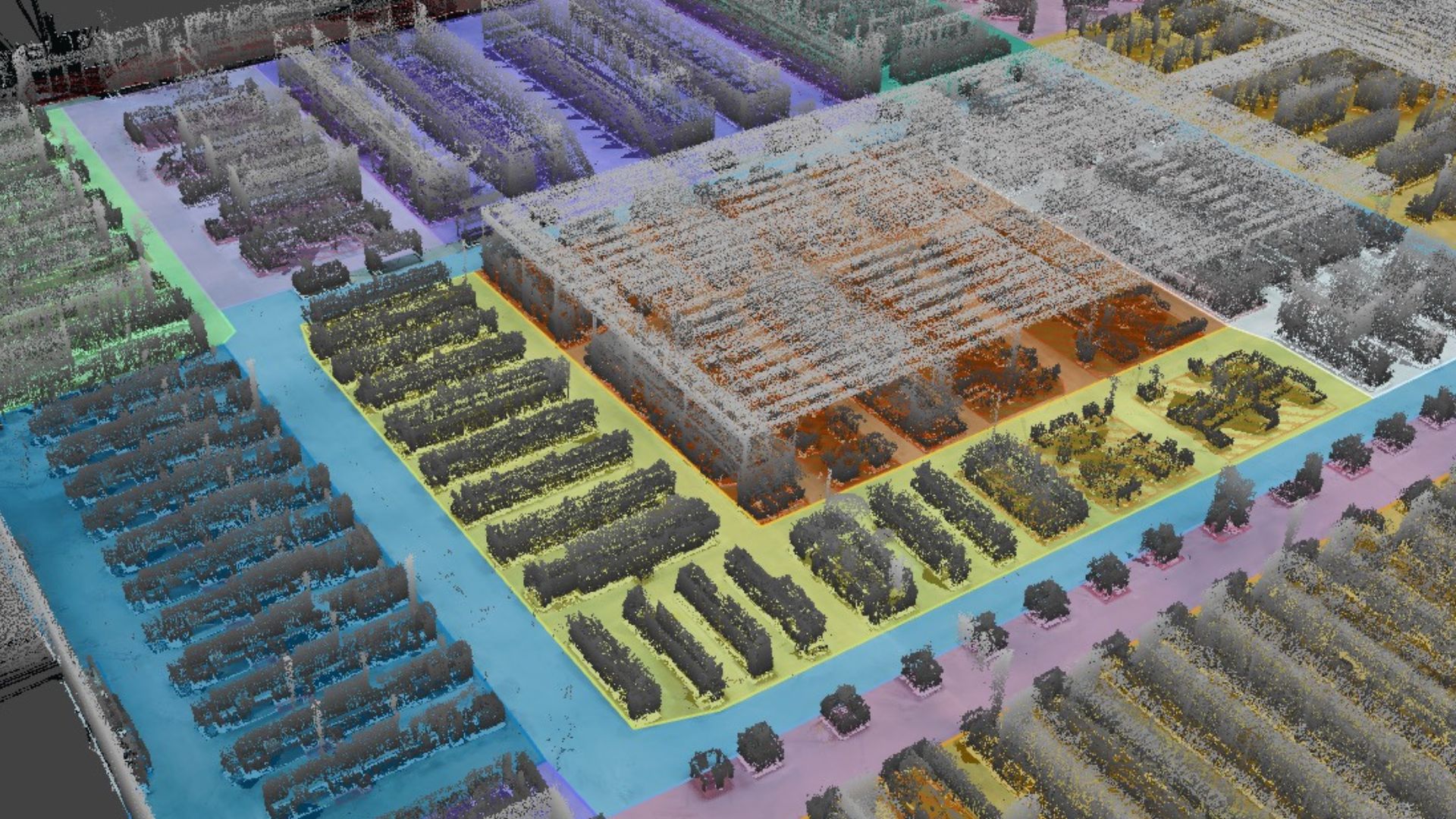
The partnership centers on semantic mapping and contextual grounding technologies. Semantic mapping allows robots to create digital maps that identify objects, spaces, and activities in their surroundings. Contextual grounding adds another layer by helping robots understand the meaning of those objects and activities during real-world operations.
The research comes at a time when robotics companies are rapidly adopting vision-language-action models and generative AI systems. These technologies help robots process images, language, and movement instructions together. However, companies still face major challenges in making these systems dependable in crowded and unpredictable environments.
Brain Corp said the project focuses on building a contextual grounding layer for autonomous systems. This layer serves as an intelligent digital model of physical spaces, helping robots understand ongoing activity around them. It also improves decision-making when robots interact with people, equipment, and changing surroundings.
READ ALSO: HII Showcases Autonomous Underwater and Surface Naval Systems at CNE 2026 in UK
Unlike traditional automation systems that perform only one task, Brain Corp is building a broader platform to manage multiple autonomous systems. The company wants to coordinate fleets of robots, fixed sensors, and AI-powered systems across large facilities. This approach supports operations in warehouses, retail stores, industrial sites, and other commercial environments.
Semantic Mapping for Autonomous Robots
The collaboration is being led with support from Nikolay A. Atanasov, who heads the Existential Robotics Laboratory at the UC San Diego Jacobs School of Engineering. His research focuses on robotic perception, autonomous systems, and semantic mapping technologies. The work aims to improve how machines understand complex physical environments.
Dr. Atanasov explained that Simultaneous Localization and Mapping(SLAM) helped move robotics beyond fixed factory settings into more dynamic spaces. SLAM enables robots to build maps while simultaneously tracking their own position. It became one of the core technologies behind modern autonomous navigation systems.
He also said current AI systems increasingly rely on direct visual understanding from cameras and sensors. However, he believes contextual 3D semantic maps remain critical for safe and dependable autonomy. These maps provide stronger spatial awareness and help systems remain stable in changing environments.
The research team plans to combine advanced robotics research with Brain Corp’s large commercial deployment network. Brain Corp currently has more than 50,000 autonomous robots operating worldwide. The company also reports over 25 million hours of autonomous operations across commercial environments.
Those deployments provide valuable real-world operational data for the research program. The information helps engineers study how robots behave under changing environmental conditions. It also allows researchers to test how autonomous systems perform at enterprise scale.
WATCH ALSO: Falcon 9 rocket of SpaceX recently launched 24 Starlink internet satellites
BrainOS Smarter Contextual Intelligence
The collaboration directly supports the development of Brain Corp’s BrainOS autonomy platform. BrainOS powers many of the company’s autonomous robotic systems used in commercial facilities today. The company plans to integrate new semantic-mapping and contextual-intelligence technologies into the platform.
John Black, Chief Technology Officer at Brain Corp, said the robotics industry is moving beyond basic movement and perception. He explained that the next challenge is giving autonomous systems a deeper understanding of the physical world. According to Black, reliable deployment depends on building stronger contextual intelligence into AI systems.
The partnership also reflects broader industry trends in Physical AI development. Companies worldwide are investing heavily in robotics systems that can work safely alongside humans. Businesses increasingly want autonomous machines that can adapt to real-world conditions without constant human supervision.
This research may also influence how future enterprise facilities manage automation systems. Smarter contextual awareness can improve efficiency, safety, and coordination across large operations. It can also support faster deployment of autonomous systems in industries facing labor shortages and rising operational costs.
READ ALSO: Robot Wolves Sell Out in Japan as Bear Attacks Hit Record Highs Across Rural Communities
The collaboration between Brain Corp and UC San Diego highlights how academic research and commercial robotics are increasingly intertwined. Universities provide advanced scientific expertise, while companies contribute operational experience and real-world deployment data. Together, these partnerships are shaping the next generation of intelligent autonomous systems.
As Physical AI continues to evolve, contextual understanding is becoming one of the most important technologies in robotics. Companies are no longer focused only on navigation or automation. The next stage of development centers on creating autonomous systems that can better understand, interpret, and respond to the world around them.