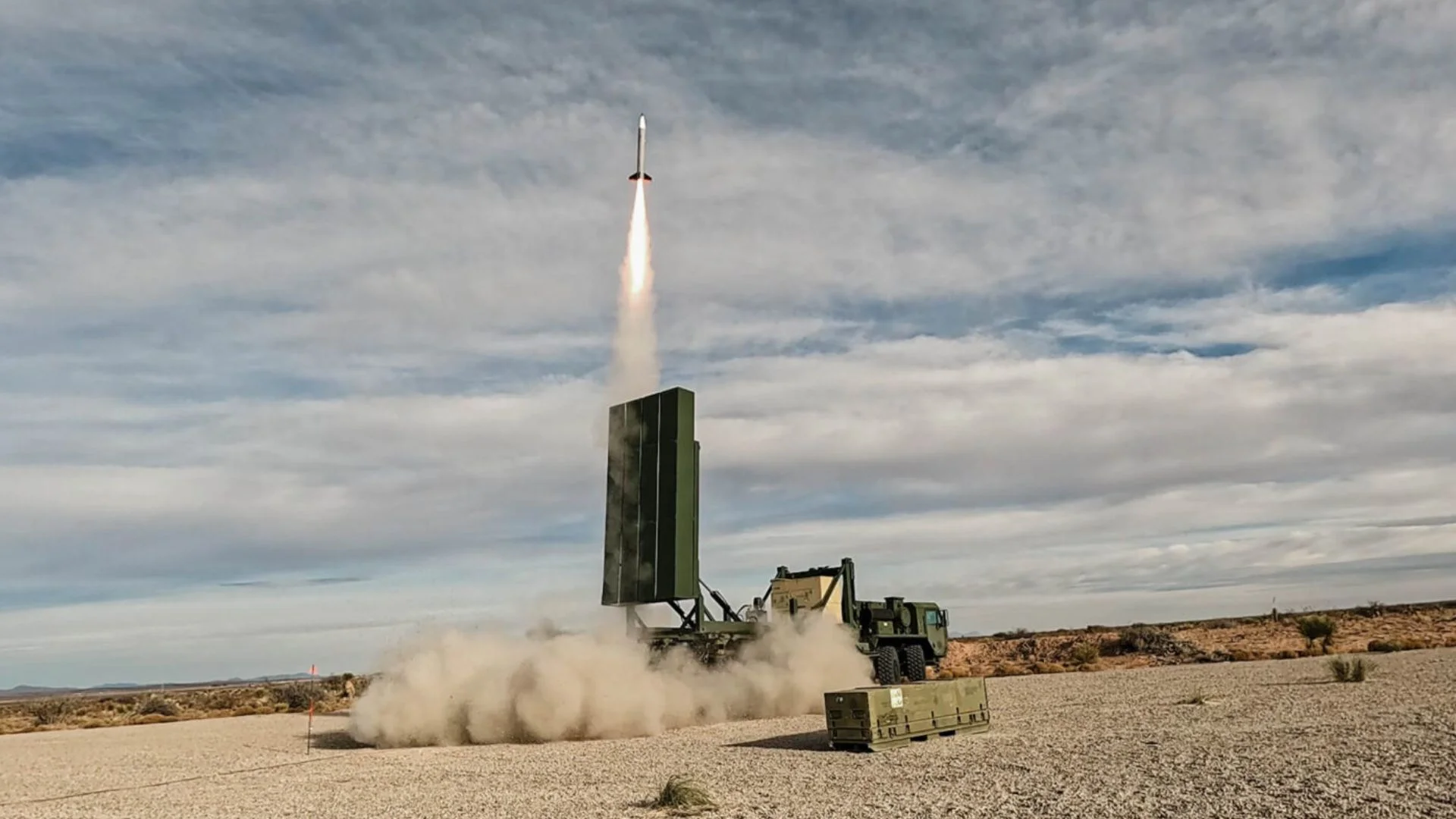
The Department of War has signed a production framework agreement with Castelion to support the future manufacturing of Blackbeard hypersonic missiles.
The agreement guarantees a minimum production target of 500 missiles annually after testing and operational validation are completed. Officials also outlined plans for possible purchases reaching thousands of missiles in the coming years.
Castelion’s Blackbeard Program
Blackbeard is designed as a lower-cost hypersonic strike weapon for the US military.
Hypersonic missiles travel at speeds above Mach 5, making them significantly faster than traditional cruise missiles. Their speed and maneuverability make them difficult for air defense systems to intercept.
The agreement marks one of the first large-scale production arrangements focused specifically on affordable hypersonic weapons.
READ ALSO: MirrorBot Reveals What Happens When Strangers Finally Look Up
It also signals a shift in how the US government plans to expand its missile inventory. Instead of relying only on traditional defense contractors, officials are increasingly working with newer private companies that can develop systems faster and at lower cost.
Bryon Hargis, chief executive officer and co-founder of Castelion, said the agreement shows strong government support for hypersonic capabilities. He stated that the company is focused on accelerating production to meet future military demand. The company also plans to expand its manufacturing facilities using private investment.
The Department said it intends to award a multi-year procurement contract once Blackbeard completes testing and validation. The initial contract would cover two years of production with extension options for up to five years.
Officials are also seeking funding approval to potentially purchase more than 12,000 Blackbeard missiles over a five-year period.
Pentagon Expands Low-Cost Missile Programs
The Castelion agreement is part of a wider Department of War initiative to rapidly increase US strike capabilities.
The Pentagon also signed separate framework agreements with Anduril Industries, Leidos, CoAspire, and Zone 5 Technologies. These companies will support the new Low-Cost Containerized Missiles program, known as LCCM.
READ ALSO: No Fans, No Airflow: 3D-Printed Metal That Cools When Stretched Debuts at Hannover Messe
The LCCM initiative focuses on producing affordable cruise missiles in large numbers. Cruise missiles typically fly at lower altitudes and slower speeds than hypersonic weapons. They are often used for precision attacks against ground targets over long distances.
The Department expects the program to support the procurement of more than 10,000 missiles over 2027-2029.
Officials said the agreements include fixed pricing terms to help control production costs during future manufacturing contracts. The goal is to establish a predictable, scalable missile production process across multiple suppliers.
The Office of the Under Secretary of War for Research and Engineering will lead the testing and evaluation campaign for the LCCM program. The Army’s Program Executive Office for Fires will oversee the transition toward operational procurement. The Department plans to begin purchasing test missiles from participating companies in June 2026.
Officials described the initiative as part of a broader transformation in military acquisition policy. The government is attempting to move faster by using commercial-style partnerships with private industry. This approach aims to reduce the delays often associated with traditional defense procurement systems.
Why the New Missile Strategy Matters
The US has increased its focus on missile production as global military competition intensifies. Modern conflicts have shown that large stockpiles of precision weapons are essential during extended operations.
Military planners are now emphasizing affordable mass production instead of limited numbers of highly expensive systems.
Hypersonic weapons have become a major priority for several global powers, including the US, China, and Russia. These weapons can travel extremely fast while changing direction during flight. That combination reduces warning time for defenders and increases pressure on existing missile defense networks.
US officials say the new agreements are designed to strengthen deterrence by building larger, more sustainable inventories.
WATCH ALSO: A new type of airless steel wheels can transform operations of heavy-duty mining trucks
Under Secretary of War for Research and Engineering Emil Michael said the framework agreements create clear signals of demand for industry investment. He added that the strategy encourages companies to expand research, development, and manufacturing capacity.
Michael Duffey, Under Secretary of War for Acquisition and Sustainment, said the agreements reflect efforts to rebuild America’s defense industrial base.
He noted that the Department is expanding beyond traditional prime contractors and accelerating testing timelines. Officials believe the model will help deliver military systems faster while supporting long-term production readiness.
The agreements also highlight the growing role of venture-backed defense startups in the US military sector. Companies like Castelion are increasingly competing for programs once dominated by established defense giants.
If the Blackbeard program moves successfully into full production, it will shape how future missile programs are developed and fielded across the US armed forces.