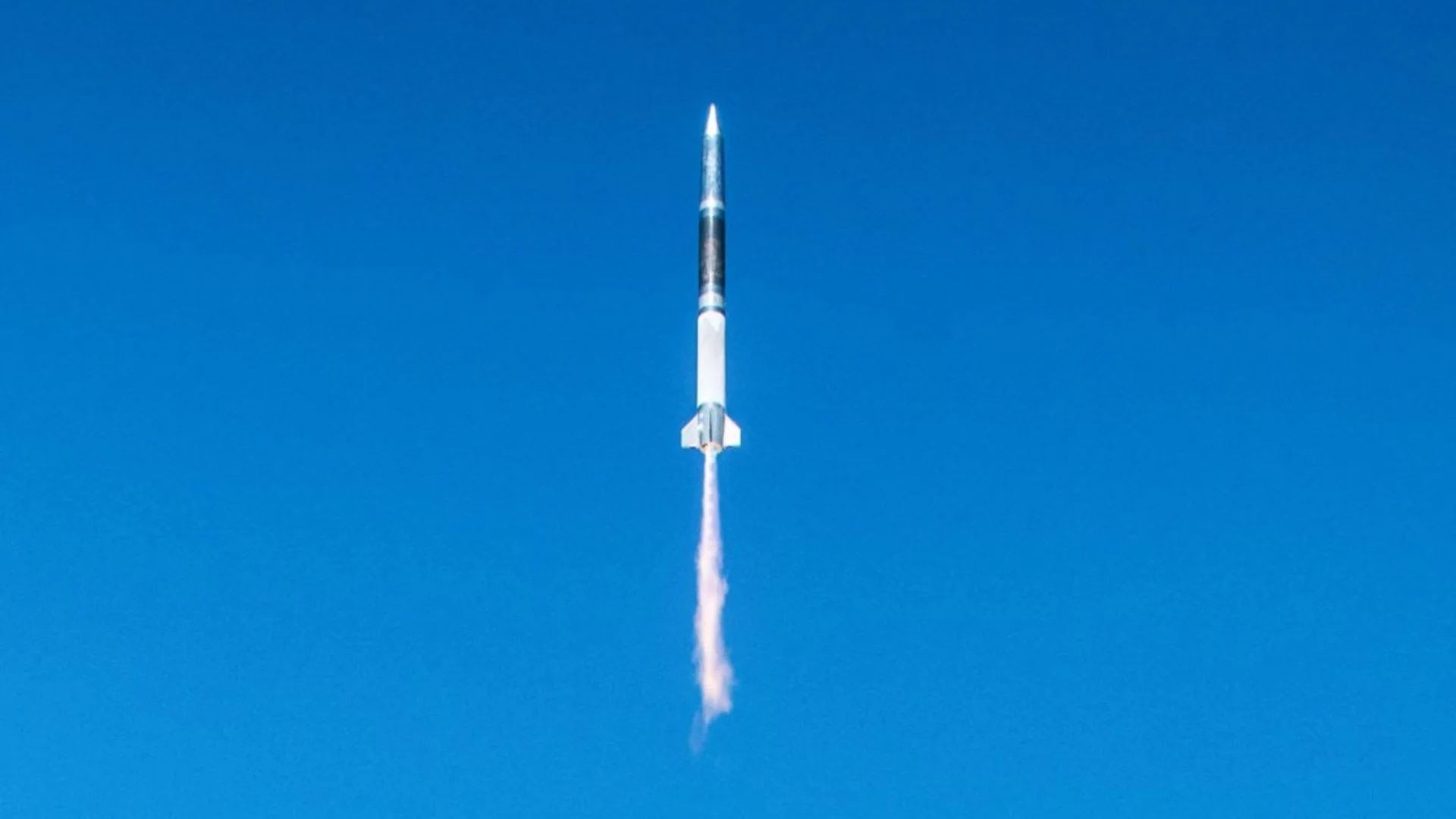
LEAP has successfully launched and recovered its Bullfrog space vehicle, advancing the development of space-based cargo transport.
The mission showed how reusable rockets can help deliver supplies quickly for military, commercial, and emergency response operations.
Company officials said the test proved that its space logistics system can now support real-world missions, rather than remaining only a research concept.
The operation was conducted in partnership with the Installation, Logistics, and Product Support directorate under the US Space Systems Command.
READ ALSO: Artemis Mission’s Laser Communication Is Changing How NASA Sees the Moon
The demonstration also highlighted the growing role of reusable space systems in future global transportation and logistics networks.
Bullfrog is a reusable single-stage rocket powered by one liquid-fueled engine. It is designed to carry payloads weighing up to 100 pounds to altitudes of up to 150 kilometers above Earth. After completing its mission, the vehicle returns using a parachute system for recovery and reuse.
The rocket was built for rapid and high-frequency missions that can support cargo transport, communications equipment, sensing systems, and scientific research payloads.
LEAP also designed the vehicle to operate from transportable launch systems that can be quickly deployed to different locations. This approach supports fast mission planning and flexible launch operations.
Chris Beckman, CEO of LEAP, said the mission demonstrated how space can now support practical transportation needs.
He explained that the company successfully delivered and recovered payload systems during the operation. According to Beckman, this type of capability may change how urgent logistics missions are handled in the future.
The Bullfrog mission collected important flight data related to hypersonic performance and payload survivability. Engineers also tested the rocket’s guidance, navigation, and control systems during the flight.
The mission validated LEAP’s proprietary engine and tank technologies under operational conditions.
READ ALSO: Shell Waste Turns CO₂ Into Fuel at Record Efficiency Without Toxic Chemicals
Unlike many traditional suborbital launches that focus mainly on testing rockets, Bullfrog was built around a payload-focused system.
LEAP said the architecture supports both commercial and government users without requiring major changes between missions. This makes the system more flexible for different industries and operational needs.
Warpware supported the mission by providing software, mission design, and guidance systems. These technologies helped manage flight tracking, navigation, and payload monitoring during the launch and recovery process. Such systems are critical for future high-speed logistics operations using reusable rockets.
Why Bullfrog Matters for Future Cargo Transport
Interest in space logistics has increased as governments and companies search for faster ways to move critical supplies. Traditional air and sea cargo networks can take hours or days to reach remote areas during emergencies or military operations. Reusable rockets offer the potential to reduce delivery times to minutes for certain missions.
The concept also aligns with growing defense interest in responsive global mobility systems.
Military planners are exploring how rockets can quickly transport medical supplies, communications equipment, or other urgent cargo to distant locations. Commercial operators are also studying how reusable launch systems may support future high-speed shipping markets.
WATCH ALSO: A humanoid robot developed by China’s Unitree is mastering anti-gravity mode
LEAP plans to increase its launch activity during 2026 while expanding payload capacity and operational partnerships. The company is also working toward building a larger distributed logistics network supported by more advanced reusable vehicles.