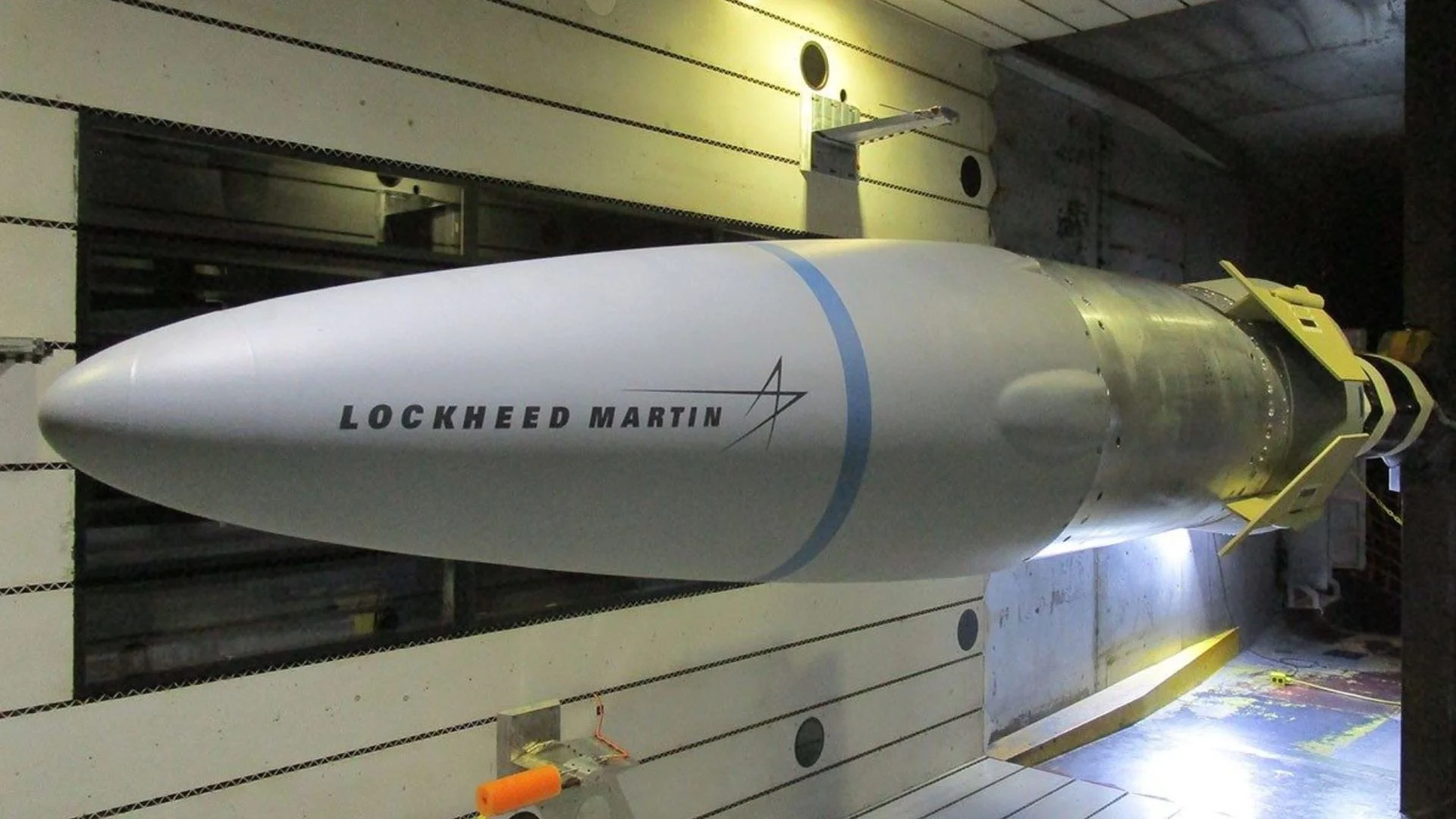
The US Air Force is restarting major work on the AGM-183A Air-launched Rapid Response Weapon(ARRW).
The new effort focuses on an upgraded ‘Increment 2’ version of the missile. This variant is designed to attack moving targets, including enemy warships.
The Air Force has requested more than $296 million in its Fiscal Year 2027 budget for the project.
The funding will support design, testing, and evaluation activities for the new missile version. It will also help develop lower-cost production methods for future manufacturing.
The updated ARRW will include a terminal seeker and a data link system. These upgrades are important because the original missile was primarily designed to strike fixed land targets. The new version aims to expand its role into long-range maritime warfare.
READ ALSO: South Korea Scales Up CO₂-to-Liquid Fuel Plant to 50 kg Daily Output in Single Step
The missile is expected to become an important part of future US military operations in the Pacific. American defense planners increasingly view long-range anti-ship weapons as essential in a possible conflict with China. The ARRW upgrade reflects that growing focus.
ARRW is a hypersonic boost-glide weapon. This means it uses a rocket booster to launch a glide vehicle at extremely high speed. After separation, the glide vehicle flies through the atmosphere while maneuvering toward its target.
Hypersonic weapons travel at speeds above Mach 5, or five times the speed of sound. Their speed and unpredictable flight path make them difficult to track and intercept. This creates major challenges for enemy air defense systems.
The Air Force says ARRW is designed for rapid strikes against high-value targets in heavily defended areas. The missile also enables bombers to attack from long range without entering enemy air defense zones. This stand-off capability is especially important in modern warfare.
AGM-183A ARRW Focuses on Anti-Ship Warfare
The most important feature in ARRW Increment 2 is its ability to hit moving targets. This capability depends on the addition of an advanced seeker system. The Air Force has not publicly confirmed which seeker technology it plans to use.
Possible options include radar guidance, infrared imaging sensors, or passive tracking systems. A combination of several sensors may also be used together. Multi-mode seekers improve accuracy and help weapons track targets in difficult conditions.
Building seekers into hypersonic weapons is technically challenging. The missile experiences intense heat and physical stress during flight at extreme speed. Engineers must ensure sensors can still operate reliably under those conditions.
The new data link system is another major upgrade. It allows the missile to receive targeting updates during flight. This is important when moving ships across long distances.
WATCH ALSO: Drum-shaped antenna reflector on NASA-ISRO NISAR satellite deployed
Warships can change direction and speed quickly after launch detection. Without updated targeting information, a missile may miss its target area entirely. The data link helps ARRW stay connected to external tracking systems during flight.
The Air Force has already tested parts of this long-range targeting network during previous military exercises.
During Exercise Northern Edge 2021, the service simulated an ARRW strike from a B-52 bomber against a target located 600 nautical miles away. No missile was launched during that event, but the exercise tested the communication and targeting chain.
Long-range hypersonic anti-ship weapons are becoming increasingly important for the US military. China’s navy has expanded rapidly over the past decade. The People’s Liberation Army Navy now operates one of the world’s largest fleets.
China has also expanded its aircraft carrier force and amphibious assault ship fleet. These vessels are central to Beijing’s military strategy in the Pacific region. The US wants weapons that can threaten those ships even in heavily defended environments.
ARRW Increment 2 may become one of those systems. Its speed would significantly reduce enemy reaction time. Its maneuverability may also help it bypass advanced naval air defenses.
The missile may also retain the ability to strike mobile land targets. These include missile launchers and transporter-erector-launchers used for ballistic missiles. Such targets are difficult to destroy because they can relocate quickly.
ARRW Revival Signals New US Hypersonic Strategy
The ARRW program faced major uncertainty only a few years ago. In 2023, the Air Force planned to cancel the missile after several failed flight tests. At that time, the service shifted its attention to another hypersonic weapons program, HACM.
HACM stands for Hypersonic Attack Cruise Missile. Unlike ARRW, HACM uses an air-breathing scramjet engine instead of a boost-glide system. The two weapons operate differently and serve different combat roles.
Despite the earlier cancellation plans, ARRW continued to receive support behind the scenes. The Air Force later restarted procurement funding for operational missiles. This signaled renewed confidence in the program.
The service received more than $362 million for ARRW procurement in Fiscal Year 2026. It is now seeking more than $452 million for additional purchases in Fiscal Year 2027. The exact number of missiles being ordered remains classified.
Several flight tests have taken place in recent years. One important test involved a live warhead launch from a B-52 bomber operating from Andersen Air Force Base in Guam during 2024. The location of that test attracted attention because Guam is strategically important in any Pacific conflict scenario.
READ ALSO: B-1B Apocalypse II Returns From Boneyard as US Air Force Expands Bomber Fleet
The Air Force currently plans to integrate ARRW onto B-52 and B-1 bombers. Other aircraft may carry future variants as the program develops further. Long-range bombers offer flexibility because they can launch weapons from afar, even in contested areas.
Lockheed Martin is the prime contractor for ARRW. The company is also working on anti-ship missile technology for the US Army’s Precision Strike Missile program. Some of the guidance technology from that project may help support ARRW Increment 2 development.
The Pentagon continues to place strong emphasis on hypersonic weapons development. Russia and China have both invested heavily in similar systems. China, in particular, has developed several hypersonic and ballistic missiles designed for anti-ship missions.
American defense officials see hypersonic weapons as critical for maintaining military balance in future conflicts. Fast-moving weapons with long range and advanced maneuverability offer new strike options against defended targets. They also help reduce response time during high-intensity combat situations.
The ARRW upgrade shows how the Air Force is adapting its strategy for modern warfare in the Pacific. The ability to attack moving ships at very high speed adds a powerful new layer to long-range strike operations.